
Bridge Tooling: When It Makes Sense and What It Costs
Bridge tooling is an interim injection mold used to make production-quality parts between prototypes and the final production mold. It lets a product launch, ship early orders or complete validation while the high-volume tool is still being built. Bridge tools are usually single- or low-cavity molds in pre-hardened steel, designed for a shorter life than the production tool.
Bridge tooling is useful only when the plan is clear. For example, a startup launching a small electronic housing may run 20,000 parts from a single-cavity P20 bridge mold while a four-cavity hardened tool is built; if the part design is still changing, the bridge tool becomes an expensive prototype instead. In this guide, we explain bridge tooling: what it is, when to use it, how it differs from prototype and production tools, steel and design choices, cost and timing, and how to move to production. For earlier stages, see our guide to prototype tooling.
Bridge tooling is an injection mold built to production-like standards but with fewer cavities, simpler actions and pre-hardened steel such as P20 or 718H, so it can be made faster and at lower cost than the final mold. It typically supports thousands to a few hundred thousand shots, depending on resin and design. It is used for market launch, early demand, validation builds and supply continuity during tool transfer or rebuild. The design should be frozen first, and the bridge tool should use the production resin and gating so its parts represent production.
In short: bridge tooling buys time with real molded parts; it works best when the design is stable.
Key points:
- Purpose: supply parts before the production tool.
- Build: fewer cavities, pre-hardened steel.
- Condition: design frozen, production resin.
What Is Bridge Tooling?
Bridge tooling is a temporary production mold that “bridges” the gap to the final tool.
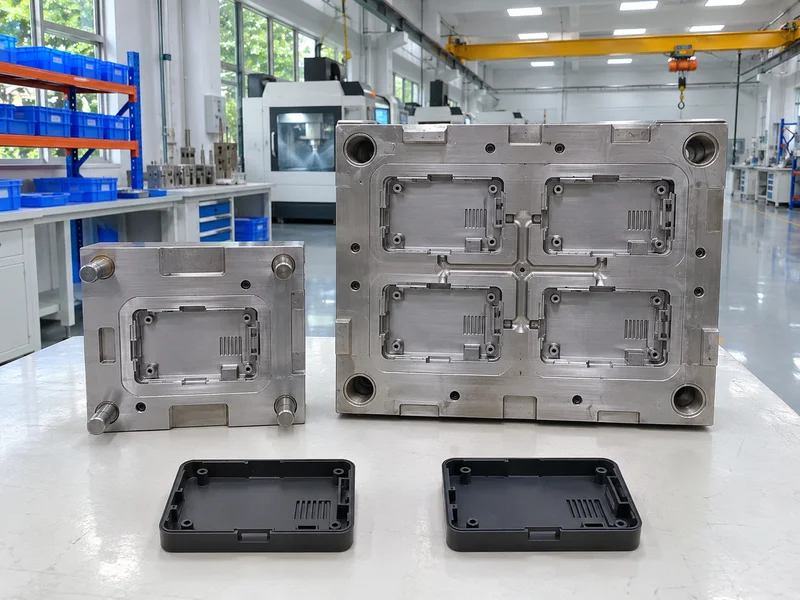
- Production resin and production-like gating
- Single or low cavity count
- Pre-hardened steel instead of hardened inserts
- Simpler actions where possible
- Shorter planned life
For example, a two-cavity bridge tool may supply the first 50,000 caps while a 16-cavity hot runner tool is built. Our guides to rapid tooling and low volume injection molding describe related approaches. Mold life classes are often discussed alongside general standards from ISO.
Key Takeaway: Above all, bridge tooling makes real parts in real resin, not prototypes.
When Does a Bridge Tool Make Sense?
Bridge tooling makes sense when parts are needed before the production tool is ready.
- Market launch before high-volume tooling is complete
- Uncertain demand that does not yet justify many cavities
- Validation builds that need molded parts
- Supply continuity during a mold rebuild or second source
- Regional supply while the main tool runs elsewhere
For example, a product with a forecast of 5,000 units in the first quarter and 200,000 a year later can start on a bridge tool. Our guide to understanding injection mold cost shows how volume drives tool investment.
Key Takeaway: In other words, use bridge tooling to match tool investment to real demand.
How Does Bridge Tooling Differ From Prototype and Production Tools?
Bridge tooling sits between prototype and production tools in life, cost and quality.
| Feature | Prototype tool | Bridge tool | Production tool |
|---|---|---|---|
| Purpose | Test design | Early supply | Long-term supply |
| Cavities | 1 | 1–2 | Many |
| Steel | Soft or pre-hardened | Pre-hardened (P20/718H) | Hardened inserts |
| Life | Low | Medium | High |
| Actions | Often manual | Mostly automatic | Automatic |
| Part quality | Representative | Production-like | Production |
For example, a prototype tool may use hand-loaded inserts for an undercut, while the bridge tool uses a real slide. Our guide to prototype injection molding covers the first column.
Key Takeaway: For this reason, define which column your tool belongs to before quoting.
How Is a Bridge Tool Designed and Built?
A bridge tool is designed like a production mold but simplified where it does not affect the part.
- Same gate location and resin as production
- Same shrinkage and critical dimensions
- Pre-hardened steel cavities, hardened inserts only where needed
- Standard mold base sized for later transfer if useful
- Automatic slides for undercuts that affect cycle or quality
For example, a bridge tool in 718H with an H13 gate insert can run glass-filled nylon for a medium run. Our guides to P20 steel and injection molding tool design explain these choices.
Key Takeaway: Overall, keep gating and shrinkage identical so parts carry over to production.
How Much Does Bridge Tooling Cost and How Long Does It Take?
Bridge tooling usually costs less and builds faster than the final production mold.
| Factor | Effect |
|---|---|
| Fewer cavities | Lower cost, shorter build |
| Pre-hardened steel | No heat treatment wait |
| Simpler cooling and actions | Lower cost |
| No hot runner | Lower cost |
| Part complexity | Still drives most cost |
For example, a single-cavity bridge mold for a small housing may reach first samples in a few weeks, while the multi-cavity tool takes longer. Our guide to how to estimate injection molding cost lists cost drivers.
Key Takeaway: Equally, compare bridge tool cost with the cost of a late launch.
How Do You Move From Bridge Tooling to Production?
You move from bridge tooling to production by carrying over the approved design and data.
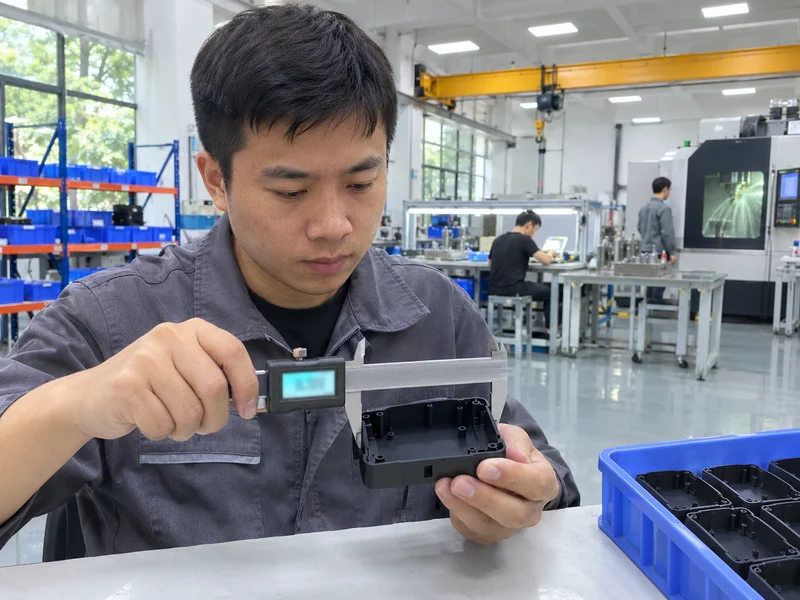
- Freeze the part design based on bridge parts
- Reuse gate, shrinkage and process data
- Compare production samples with approved bridge samples
- Keep the bridge tool as backup or for service parts
- Plan overlap so supply does not stop
For example, the bridge tool can remain as a backup for spare parts after the production tool is approved. Our injection mold manufacturing team plans bridge and production tools as separate scopes.
Key Takeaway: As a rule, plan the bridge-to-production change before the bridge tool is built.
FAQ
- Q: What is bridge tooling?
- An interim production-like mold used before the final high-volume tool.
- Q: How many parts can a bridge tool make?
- Typically thousands to a few hundred thousand, depending on resin and design.
- Q: What steel is used for bridge tooling?
- Usually pre-hardened P20 or 718H, with hardened inserts where needed.
- Q: Is bridge tooling the same as prototype tooling?
- No, bridge tools make production-like parts for early supply.
- Q: Can a bridge tool become the production tool?
- Sometimes for low volumes, if its life and output meet demand.
Conclusion
Bridge tooling supplies production-like parts while the final mold is built or demand is still growing. Freeze the design, use production resin and gating, and plan the move to production. To discuss a bridge and production tooling plan, send your 3D model and 2D drawing to our engineers.