
Scientific Molding: Which Studies Add Real Value
Scientific molding is a data-driven way to develop an injection molding process. Instead of adjusting settings until parts look good, the process engineer runs structured studies, measures the results and sets each parameter from evidence. The aim is a process that is robust, repeatable and documented, so it keeps making good parts when material lots, machines or operators change.
Not every part needs the full method. For example, a simple PP cap with wide tolerances may run well with basic setup checks. In contrast, a medical housing with tight fits, or a part that will move between presses, benefits greatly from documented studies. In this guide, we explain what scientific molding includes, which studies add useful process evidence, when it is worth the time and how to ask a supplier for it. For the fill-pack-hold method itself, see our guide to decoupled molding.
Scientific molding develops an injection molding process from measured studies rather than trial and error. Typical studies include a viscosity (rheology) curve, cavity balance, pressure drop, cosmetic process window, gate freeze and cooling time studies, often combined with decoupled fill, pack and hold. The result is a documented process window and setup sheet. It adds most value for tight-tolerance, safety-related or high-volume parts, multi-cavity tools and processes that must transfer between machines; for simple, wide-tolerance parts, a reduced set of studies may be enough.
In short: scientific molding replaces guesswork with studies, and it pays most where tolerance, risk or volume is high.
Key points:
- Evidence: each setting comes from a study.
- Robustness: the process window shows how much variation is tolerated.
- Scope: match the number of studies to the part’s risk.
What Is Scientific Molding?
Scientific molding is a structured approach to process development that treats the mold, machine and material as a system and measures how the plastic behaves inside it.
Core ideas:
- Process from the plastic’s point of view: melt temperature, flow rate, pressure and cooling, not only machine settings.
- Decoupled stages: fill by speed, pack and hold by pressure.
- Studies: each key setting proven by a test.
- Documentation: a process sheet and window that others can repeat.
For example, two machines with different screw sizes can produce the same part if the process is defined by flow rate and plastic pressure rather than by percentages on one machine’s screen. Our injection molding process guide explains the basic cycle.
Key Takeaway: Scientific molding makes the process portable, because it is defined by physics, not by one machine.
Which Scientific Molding Studies Add Useful Process Evidence?
The scientific molding studies that add useful process evidence are those that answer a real risk for the part.
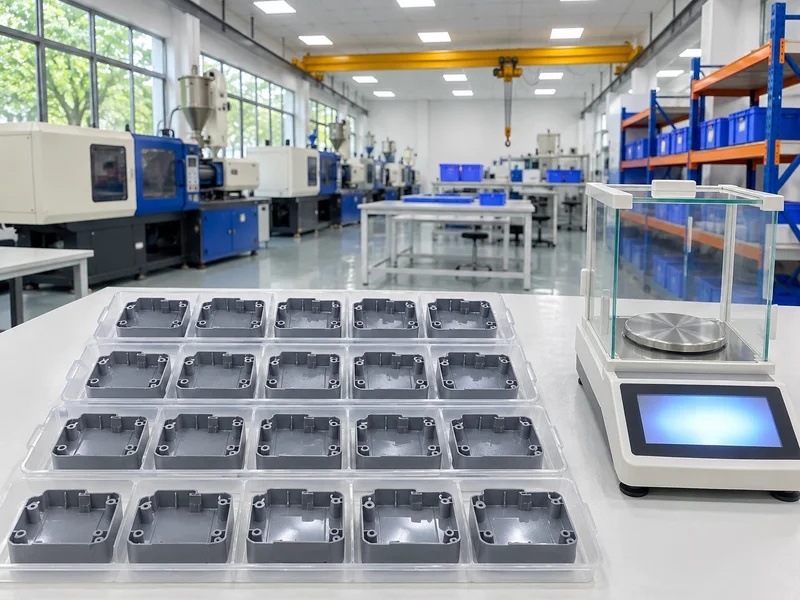
| Study (typical) | What it answers |
|---|---|
| Viscosity curve | Which injection speed gives stable viscosity |
| Cavity balance | Whether all cavities fill equally |
| Pressure drop | Whether fill is pressure-limited |
| Cosmetic process window | Which pack pressure and melt range give good parts |
| Gate freeze | How long hold must last |
| Cooling time | The shortest cooling that keeps dimensions |
| Design of experiments (DOE) | Which settings drive critical dimensions |
For example, a multi-cavity mold benefits strongly from a cavity balance study, while a single-cavity part with one critical dimension benefits from a DOE on pack pressure and mold temperature. Our guide to multi-cavity injection molding covers balance checks.
Key Takeaway: Choose studies by the part’s risks. Not every part needs every study.
When Does Scientific Molding Add the Most Value?
Scientific molding adds the most value when the cost of variation is high.
High-value cases:
- Tight tolerances on fits or functional dimensions
- Safety-related or regulated parts
- Multi-cavity molds, where balance matters
- High volumes, where small savings in scrap and cycle add up
- Process transfer between machines or sites
- Materials sensitive to process, such as PC, PA or PEEK
Lower-value cases:
- Simple parts with wide tolerances
- Very short runs where studies cost more than they save
- Prototype tools that will be replaced
For example, a PA66 clip with a critical snap force may justify a DOE, because small changes in pack pressure change the clip thickness and force. Our guide to low volume injection molding explains when a lighter approach fits.
Key Takeaway: Scale the study plan to the part. Over-studying a simple part wastes trial time.
How Does Scientific Molding Fit Into Mold Trials?
Scientific molding fits into mold trials by running the studies during T1–T3, when the mold is being proven, and freezing the process at sample approval.
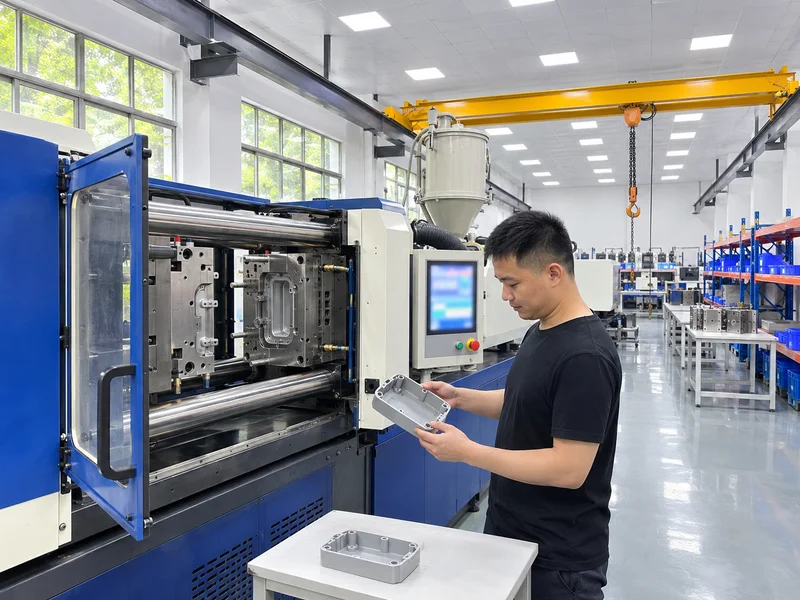
A typical sequence:
- T1: basic setup, short shots, viscosity curve, cavity balance.
- T2: after tool changes, pressure drop, gate freeze and cooling studies.
- T3: process window or DOE, sample run, dimensional report.
- Approval: process sheet and window released with samples.
For example, a short-shot study at T1 may reveal one slow cavity. Fixing the gate before T2 saves later process work. Our standard mold quote includes up to 3 mold trials and 10-shot samples; process studies are planned according to project requirements.
Key Takeaway: Plan studies across the trials. Studies on an unfinished mold need repeating.
What Should the Process Record Include?
The scientific molding record should include enough data for another engineer to reproduce the process.
Record contents:
- Machine and screw data, including intensification ratio
- Study results, with charts and chosen settings
- Process window, with upper and lower limits
- Setup sheet, in plastic terms where possible
- Material data, including drying conditions
- Part results, such as weights and critical dimensions
For example, a setup sheet that lists fill time and plastic pressure, not only screw speed percentage, can be used on a different press. Our quality control and inspection process can include process records with trial reports, and a control plan links key settings to checks.
Key Takeaway: Ask for the record, not just the claim. “We use scientific molding” means little without data.
How Do You Ask a Supplier for Process Studies?
You ask a supplier for scientific molding by stating which studies you need and what evidence you expect at approval.
Include in the RFQ or project plan:
- Critical dimensions and their tolerances
- Required studies, such as gate freeze and process window
- Evidence format, such as charts and a setup sheet
- Machine transfer needs, if the mold will move
- Approval criteria, such as capability on critical dimensions
For example, “provide gate freeze study, cosmetic process window and dimensional results at window corners” is clear and testable. Process capability methods are described in statistical standards from bodies such as ISO.
Key Takeaway: Define the evidence up front. It is easier to plan than to add later.
FAQ
- Q: What is scientific molding?
- A data-driven method that sets injection molding parameters from structured studies and documents a process window.
- Q: Is scientific molding the same as decoupled molding?
- Decoupled molding is one part of scientific molding; scientific molding also includes studies such as viscosity, balance and process windows.
- Q: Which studies are most common?
- Viscosity curve, cavity balance, pressure drop, gate freeze, cooling time and process window studies.
- Q: Does every part need scientific molding?
- No. Simple, wide-tolerance parts may need only basic checks; high-risk parts benefit most.
- Q: What evidence should a supplier provide?
- Study charts, chosen settings, a process window and a setup sheet.
Conclusion
Scientific molding adds useful process evidence where tolerance, risk, volume or process transfer make variation costly. Choose studies by risk, run them across the mold trials and ask for a complete record. To plan the process evidence for your part, send your 3D model and 2D drawing to our engineers.