
Multi Axis CNC Turning: Features, Accuracy and Cost
Multi axis CNC turning combines turning with milling, drilling and sometimes a second spindle, so a rotational part can be completed in one machine. A mill-turn center can cut flats, cross holes, slots and off-center features while the part is still in the chuck. That removes setups, improves the relationship between features and often shortens lead time.
It is not always the cheapest route, however. For example, a simple shaft with one cross hole may be cheaper on a standard lathe plus a quick drilling operation. In contrast, a valve body with angled ports, flats and threads on both ends may be far cheaper and more accurate in one multi-axis setup. In this guide, we explain when multi axis CNC turning helps a rotational part, which features it handles, how it affects accuracy and cost, and what to send for a quote. For the basic choice between machines, see our guide to CNC lathe vs CNC mill.
Multi axis CNC turning uses lathes with live (driven) tools, a C-axis to index or rotate the spindle, often a Y-axis for off-center milling, and sometimes a sub-spindle to machine the back of the part. It completes turned parts with flats, cross holes, slots, polygons and angled features in one or two clampings. It helps most when parts have several milled features related to turned diameters, tight relationships between features, or high volumes where setup savings repeat. For simple turned parts or low-volume parts with few milled features, a standard lathe plus a milling operation may be cheaper.
In short: use multi-axis turning when milled features must relate closely to turned diameters, or when removing setups saves real time.
Key points:
- Capabilities: live tools, C-axis, Y-axis, sub-spindle.
- Benefit: fewer setups and better feature relationships.
- Limit: higher machine rate; not always cheaper for simple parts.
What Is Multi Axis CNC Turning?
Multi axis CNC turning is turning on a lathe that also has rotating tools and extra axes, so it can mill and drill as well as turn.
Common configurations:
- Live tooling: driven tools in the turret for drilling and milling
- C-axis: the main spindle can index or rotate under control
- Y-axis: tools move off-center for milling flats and pockets
- Sub-spindle: a second spindle picks up the part to machine the back
- B-axis: a tilting milling head on full mill-turn centers
For example, a hydraulic fitting with a hex, cross hole and threads at both ends can be completed in one cycle on a lathe with live tools and a sub-spindle. Our CNC turning service covers turned parts, and we review whether multi-axis or separate operations suit each part.
Key Takeaway: The more milled features a turned part has, the more multi-axis turning helps.
When Does Multi Axis CNC Turning Help a Rotational Part?
Multi axis CNC turning helps a rotational part when it removes setups, improves accuracy between features, or reduces handling at volume.
It helps when:
- Cross holes and flats must be positioned relative to turned diameters
- Features exist on both ends, handled by a sub-spindle
- Angled ports or off-center features are needed
- Volumes are medium to high, so setup savings repeat
- Lead time matters, because one machine replaces several operations
It helps less when:
- The part is a simple shaft or bushing
- Only one minor milled feature is needed
- Volume is very low, so programming time dominates
For example, a valve spool with radial holes that must align with grooves benefits strongly, because one clamping keeps them aligned. Our guide to tolerance for slip fit explains turned fits.
Key Takeaway: Ask how many setups each route needs. Fewer setups usually mean better accuracy.
Which Features Can Multi Axis CNC Turning Machine?
Multi axis CNC turning can machine most features that a separate mill would add to a turned part.
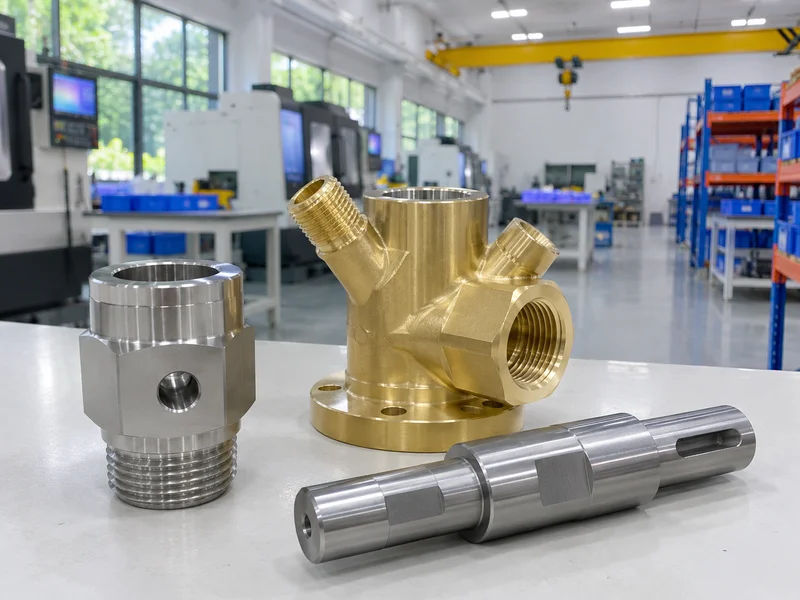
Typical features:
- Cross holes and radial holes
- Flats, hexes and polygons
- Keyways and slots
- Off-center holes and pockets (with Y-axis)
- Angled holes (with B-axis or angled tool holders)
- Engraving and marking
- Back-end features using a sub-spindle
For example, a hex on a fitting can be milled with live tools and C-axis indexing, instead of starting from hex bar. That allows round bar stock and a more consistent finish. Thread specifications for such fittings are covered in our guide to threaded holes.
Key Takeaway: Design milled features on turned parts with live-tool access in mind, such as standard cutter sizes.
How Does Multi Axis Turning Affect Accuracy?
Multi axis turning affects accuracy by keeping the part in one clamping, so relationships between features are held by the machine, not by re-fixturing.
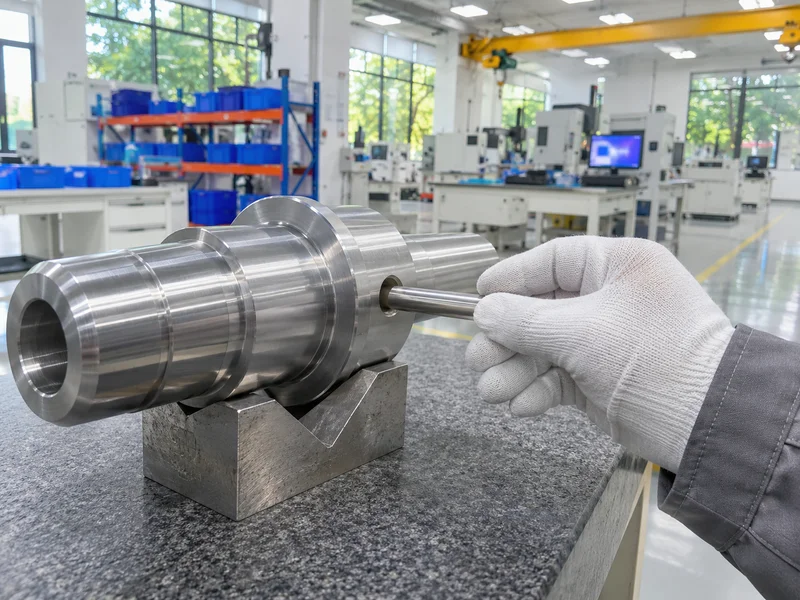
Accuracy benefits:
- Concentricity between turned diameters on both ends (with sub-spindle transfer)
- Position of cross holes relative to diameters and shoulders
- Angular position of flats relative to holes
- Less handling damage
However, the machine’s own accuracy, thermal stability and tool deflection still limit results. Finished tolerances are controlled per drawing, and position requirements are clearer when expressed with GD&T. Our guide to GD&T position tolerance explains how.
Key Takeaway: Use GD&T to state relationships between turned and milled features. Multi-axis turning holds them well.
How Does Multi Axis CNC Turning Affect Cost?
Multi axis CNC turning affects cost through a higher machine rate, offset by fewer setups, less handling and shorter lead time.
Cost comparison factors:
- Machine rate: higher for mill-turn centers.
- Setups: one instead of two or three.
- Cycle time: milling on a lathe may be slower than on a dedicated mill.
- Programming: more complex.
- Quantity: savings grow with volume.
For example, a part needing turning plus two milling setups may cost less overall on a multi-axis lathe at 500 pieces, but more at 10 pieces because of programming. We do not publish fixed prices; quotes follow the drawing and quantity. Our guide to rapid CNC machining explains how setups affect lead time.
Key Takeaway: Ask for quotes at two quantities. The cheaper route can change with volume.
What Should You Send for a Multi-Axis Turning Quote?
You should send the 3D model and 2D drawing first, then the information that defines critical relationships and volume.
Quote inputs:
- 3D model and 2D drawing
- Material and condition
- Critical features, such as concentricity and hole position
- Surface finish and edge-break requirements
- Thread specifications
- Quantity per order and per year
- Finish, such as plating or anodizing
For example, highlighting that two cross holes must align within 0.05 mm of a groove tells the supplier that one-clamping machining is needed. Our CNC machining services cover turned and milled parts from prototype to production. General tolerances such as ISO 2768 can cover non-critical features.
Key Takeaway: Mark the critical feature relationships on the drawing. They decide the machining route.
FAQ
- Q: What is multi axis CNC turning?
- Turning on a lathe with live tools and extra axes, so milling and drilling can be done in the same setup.
- Q: What is a mill-turn machine?
- A machine that combines full turning and milling, often with a B-axis milling head and a sub-spindle.
- Q: When is multi-axis turning worth it?
- When turned parts have several milled features, tight feature relationships or medium to high volumes.
- Q: Is multi-axis turning more accurate?
- It often is for relationships between features, because the part stays in one clamping.
- Q: Is multi-axis turning more expensive?
- The machine rate is higher, but fewer setups can make the total part cost lower.
Conclusion
Multi axis CNC turning helps rotational parts with milled features that must relate closely to turned diameters, and it removes setups at volume. For simple parts, standard turning plus milling may be cheaper. To review the best route for your part, send your 3D model and 2D drawing to our engineers.