
Mold Release Agent: Types, Problems and Alternatives
A mold release agent is a coating applied to mold surfaces so molded parts separate cleanly and easily. In injection molding, release agents are sprayed occasionally to help with sticking parts, difficult materials or new molds, while internal release additives are blended into some resins. Used well, a mold release agent saves scrap; used carelessly, it causes surface defects, paint and bonding failures, and contamination.
Most production molds should not need regular spraying. For example, a part that only ejects with frequent release spray may have insufficient draft, rough polish in the draw direction or a cooling imbalance that should be fixed in the tool. In this guide, we explain the mold release agent: types, when to use one, problems it can cause, how it affects secondary operations, alternatives that fix the root cause, and how to control its use. For ejection design, see our guide to ejector pin marks.
A mold release agent reduces adhesion between the molded part and the mold surface. Types include silicone-based sprays, non-silicone (paintable) sprays, semi-permanent coatings and internal release additives in the resin. In injection molding, release agents are best used sparingly for startup, trials or difficult materials. Overuse causes surface blemishes, buildup in vents and details, and poor adhesion for painting, printing, bonding or overmolding. Persistent sticking should be solved with draft, polish direction, ejection, cooling or mold coatings rather than routine spraying.
In short: release agents help occasionally; recurring sticking means the tool or process needs fixing.
Key points:
- Types: silicone, non-silicone, semi-permanent, internal.
- Risks: surface defects and poor adhesion downstream.
- Root cause: draft, polish, ejection and cooling.
What Is a Mold Release Agent?
A mold release agent is a substance that creates a thin barrier between the mold and the molded plastic, reducing adhesion.
Forms:
- Aerosol sprays applied to cavity and core
- Semi-permanent coatings that last many cycles
- Internal additives mixed into resin
- Permanent mold coatings such as PVD or PTFE-based layers
For example, a technician may spray a light coat on a new mold during the first trial shots, then stop once the process is stable. Our guide to injection mold components explains core and cavity surfaces.
Key Takeaway: Above all, a release agent is a helper, not a design feature.
Which Types of Mold Release Agent Are Used?
Types of mold release agent differ in how they work and what they affect downstream.
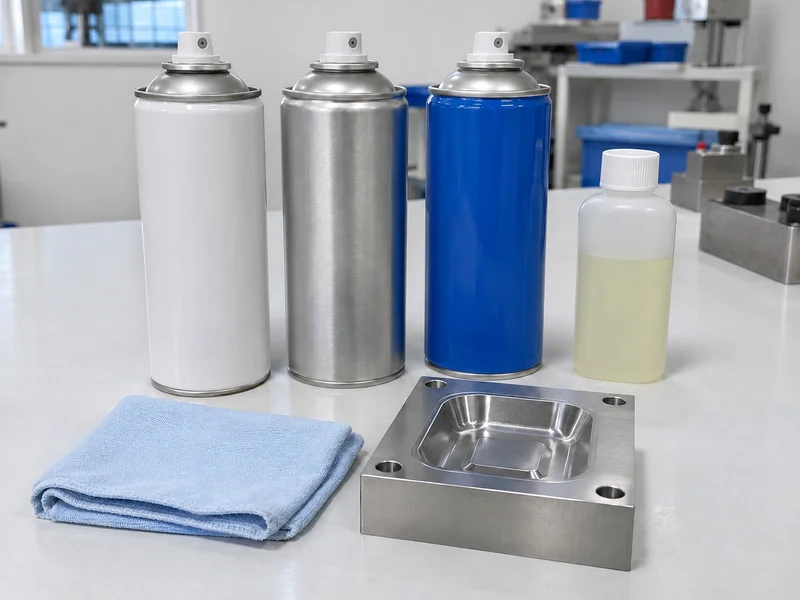
| Type | Advantages | Drawbacks |
|---|---|---|
| Silicone spray | Very effective, cheap | Hurts painting, printing, bonding |
| Non-silicone (paintable) spray | Compatible with secondary operations | Less release power |
| Semi-permanent coating | Lasts many cycles, less transfer | Needs proper application |
| Internal release additive | No spraying, consistent | Changes resin, may affect properties |
| Dry film (PTFE-type) | Clean, low transfer | Wears over time |
For example, a part that will be pad printed should never see silicone spray; a paintable non-silicone release is safer if any is used. Our guide to heat staking plastic covers printing and marking.
Key Takeaway: In other words, choose the type by what happens to the part after molding.
When Should a Mold Release Agent Be Used?
A mold release agent should be used only where it solves a short-term or material-specific problem.
Appropriate uses:
- Mold startup and first trial shots
- New molds before polish is fully broken in
- Sticky materials such as some TPEs and TPUs
- Temporary relief while a tool fix is planned
Avoid routine use when:
- Parts will be painted, printed, bonded or overmolded
- Optical or cosmetic surfaces are involved
- Medical-style or food-contact parts have cleanliness limits
For example, a TPE grip that sticks during trial may need light release while the core texture and draft are adjusted. Our guide to TPE injection molding process explains TPE sticking.
Key Takeaway: For this reason, treat routine spraying as a sign that something needs fixing.
What Problems Can a Mold Release Agent Cause?
A mold release agent can cause several quality problems when overused.
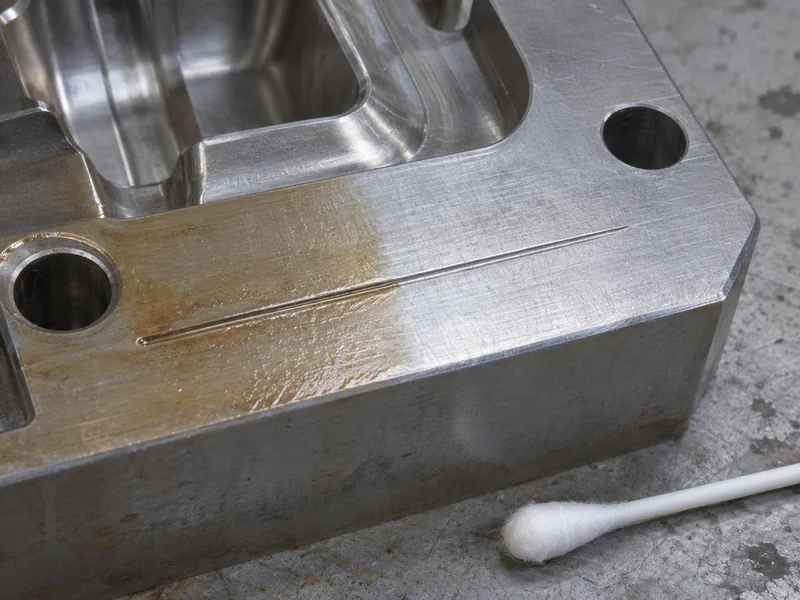
- Surface blemishes: streaks, haze, spots
- Buildup in vents, fine details and textures
- Poor adhesion of paint, ink, adhesives and overmolds
- Contamination of clean parts
- Dimensional effects in very fine details
- Inconsistent ejection when application varies
For example, release buildup in vents can cause burn marks at the end of fill, creating a new defect. Our guide to injection mold venting explains vent maintenance.
Key Takeaway: Overall, release overuse often creates more defects than it solves.
How Do You Fix Sticking Without Spraying?
You fix sticking without spraying by correcting the cause in the tool, design or process.
Root-cause fixes:
- Increase draft, especially on textured walls
- Polish in the draw direction
- Improve ejection: more pins, sleeves, stripper plates or air poppets
- Balance cooling so parts shrink onto the right half
- Reduce packing that forces parts into the cavity
- Apply permanent coatings such as PVD or nickel-PTFE on difficult cores
For example, a deep core that holds parts too tightly may release cleanly after polishing in the draw direction and adding an air poppet. Our guide to draft angle guidelines explains draft.
Key Takeaway: Equally, fix sticking at the tool so production does not depend on spray.
How Should Mold Release Agent Use Be Controlled?
Mold release agent use should be controlled through approval, records and process rules.
Controls:
- Approved products listed for each part
- Silicone-free rule for parts with secondary operations
- Application rules: when, where and how much
- Records of use during trials and production
- Mold cleaning to remove buildup
For example, a process sheet that says “no release agent in production; non-silicone release allowed only during startup, max 3 shots” prevents silent overuse. Our plastic injection molding service records such rules when required. Chemical safety information for release agents is regulated under REACH, described by ECHA.
Key Takeaway: As a rule, write release agent limits into the process sheet.
Should Customers Specify Release Agent Requirements?
Customers should specify release agent requirements when parts have downstream operations or cleanliness needs.
Specification items:
- Release agent allowed or not
- Silicone-free requirement
- Approved product list
- Cleanliness or residue limits
- Testing, such as adhesion tests for printed parts
For example, “No silicone-based release agents; parts must pass cross-hatch ink adhesion test” protects a printed housing. Our quality control and inspection process records such tests when specified.
Key Takeaway: Finally, put “silicone-free” on the drawing for painted or printed parts.
FAQ
- Q: What is a mold release agent?
- A coating or additive that reduces adhesion between the mold and the molded part.
- Q: Is mold release needed in injection molding?
- Not usually in stable production; it is used at startup or for difficult materials.
- Q: Why avoid silicone release agents?
- They can prevent paint, ink, adhesives and overmolds from bonding.
- Q: How do you stop parts sticking without release agent?
- Increase draft, polish in the draw direction, improve ejection and balance cooling.
- Q: Can release agent cause defects?
- Yes: streaks, buildup in vents, burn marks and adhesion failures.
Conclusion
A mold release agent is useful at startup or for difficult materials, but routine use hides tool problems and harms downstream operations. Fix sticking at the tool, choose silicone-free products when needed and control use in the process sheet. To review a sticking problem, send your 3D model and 2D drawing to our engineers.