
Purging Compound: Types and How to Purge Effectively
A purging compound is a cleaning material run through an injection molding machine’s barrel, screw and hot runner to remove previous resin, color and degraded material. It speeds up color and material changes, reduces black specks and contamination, and cuts the amount of scrap compared with purging by the next production resin alone. For molders running many colors or materials on the same press, purging is a daily operation that affects quality and cost.
Purging is often done by habit rather than method. For example, purging a dark PA66 to a white PBT with virgin PBT alone may take many kilograms and still leave streaks, while a suitable purging compound and correct procedure can clear it much faster. In this guide, we explain purging compound: types, when to purge, how to purge effectively, purging hot runners, preventing contamination and black specks, and what to record. For specks, see our guide to black specks injection molding.
A purging compound cleans the barrel, screw, nozzle and hot runner during color changes, material changes and shutdowns. Main types are mechanical purging compounds (abrasive or high-viscosity carrier resins that scrub surfaces) and chemical purging compounds (foaming or reactive agents that loosen residues). Purging is most effective at the right temperature, with screw rotation and back pressure varied to sweep all surfaces. Hot runners need compounds suitable for their gates and flow paths. Good practice reduces changeover scrap, black specks and color streaks, and records the procedure for each resin change.
In short: use the right purging compound and a defined procedure to change materials faster and cleaner.
Key points:
- Types: mechanical and chemical.
- Uses: color changes, material changes, shutdowns.
- Results: less scrap and fewer specks.
What Is a Purging Compound?
A purging compound is a material designed to clean residues from molding machine barrels, screws and hot runners.
When it is used:
- Color changes, especially dark to light
- Material changes between incompatible resins
- Shutdowns to leave a stable material in the barrel
- Removing degraded material that causes specks
- Hot runner cleaning
For example, changing from black PC/ABS to white PC/ABS without purging can leave grey streaks for many shots. A purging compound clears residues faster. Our plastic injection molding service plans color changes in production scheduling.
Key Takeaway: Above all, purging is a planned changeover step, not a last resort.
Which Types of Purging Compound Exist?
Types of purging compound clean in different ways.
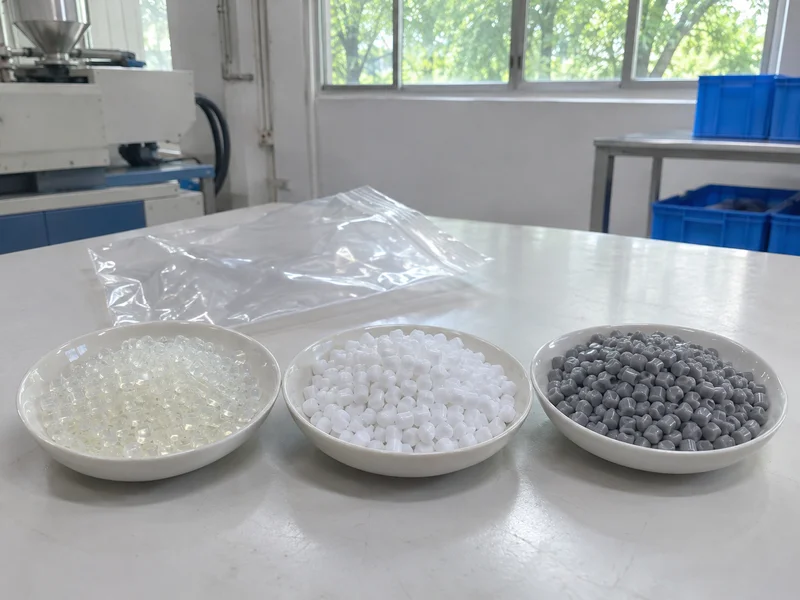
| Type | How it works | Best for |
|---|---|---|
| Mechanical | Scrubs with high viscosity or fillers | Color changes, general cleaning |
| Chemical | Foams or reacts to lift residues | Hot runners, carbon deposits |
| Ready-to-use | Pre-compounded | Simple handling |
| Concentrate | Mixed with carrier resin | Flexibility, cost control |
| Engineering-grade | Rated for high temperatures | PC, PA, PPS, PEEK |
For example, a high-temperature purging grade is needed when cleaning a barrel used for PPS. Purging compound safety data are covered under REACH, with information available from ECHA.
Key Takeaway: In other words, match the compound to the resin temperature and the residue type.
When Should You Use a Purging Compound?
You should use a purging compound when residues would otherwise cause long changeovers or defects.
Typical triggers:
- Dark-to-light color changes
- Changing between incompatible resins, such as PC to POM
- Before shutdowns with heat-sensitive resins
- Recurring black specks or color streaks
- After running flame-retardant or filled grades
For example, leaving POM in a hot barrel during a long stop risks degradation; purging and shutting down with a stable material prevents it. Our guide to POM injection molding explains POM’s heat sensitivity.
Key Takeaway: For this reason, write purging steps into changeover and shutdown procedures.
How Do You Purge Effectively?
You purge effectively by preparing the machine and varying conditions so the compound sweeps all surfaces.
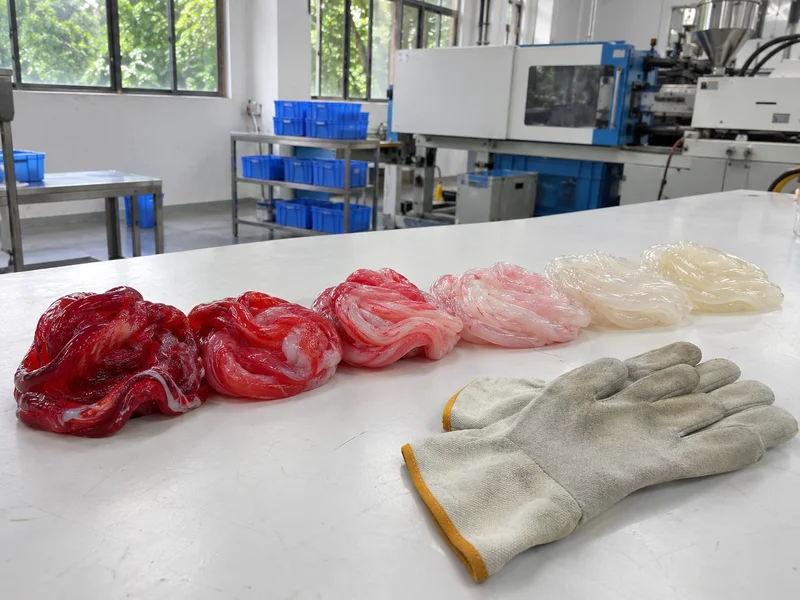
Typical procedure:
- Empty the hopper and run the barrel down.
- Set temperature to the compound’s recommended range.
- Introduce purging compound.
- Vary screw speed and back pressure to scrub surfaces.
- Shoot purge shots until clean.
- Run the new resin to flush the compound.
- Check first parts for color and specks.
For example, alternating high screw speed with short pauses can loosen residue from flights and the check ring. Our guide to splay in injection molding explains degradation marks.
Key Takeaway: Overall, a defined procedure purges faster than random extra shots.
How Should Hot Runners Be Purged?
Hot runners should be purged with compounds and methods suited to their channels and gates.
Considerations:
- Compound must pass the gates without blocking them
- Chemical or low-viscosity compounds for narrow channels
- Temperature suitable for the hot runner and resin
- Shooting into the mold with care, or open-mold purging
- Valve gates may need specific procedures
For example, a valve-gated multi-cavity mold may be purged through the gates with a compatible chemical compound to clear color from the manifold. Our guide to the hot runner system explains hot runner design.
Key Takeaway: Equally, check hot runner maker guidance before purging.
How Do You Prevent Contamination and Black Specks?
You prevent contamination and black specks by combining purging with good machine and material practice.
Prevention:
- Clean hoppers, dryers and conveyors during changes
- Limit residence time for heat-sensitive resins
- Avoid dead spots in barrels and hot runners
- Regular screw and check ring inspection
- Purge before shutdowns
For example, recurring black specks may come from a worn check ring trapping degraded material; replacing it solves the source. Our guide to injection molding defects and solutions maps defect causes.
Key Takeaway: As a rule, purging removes residue, but maintenance removes its cause.
What Should Be Recorded for Purging?
Purging should be recorded so changeovers are repeatable and their cost is known.
Records:
- Compound type and amount
- Temperatures and procedure
- Number of purge shots
- First good part after change
- Scrap amount during changeover
For example, a changeover log showing that dark-to-light changes take 3 kg of compound and 20 shots helps plan production order. Our quality control and inspection process includes first-part checks after changeovers.
Key Takeaway: Finally, record purging so changeovers improve over time.
FAQ
- Q: What is a purging compound?
- A material used to clean barrels, screws and hot runners during color or material changes.
- Q: What is the difference between mechanical and chemical purging?
- Mechanical compounds scrub; chemical compounds foam or react to lift residues.
- Q: When should purging compound be used?
- For color and material changes, shutdowns and recurring specks or streaks.
- Q: Can purging compound clean hot runners?
- Yes, with suitable compounds and procedures.
- Q: Does purging stop black specks?
- It removes residue; maintenance and residence time control stop the cause.
Conclusion
A purging compound shortens color and material changes and reduces contamination when the type, temperature and procedure are right. Combine purging with good machine maintenance and record the results. To review a molding program, send your 3D model and 2D drawing to our engineers.