
17-4 PH Stainless Steel: Conditions, Machining and Aging
17-4 PH stainless steel is a precipitation-hardening martensitic stainless steel that combines good corrosion resistance with high strength after a simple aging heat treatment. That combination makes it popular for machined shafts, valve components, pump parts, fittings, fasteners, robotics parts and instrument components that need more strength than 304 or 316 but more corrosion resistance than alloy steel.
Its condition matters as much as its grade. For example, 17-4 PH machined in Condition A and then aged to H900 reaches very high strength, but the part shrinks slightly during aging, which must be allowed for on tight bores. In this guide, we explain 17-4 PH stainless steel: composition, heat treatment conditions, properties, corrosion resistance, machining, dimensional change during aging and how to specify it. For austenitic grades, see our guide to 304 stainless steel versus 316 stainless steel.
17-4 PH stainless steel (UNS S17400, EN 1.4542) contains about 15–17.5% chromium, 3–5% nickel, 3–5% copper and small niobium. It is supplied solution annealed (Condition A) and strengthened by aging at about 480–620 °C to conditions such as H900, H1025 or H1150, giving yield strengths from roughly 1,000 to over 1,150 MPa (H900 highest, H1150 toughest). Corrosion resistance is roughly comparable to 304 in many environments. It machines reasonably well in Condition A or overaged conditions, is magnetic, and shrinks slightly (about 0.04–0.06%) during aging.
In short: 17-4 PH gives stainless corrosion resistance with high strength after a simple aging treatment.
Key points:
- Strength: much higher than 304/316.
- Conditions: H900 (strongest) to H1150 (toughest).
- Aging: small, predictable shrinkage.
What Is 17-4 PH Stainless Steel?
17-4 PH stainless steel is a precipitation-hardening stainless steel strengthened by copper-rich precipitates formed during aging.
Composition (typical):
| Element | Approx. % |
|---|---|
| Chromium | 15.0–17.5 |
| Nickel | 3.0–5.0 |
| Copper | 3.0–5.0 |
| Niobium + tantalum | 0.15–0.45 |
| Carbon | ≤0.07 |
For example, the name “17-4” refers to roughly 17% chromium and 4% nickel. Specifications such as ASTM A564 for bar are published by ASTM International.
Key Takeaway: Above all, copper precipitates give 17-4 PH its strength.
What Are the Heat Treatment Conditions of 17-4 PH Stainless Steel?
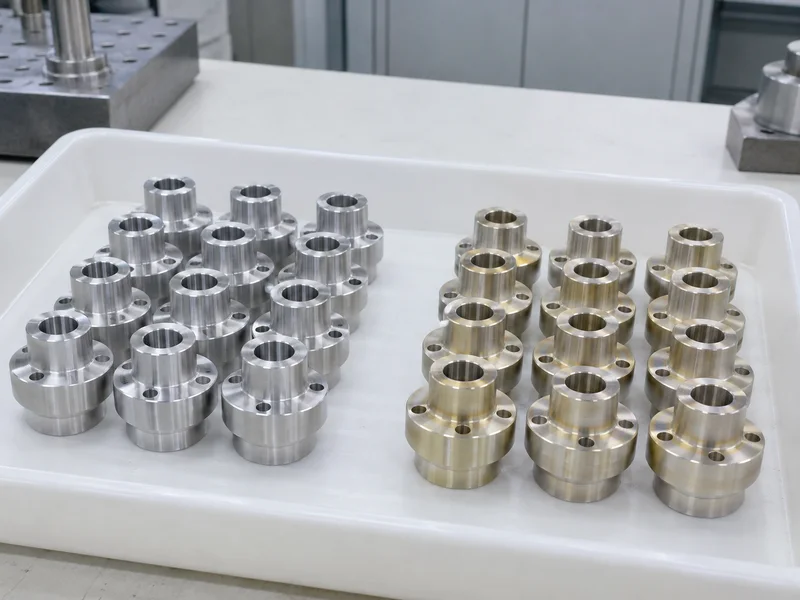
The heat treatment conditions of 17-4 PH stainless steel trade strength for toughness.
| Condition | Aging temperature (approx.) | Strength | Toughness |
|---|---|---|---|
| Condition A | Solution annealed | Moderate | Good, machinable |
| H900 | ~480 °C | Highest | Lowest |
| H1025 | ~550 °C | High | Better |
| H1075 | ~580 °C | Medium-high | Good |
| H1150 | ~620 °C | Lower | Highest, better stress-corrosion resistance |
For example, a highly loaded pin might use H900, while a part exposed to stress-corrosion risk may use H1150. Our guide to heat treatment of steel explains heat treatment sequences.
Key Takeaway: In other words, choose the condition by strength vs toughness.
How Do 17-4 PH Properties Compare With Other Stainless Steels?
17-4 PH properties compare with other stainless steels as a high-strength option with moderate corrosion resistance.
| Grade (typical) | Yield strength | Corrosion resistance | Machinability |
|---|---|---|---|
| 304 | ~215 MPa (annealed) | Good | Moderate |
| 316 | ~205 MPa (annealed) | Very good | Moderate |
| 303 | ~240 MPa | Fair | Good |
| 17-4 PH H900 | ~1,170 MPa | Good (≈304) | Moderate |
| 420 (hardened) | High | Fair | Moderate |
For example, a valve stem that bends in 316 may be redesigned in 17-4 PH H1025 without enlarging the diameter. Our guide to is stainless steel a ferrous material explains magnetism.
Key Takeaway: For this reason, use 17-4 PH when strength matters more than maximum corrosion resistance.
How Does 17-4 PH Stainless Steel Machine?
17-4 PH stainless steel machines reasonably well, best in Condition A or overaged conditions.
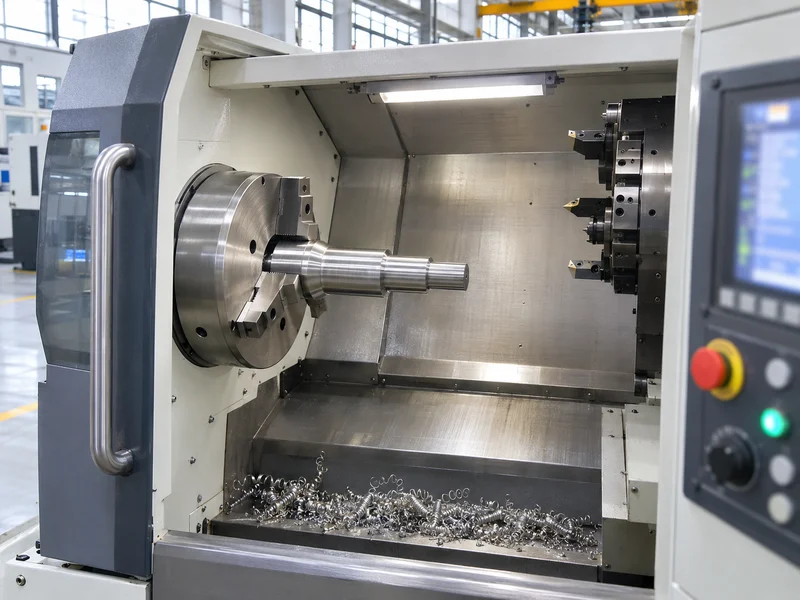
Machining guidance:
- Condition A: machinable, then age to final strength
- H1150: machinable with good results
- H900: harder, slower machining
- Tools: sharp coated carbide, rigid setups
- Coolant: good flow to control heat
For example, a fitting can be machined in Condition A, aged to H1025 and then finish-machined on critical bores if needed. Our CNC machining services machine stainless steels including precipitation-hardening grades.
Key Takeaway: Overall, plan whether to machine before or after aging.
How Does Aging Change 17-4 PH Dimensions?
Aging changes 17-4 PH dimensions because the precipitation reaction causes slight contraction.
Facts:
- Typical shrinkage: about 0.04–0.06% for H900; less for higher-temperature aging
- Uniform and predictable in most cases
- Tight features: machine with allowance or finish after aging
- Discoloration: light oxide may need removal or passivation
For example, a 50 mm length shrinking 0.05% changes about 0.025 mm, enough to affect a precision bore. Our guide to tight tolerance machining explains allowances.
Key Takeaway: Equally, allow for aging shrinkage on tight features.
How Corrosion Resistant Is 17-4 PH Stainless Steel?
17-4 PH stainless steel is corrosion resistant enough for many industrial environments, roughly similar to 304.
Considerations:
- General corrosion: good in atmospheric and mild chemical environments
- Chlorides: less resistant than 316
- Stress corrosion: H1150 and higher aging improve resistance
- Passivation: improves surface corrosion resistance after machining
For example, a marine fitting exposed to seawater may perform better in 316 or duplex, while a pump shaft in fresh water suits 17-4 PH. Our guide to electropolishing compares it with passivation.
Key Takeaway: As a rule, check chloride exposure before choosing 17-4 PH.
How Should 17-4 PH Stainless Steel Be Specified?
17-4 PH stainless steel should be specified with grade, condition, standard and finish.
Specification items:
- Grade and standard, such as “17-4 PH per ASTM A564”
- Final condition, such as H1025
- Hardness range for verification
- Machining stage relative to aging, if critical
- Passivation requirement
- Material certificate
For example, “17-4 PH, ASTM A564, H1025, 35–40 HRC, passivate per ASTM A967, EN 10204 3.1 certificate” is complete. Our quality control and inspection process supplies certificates and hardness checks on request.
Key Takeaway: Finally, always state the heat treatment condition, not just “17-4 PH”.
FAQ
- Q: What is 17-4 PH stainless steel?
- A precipitation-hardening stainless steel with about 17% chromium and 4% nickel.
- Q: What does H900 mean?
- A condition aged at about 480 °C (900 °F), giving the highest strength.
- Q: Is 17-4 PH magnetic?
- Yes, it is martensitic and magnetic.
- Q: Is 17-4 PH more corrosion resistant than 316?
- No; it is roughly similar to 304 and less resistant to chlorides than 316.
- Q: Does 17-4 PH change size during aging?
- Yes, it shrinks slightly, about 0.04–0.06% for H900.
Conclusion
17-4 PH stainless steel delivers high strength with useful corrosion resistance through a simple aging treatment. Choose the condition for strength or toughness, plan machining around aging and specify condition and passivation clearly. To review a stainless part, send your 3D model and 2D drawing to our engineers.