
Electropolishing vs Mechanical Polishing and Passivation
Electropolishing removes a thin, controlled layer of metal from a part’s surface by making it the anode in an electrolytic bath. The result is a smoother, brighter, cleaner surface with improved corrosion resistance, especially on stainless steel. It is widely used for machined stainless parts in food, fluid, semiconductor, laboratory and medical-style equipment, where cleanability and corrosion resistance matter.
Electropolishing is often confused with passivation. For example, a 316L fitting may be passivated to remove free iron and strengthen its oxide layer, but if it must also be easy to clean and visibly smooth, electropolishing is the better finish. In this guide, we explain electropolishing: how it works, its benefits, how it compares with passivation and mechanical polishing, effects on dimensions and edges, suitable materials, design tips and how to specify it. For other finishes, see our guide to metal surface finishing techniques.
Electropolishing is an electrochemical process that dissolves surface metal from a part acting as the anode in an acid electrolyte, removing typically a few to about 20–40 µm depending on time and current. It preferentially removes peaks, smoothing micro-roughness, brightening the surface, deburring fine edges and enriching chromium at the surface of stainless steel, which improves corrosion resistance and cleanability. It differs from passivation, which chemically removes free iron without measurable material removal. Dimensions, edges and threads change slightly, so allowances and masking must be planned. Common standards include ASTM B912.
In short: electropolishing smooths, brightens and protects stainless surfaces by removing a thin metal layer.
Key points:
- Removes material: a few to tens of microns.
- Benefits: smoothness, cleanability, corrosion resistance.
- Not passivation: different process and effect.
How Does Electropolishing Work?
Electropolishing works by dissolving metal from the part’s surface in an electrolytic cell.
Process steps:
- Clean and degrease the part.
- Rack the part as the anode.
- Immerse in a controlled acid electrolyte.
- Apply current for a set time.
- Rinse and dry thoroughly.
Peaks dissolve faster than valleys because current density is higher there, so the surface levels and brightens. For example, a machined 316L manifold with fine tool marks becomes smoother and brighter after electropolishing. Electropolishing of stainless steel is described in ASTM International standard B912.
Key Takeaway: Above all, the process removes peaks preferentially.
What Are the Benefits of Electropolishing?
The benefits of electropolishing include smoothness, cleanability, corrosion resistance and deburring.
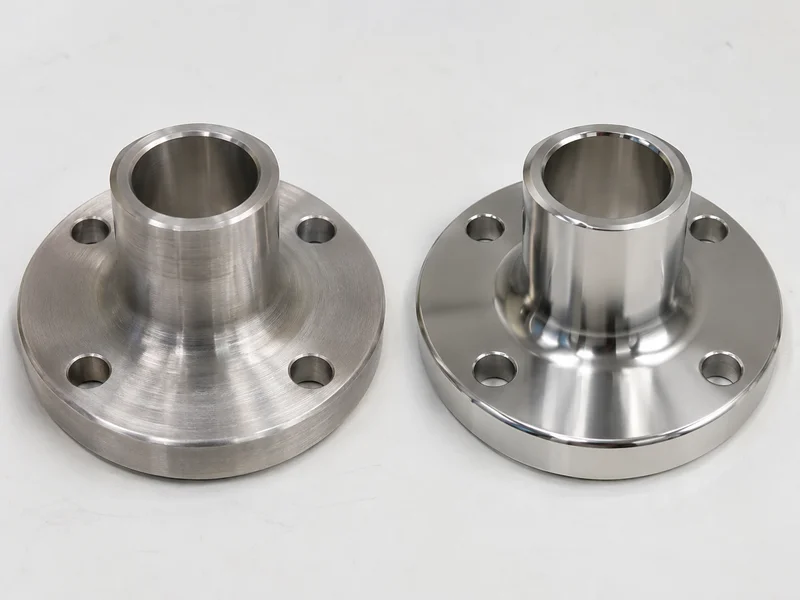
- Lower micro-roughness and bright appearance
- Easier cleaning and less product adhesion
- Improved corrosion resistance from chromium-rich surface
- Micro-deburring of fine edges
- Removal of embedded contamination
- Reduced particle shedding in clean applications
For example, a fluid fitting for a clean process line is electropolished to reduce sites where residue or bacteria could stick. Our guide to 303 vs 304 stainless explains grade effects on finish.
Key Takeaway: In other words, it improves both surface function and appearance.
What Is the Difference Between Electropolishing and Passivation?
The difference between electropolishing and passivation is material removal and surface leveling.
| Feature | Electropolishing | Passivation |
|---|---|---|
| Process | Electrochemical | Chemical (nitric or citric acid) |
| Material removal | A few to tens of µm | Negligible |
| Surface smoothing | Yes | No |
| Appearance | Bright | Unchanged |
| Corrosion improvement | Strong | Good |
| Dimensional effect | Small, measurable | None |
For example, a precision stainless shaft with tight fits may be passivated only, while a sanitary part is electropolished. Passivation of stainless parts is described in ASTM A967.
Key Takeaway: For this reason, choose passivation for dimension-critical parts and electropolishing for cleanability.
How Does Electropolishing Compare With Mechanical Polishing?
Electropolishing compares with mechanical polishing by how the surface is smoothed.
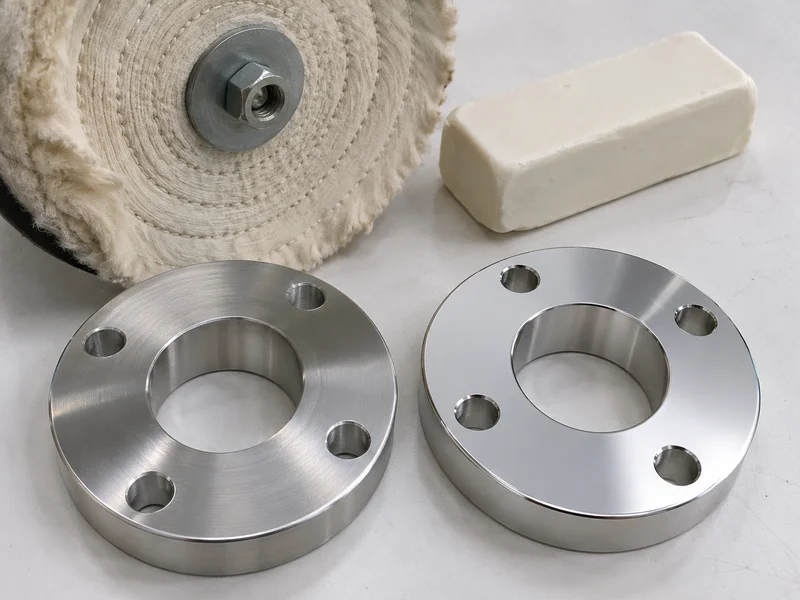
- Mechanical polishing: abrasives smear and fold the surface; can embed particles; good for macro-smoothness
- Electropolishing: removes material without smearing; improves micro-roughness; reaches complex shapes evenly
- Combination: mechanical polishing first, then electrolytic finishing for the best finish
For example, a mirror-like sanitary surface is often mechanically polished and then electropolished. Our guide to CNC machining surface finish explains roughness values.
Key Takeaway: Overall, the electrolytic process reaches recesses that mechanical polishing cannot.
How Does Electrolytic Polishing Affect Dimensions and Features?
Electropolishing affects dimensions and features because it removes metal unevenly by current density.
Effects:
- General surfaces: small uniform removal
- Edges and corners: more removal, slight rounding
- Holes and recesses: less removal
- Threads: may loosen slightly
- Tight fits: need allowance or masking
For example, a 10 µm removal on a bore increases its diameter by about 20 µm, which matters for an H7 fit. Our guide to tight tolerance machining explains allowances.
Key Takeaway: Equally, specify removal amount and masking for critical features.
Which Materials Can Be Electropolished?
Many metals can be electropolished, with stainless steel the most common.
- Stainless steels: 304, 316, 316L, 17-4 PH and others
- Carbon steel: possible, less common
- Aluminum: possible with suitable electrolytes
- Copper and brass
- Titanium and nickel alloys
For example, a 316L instrument part is a typical electropolishing candidate, while 303 may show sulfide inclusions after polishing. Our guide to 17-4 PH stainless steel covers precipitation-hardening grades.
Key Takeaway: As a rule, low-inclusion stainless grades give the best electropolished finish.
How Should Electropolishing Be Specified?
Electropolishing should be specified with standard, removal amount, finish and masking.
Specification items:
- Standard, such as ASTM B912
- Material removal range, for example 5–10 µm
- Target roughness, for example Ra ≤0.4 µm
- Masked areas and tight features
- Cleanliness and packaging
- Inspection of appearance and roughness
For example, “Electropolish per ASTM B912, removal 5–10 µm, Ra ≤0.4 µm on wetted surfaces, mask threads” is complete. Electropolishing is available through our qualified finishing suppliers as part of our CNC machining services, and our quality control and inspection process checks finish when specified.
Key Takeaway: Finally, state removal amount so machining allowances can be planned.
FAQ
- Q: What is electropolishing?
- An electrochemical process that removes a thin surface layer to smooth and brighten metal.
- Q: Is electropolishing the same as passivation?
- No. Passivation removes free iron without measurable removal; electropolishing removes metal and smooths.
- Q: How much material does electropolishing remove?
- Typically a few to tens of microns, depending on time and current.
- Q: Does electropolishing improve corrosion resistance?
- Yes, especially on stainless steel.
- Q: Can threads be electropolished?
- Yes, but they may loosen slightly, so masking may be needed.
Conclusion
Electropolishing smooths, brightens and protects stainless and other metals by removing a thin, controlled layer. Use it for cleanability and corrosion resistance, plan allowances and masking, and specify removal and finish clearly. To review finishing on your part, send your 3D model and 2D drawing to our engineers.