
303 vs 304 Stainless: How to Pick the Best One
303 vs 304 stainless is a classic choice for machined parts. Both are austenitic 18-8 stainless steels, but 303 contains added sulfur that makes it much easier to machine, while 304 has better corrosion resistance, weldability and formability. For small precision turned and milled parts, such as fittings, shafts, pins, screws and instrument components, the choice affects cycle time, cost, finish and how the part performs in service.
Picking 303 by default can backfire. For example, a 303 fitting may machine quickly but pit in a chloride-rich wash-down environment where 304 or 316 would survive. In this guide, we compare 303 vs 304 stainless: composition, machinability, corrosion resistance, welding and forming, finishing, cost and how to choose and specify the right grade. For a higher-alloy comparison, see our guide to 304 stainless steel versus 316 stainless steel.
303 vs 304 stainless: 303 (UNS S30300, 1.4305) is 304-type stainless with about 0.15% or more sulfur added to form manganese sulfide inclusions that break chips, making it one of the most machinable stainless steels (often about 70–80% of free-cutting brass references vs about 40–45% for 304). The sulfur reduces corrosion resistance, especially to pitting, and makes 303 poor for welding and cold forming. 304 (S30400, 1.4301) machines more slowly and work-hardens, but offers better corrosion resistance, weldability and formability. Choose 303 for high-volume machined parts in mild environments; 304 where corrosion, welding or forming matter.
In short: 303 for easy machining; 304 for corrosion, welding and forming.
Key points:
- 303: sulfur-added, machines fast.
- 304: better corrosion and weldability.
- Cost: 303 often cheaper per finished part.
What Is the Difference Between 303 vs 304 Stainless?
The difference between 303 vs 304 stainless is mainly the added sulfur in 303.
| Property (typical) | 303 | 304 |
|---|---|---|
| Chromium | ~17–19% | ~18–20% |
| Nickel | ~8–10% | ~8–10.5% |
| Sulfur | ≥0.15% | ≤0.03% |
| Machinability | Excellent | Moderate |
| Corrosion resistance | Fair–good | Good |
| Weldability | Poor | Excellent |
| Magnetic (annealed) | No | No |
For example, both grades look identical on the shelf, so material certificates and markings matter. Stainless bar specifications such as ASTM A582 (303) and A276 (304) are published by ASTM International.
Key Takeaway: Above all, sulfur is what makes 303 different.
303 vs 304 Stainless: How Does Machinability Compare?
Machinability compares strongly in favor of 303.
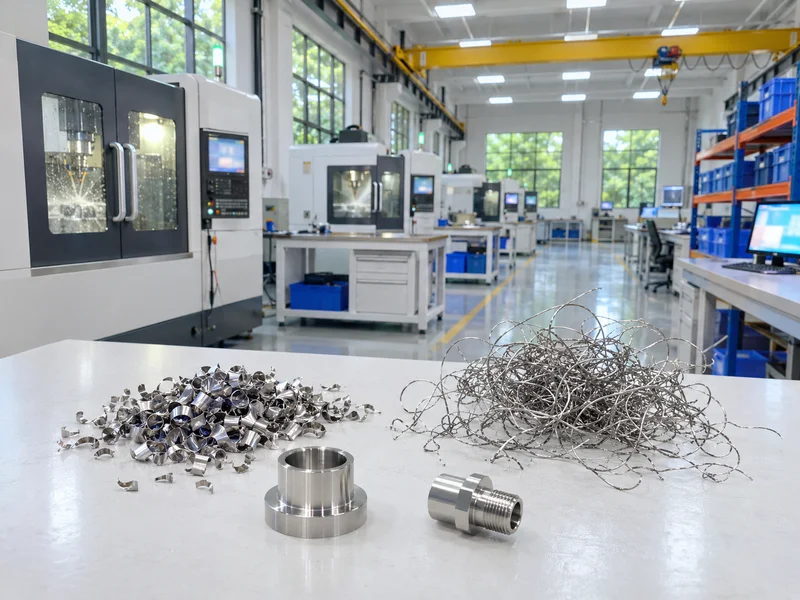
- 303: short broken chips, higher cutting speeds, better tool life, good finish
- 304: stringy chips, work hardening, slower speeds, more tool wear
- Threads and small holes: easier in 303
- Deburring: 303 forms smaller burrs
For example, a turned fitting with cross holes and threads can run noticeably faster in 303 than in 304 on a Swiss-type lathe. Our guide to swiss machining explains small-part turning.
Key Takeaway: In other words, 303 saves cycle time on complex machined parts.
303 vs 304 Stainless: How Does Corrosion Resistance Compare?
Corrosion resistance compares in favor of 304.
- 303: sulfide inclusions act as pitting initiation sites
- 304: better resistance in humid, chloride and mild chemical environments
- Passivation: helps both, but 303 needs careful passivation to avoid flash attack
- Neither is ideal in seawater; consider 316 or better
For example, a 303 part in a food plant cleaned with chlorinated cleaners may show pitting, while 304 or 316 performs better. Our guide to electropolishing explains surface treatments.
Key Takeaway: For this reason, avoid 303 in corrosive or wash-down environments.
How Do Welding and Forming Compare?
Welding and forming compare clearly in favor of 304.
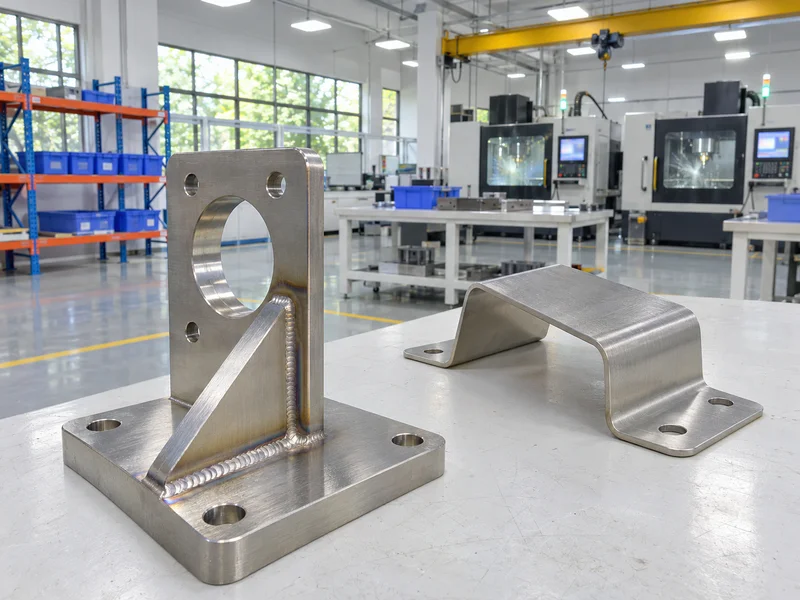
- 303: sulfur causes hot cracking when welded; not recommended for welding
- 304: excellent weldability
- 303: poor cold forming, can crack when bent or swaged
- 304: good formability for bending, swaging and flaring
For example, a part that must be welded to a bracket or swaged onto a tube should be 304. Our guide to is stainless steel a ferrous material explains austenitic grades.
Key Takeaway: Overall, never specify 303 for welded or formed parts.
How Do Finishing and Appearance Compare?
Finishing and appearance compare with some differences.
- Machined finish: 303 often gives a better as-machined finish
- Polishing and electropolishing: 304 gives a more uniform bright surface; 303 inclusions may show
- Passivation: both, with care for 303
- Bead blasting: both give uniform matte
For example, a decorative bright part may look better in 304 after electropolishing. Our guide to metal surface finishing techniques compares options.
Key Takeaway: Equally, choose 304 for high-gloss or electropolished parts.
How Do Cost and Availability Compare?
Cost and availability are similar for raw material, but finished part cost often favors 303.
- Bar price: similar
- Machining time: lower for 303
- Tool cost: lower for 303
- Availability: both widely stocked in bar
- Sheet and tube: 304 far more common
For example, a batch of 5,000 small fittings may cost noticeably less in 303 because of shorter cycles and tool life. Our guide to CNC machining cost for custom parts explains cost drivers.
Key Takeaway: As a rule, 303 is cheaper per machined part when corrosion allows.
How Should You Choose and Specify 303 or 304?
You should choose and specify 303 or 304 by machining needs, environment and joining.
Decision guide:
- Complex machined part, mild environment → 303
- Corrosive, humid or wash-down environment → 304 (or 316)
- Welded or formed part → 304
- Polished or electropolished appearance → 304
Specification items:
- Grade and standard, such as “303 per ASTM A582” or “304 per ASTM A276”
- Condition, such as annealed
- Passivation requirement
- Material certificate
For example, “303 stainless, ASTM A582, passivate per ASTM A967, EN 10204 3.1” is complete. Our CNC machining services machine 303, 304 and 316 parts to drawing.
Key Takeaway: Finally, write the exact grade; “stainless” alone is not a specification.
FAQ
- Q: What is the difference between 303 and 304 stainless?
- 303 has added sulfur for machinability; 304 has better corrosion resistance and weldability.
- Q: Is 303 easier to machine than 304?
- Yes, much easier, with shorter chips and better tool life.
- Q: Can 303 stainless be welded?
- It is not recommended; it tends to hot crack.
- Q: Which is more corrosion resistant?
- 304.
- Q: When should I use 303?
- For complex machined parts in mild environments without welding or forming.
Conclusion
303 vs 304 stainless depends on machining versus service needs. Choose 303 for fast, economical machining in mild environments, and 304 for corrosion, welding, forming and bright finishes. To review material for your part, send your 3D model and 2D drawing to our engineers.