
5052 vs 6061: How to Pick the Best One
5052 vs 6061 is a common aluminum choice for brackets, covers, enclosures and machined parts. 5052 is a non-heat-treatable aluminum-magnesium alloy known for excellent formability and corrosion resistance, especially in marine and humid environments. 6061 is a heat-treatable aluminum-magnesium-silicon alloy with higher strength, better machinability and very good anodizing response. The right choice depends on whether the part is mainly bent, mainly machined, or exposed to corrosive conditions.
Many parts end up in the wrong alloy because of supply habits. For example, a tightly bent sheet bracket in 6061-T6 may crack at the bend, while the same bracket in 5052-H32 bends cleanly; conversely, a machined manifold in 5052 cuts gummy and holds tolerances less well than 6061-T6. In this guide, we compare 5052 vs 6061: composition and tempers, strength, formability, machinability, corrosion, anodizing, welding and cost, and how to choose. For 6061 details, see our guide to aluminium alloy 6061 properties.
5052 vs 6061: 5052 (Al-2.5Mg-0.25Cr) is non-heat-treatable, strengthened by cold work (tempers such as H32), with yield strength around 190 MPa, excellent formability and very good corrosion resistance, including in seawater. 6061 (Al-Mg-Si) is heat-treatable; in T6 it has yield strength around 275 MPa, good machinability, very good anodizing and weldability, but poorer formability in T6. Choose 5052 for bent sheet parts and marine exposure; choose 6061-T6 or T651 for machined parts, higher strength and decorative anodizing.
In short: 5052 bends and resists corrosion; 6061 machines, anodizes and is stronger.
Key points:
- 5052: formable, corrosion resistant, not heat-treatable.
- 6061: stronger, machinable, heat-treatable.
- Choice: sheet forming vs machining.
What Is the Difference Between 5052 vs 6061?
The difference between 5052 vs 6061 is their alloy system and how they gain strength.
| Property (typical) | 5052-H32 | 6061-T6 |
|---|---|---|
| Main alloying | Magnesium, chromium | Magnesium, silicon |
| Strengthening | Cold work | Heat treatment |
| Yield strength | ~190 MPa | ~275 MPa |
| Tensile strength | ~230 MPa | ~310 MPa |
| Formability | Excellent | Fair (T6) |
| Machinability | Fair (gummy) | Very good |
| Corrosion resistance | Excellent (marine) | Good |
For example, a marine cover bent from sheet suits 5052, while a precision housing milled from plate suits 6061. Aluminum alloy specifications such as ASTM B209 are published by ASTM International.
Key Takeaway: Above all, 5052 is a forming alloy; 6061 is a machining alloy.
5052 vs 6061: How Does Strength Compare?
5052 and 6061 compare in strength in favor of 6061 when heat treated.
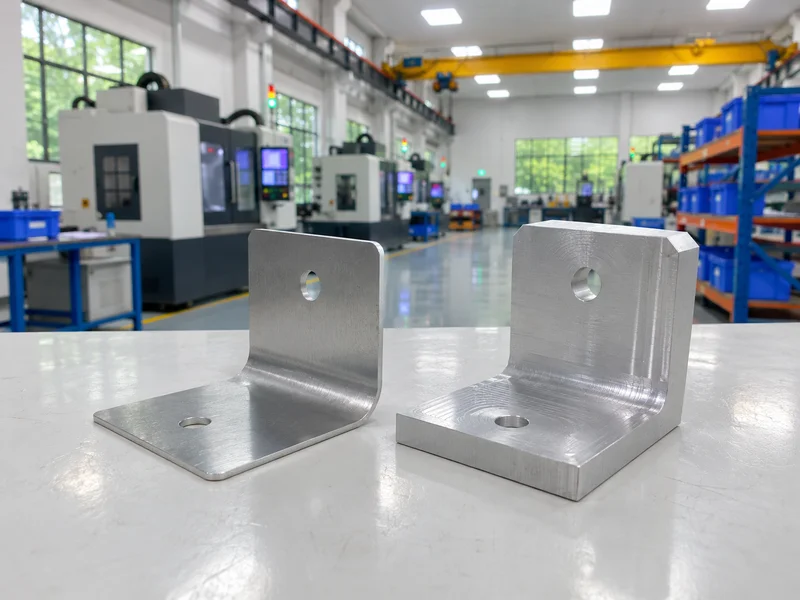
- 6061-T6: about 40–45% higher yield strength than 5052-H32
- 5052: strength depends on temper (H32, H34, H38)
- 6061-T4: softer, better for forming, then aged
- Fatigue: 5052 has good fatigue performance
For example, a structural bracket that must carry load with thin sections usually needs 6061-T6. Our guide to 6061 T6 aluminum vs 7075 T6 compares stronger options.
Key Takeaway: In other words, choose 6061 when strength drives the design.
5052 vs 6061: How Do Forming and Machining Compare?
Forming and machining compare differently: 5052 forms better, 6061 machines better.
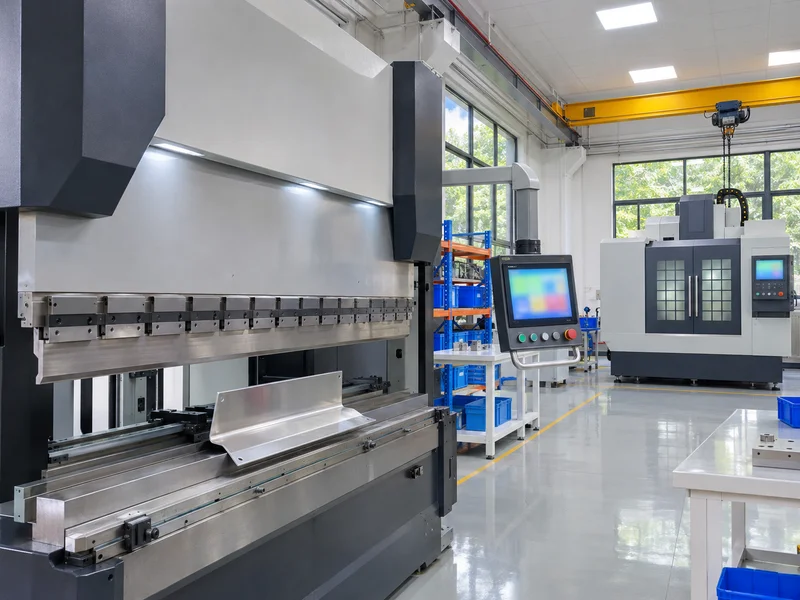
Forming:
- 5052-H32: tight bend radii, little cracking
- 6061-T6: larger bend radii needed; may crack
- 6061-O or T4: formable, then heat treated
Machining:
- 6061-T6: clean chips, good finish, stable dimensions
- 5052: softer and gummy; built-up edge and burrs more likely
For example, a 2 mm sheet bent at a 1 mm inside radius works in 5052-H32 but may crack in 6061-T6. Our guide to deburring explains burr control on soft alloys.
Key Takeaway: For this reason, match the alloy to the main manufacturing process.
How Do Corrosion Resistance and Anodizing Compare?
Corrosion resistance favors 5052; decorative anodizing favors 6061.
- 5052: excellent in seawater and humid air, no copper content
- 6061: good general corrosion resistance; small copper content
- Anodizing 6061: uniform, attractive colors
- Anodizing 5052: good protection, sometimes less uniform appearance
For example, an outdoor marine enclosure in 5052 resists salt spray well, while a cosmetic black anodized cover is usually 6061. Our guide to hard anodizing explains anodizing options.
Key Takeaway: Overall, use 5052 for marine exposure and 6061 for cosmetic anodizing.
How Do Welding and Cost Compare?
Welding and cost compare as follows:
- Welding 5052: excellent; no strength loss from heat treatment because it is not heat-treated
- Welding 6061: good, but the heat-affected zone loses T6 strength unless re-treated
- Material cost: similar, varies with form
- Availability: 5052 common as sheet; 6061 common as plate, bar and extrusion
For example, a welded sheet tank is often 5052, while a machined block is 6061 plate. Our guide to 6063 vs 6061 aluminum covers extrusion alloys.
Key Takeaway: Equally, consider product form availability when choosing.
Which Parts Suit 5052 and Which Suit 6061?
Parts suit 5052 or 6061 according to process and environment.
5052 suits:
- Bent sheet brackets and covers
- Marine and outdoor enclosures
- Fuel and fluid tanks
- Welded sheet assemblies
6061 suits:
- Machined housings and manifolds
- Precision brackets and fixtures
- Structural parts
- Anodized cosmetic parts
For example, an electronics chassis might combine a 5052 bent cover with a 6061 machined base. Our CNC machining services machine 6061 and other aluminum alloys; sheet forming is evaluated per project.
Key Takeaway: As a rule, sheet parts lean 5052; machined parts lean 6061.
How Should 5052 or 6061 Be Specified?
5052 or 6061 should be specified with alloy, temper, form and finish.
Specification items:
- Alloy and temper, such as 5052-H32 or 6061-T651
- Product form: sheet, plate, bar, extrusion
- Finish: anodizing type, chem film
- Material certificate, if required
- Equivalents, such as EN AW-5052 or EN AW-6061
For example, “6061-T651 plate, black anodize Type II” or “5052-H32 sheet, 2 mm, clear anodize” are complete. Our quality control and inspection process supplies material certificates on request.
Key Takeaway: Finally, always include the temper with the alloy.
FAQ
- Q: What is the difference between 5052 and 6061 aluminum?
- 5052 is formable and corrosion resistant; 6061 is stronger, machinable and heat-treatable.
- Q: Which is stronger, 5052 or 6061?
- 6061-T6 is stronger than 5052-H32.
- Q: Which is better for bending?
- 5052, especially in H32 temper.
- Q: Which is better for machining?
- 6061-T6 machines more cleanly.
- Q: Which is better for marine use?
- 5052 generally resists seawater better.
Conclusion
5052 vs 6061 comes down to process and environment: 5052 for bent sheet and marine exposure, 6061 for machined, stronger and cosmetically anodized parts. Specify alloy, temper and form clearly. To review aluminum selection for your part, send your 3D model and 2D drawing to our engineers.