
Cold Runner Systems: Cross-Sections and Balancing
A cold runner is the unheated channel system in an injection mold that carries molten plastic from the sprue to the gates. The plastic in the runner cools and is ejected with the parts each cycle, then removed and either reground or scrapped. Cold runners are simple, robust and low in tooling cost, which makes them common for small and medium molds, frequent color changes and many engineering resins.
Runner design changes part quality more than many buyers expect. For example, a four-cavity mold with an unbalanced runner may fill the near cavities first and overpack them, giving different part weights and dimensions per cavity. In this guide, we explain cold runner systems: parts, layouts, cross-sections, balancing, two-plate and three-plate options, pros and cons, and when to choose a hot runner instead. For the comparison, see our guide to hot runner vs cold runner molds.
A cold runner system consists of the sprue, primary and secondary runners, cold slug wells and gates. Runners are cut into the mold plates, usually as full-round or trapezoidal channels, sized for the resin and part weight and balanced so each cavity fills at the same time. Two-plate molds eject runner and parts together; three-plate molds separate the runner automatically using pin-point gates. Cold runners cost less and handle color changes and heat-sensitive resins well, but they add material waste, regrind handling and cooling time compared with hot runners.
In short: cold runners are simple and flexible; the cost is runner waste and cycle time.
Key points:
- Parts: sprue, runners, cold slug wells, gates.
- Design: full-round, balanced runners.
- Trade-off: low tool cost vs material waste.
What Is a Cold Runner System?
A cold runner system is the set of unheated channels that feeds plastic to the cavities.
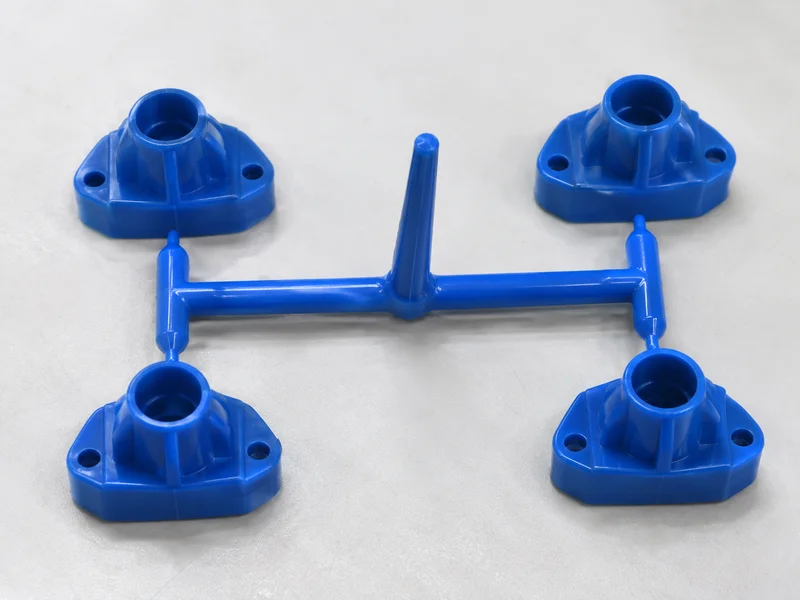
- Sprue: from the nozzle into the mold
- Primary runner: from the sprue toward cavities
- Secondary runners: branches to each cavity
- Cold slug wells: catch the cold front of the melt
- Gates: small openings into the cavity
For example, in a two-cavity mold the sprue feeds a primary runner that splits into two secondary runners, each with an edge gate. Our guides to sprue bushing and injection molding gate types explain the ends of the system.
Key Takeaway: Above all, the cold runner is part of the shot, so it affects fill and weight.
Which Cross-Sections Are Used?
Cold runners use a few standard cross-sections with different flow efficiency.
| Cross-section | Flow efficiency | Note |
|---|---|---|
| Full round | Best | Cut in both plates; needs alignment |
| Trapezoidal | Good | Cut in one plate; common choice |
| Modified trapezoid | Good | Close to round flow |
| Half round | Poor | Avoid for precision parts |
| Rectangular | Poor | Avoid |
For example, a precision connector mold often uses full-round runners for the lowest pressure loss and best balance. Runner diameter is set by part weight, wall thickness and resin, then checked in simulation where needed.
Key Takeaway: In other words, full-round runners give the best flow for the material used.
How Are the Runners Balanced?
Cold runners are balanced so every cavity fills and packs at the same time.
- Natural balance: equal flow length and branches to each cavity (H-pattern)
- Artificial balance: different runner or gate sizes to equalize fill
- Melt flipping devices for shear imbalance in multi-cavity molds
- Short shots used to check balance at the trial
For example, an 8-cavity H-pattern runner looks balanced on paper but can still fill inner cavities first due to shear heating; a short-shot study shows it. Our guide to multi cavity injection molding explains balancing. Machine and mold interface data are covered by EUROMAP recommendations.
Key Takeaway: For this reason, prove runner balance with short shots, not only drawings.
How Do Two-Plate and Three-Plate Cold Runners Differ?
Two-plate and three-plate cold runners differ in gate position and runner separation.
| Feature | Two-plate | Three-plate |
|---|---|---|
| Gate position | On the parting line (edge, sub) | Anywhere on the part (pin-point) |
| Runner removal | With parts; degate manually or with sub gates | Automatic separation |
| Mold cost | Lower | Higher |
| Cycle | Shorter mold opening | Longer opening stroke |
For example, a round cap gated in the center uses a three-plate mold with a pin-point gate. Our guide to mold base types explains the plates.
Key Takeaway: Overall, use a three-plate cold runner when the gate must be away from the parting line.
What Are the Advantages and Limits of a Cold Runner?
A cold runner has clear advantages and limits.
Advantages:
- Lower mold cost and simpler maintenance
- Easy color and material changes
- Good for heat-sensitive resins that degrade in hot runners
- Robust with fewer electrical parts
Limits:
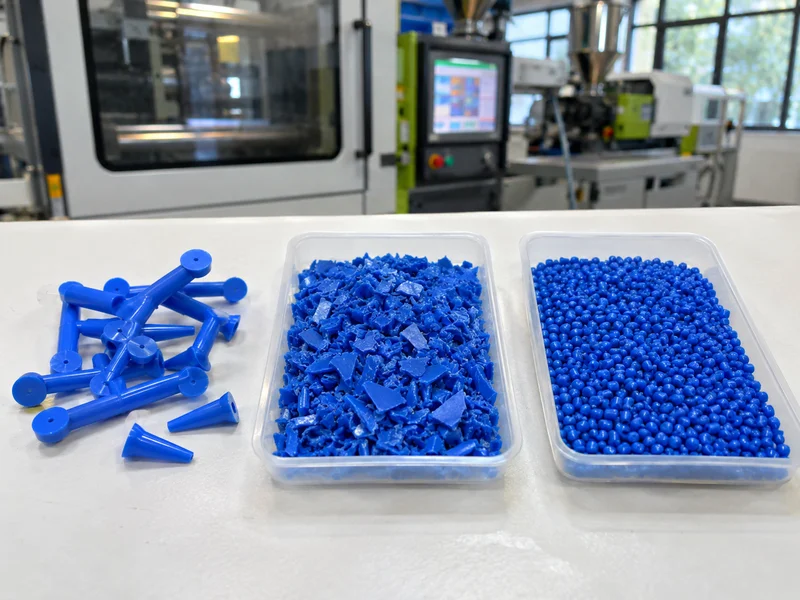
- Runner waste in every shot
- Regrind handling and possible property loss
- Longer cooling if the runner is thicker than the part
- Higher shot weight and pressure
For example, a small PC part with a 3 g runner per 2 g part wastes more resin than the part itself unless the runner is reground. Our guide to estimating molding cycle time shows how runners affect cycle.
Key Takeaway: Equally, compare runner waste against hot runner cost at your annual volume.
When Should You Choose a Cold Runner Instead of a Hot Runner?
You should choose a cold runner when volume, resin and flexibility favor it.
- Low and medium volumes where hot runner cost is not repaid
- Frequent color changes
- Heat-sensitive resins such as some PVC and POM grades
- Small parts where a hot runner nozzle is hard to fit
- Budget-limited projects
For example, a 50,000-part-per-year housing in three colors often stays on a cold runner, while a 2,000,000-part cap moves to a hot runner system. Our injection mold manufacturing team builds both hot and cold runner molds.
Key Takeaway: Finally, decide runner type during DFM, because it changes the whole mold base.
FAQ
- Q: What is a cold runner?
- An unheated channel system that carries plastic to the gates and is ejected each cycle.
- Q: What is the best runner cross-section?
- Full round has the best flow efficiency.
- Q: Can cold runner material be reused?
- Often, as regrind within limits set by the part specification.
- Q: What is a three-plate cold runner mold?
- A mold with an extra plate that separates the runner from pin-point gated parts.
- Q: Is a cold runner cheaper than a hot runner?
- The mold is cheaper; part cost depends on volume and waste.
Conclusion
A cold runner system is simple, flexible and low in mold cost. Use full-round, balanced runners, choose two-plate or three-plate by gate position and compare waste with hot runner cost at your volume. To review the runner layout for your mold, send your 3D model and 2D drawing to our engineers.