
Core Pin Design: Types, Materials and Cooling
A core pin is a slender steel pin in an injection mold that forms a hole, bore or recess in the molded part. Core pins sit in the core or cavity side, the part shrinks onto them as it cools, and they must stay straight, cool and well-vented through every shot. They are among the most failure-prone details in small precision molds.
Small core pins fail in predictable ways. For example, a 1.2 mm pin forming a deep blind hole may bend under injection pressure and leave an off-center hole, while the same hole formed by a stepped pin supported in the opposite half stays straight. In this guide, we explain the core pin: what it does, types, materials, design rules, cooling and venting, how core pins relate to the mold cavity, and how to specify and maintain them. For ejecting around pins, see our guide to ejector sleeves.
A core pin forms holes and recesses in molded parts. Pins are made from hardened tool steel such as nitrided 1.2344 / H13, high-speed steel or, for very small sizes, carbide, and are often bought as standard components and ground to length. Design rules limit the unsupported length to a few times the diameter, add draft, support long pins in the opposite mold half, vent the pin tip, cool larger pins and make pins replaceable. The mold cavity and core around the pin set the part’s outer shape, while the pin sets its holes.
In short: keep core pins short, supported, vented, cooled and replaceable.
Key points:
- Function: form holes and recesses.
- Risks: bending, wear, heat, poor venting.
- Rules: length-to-diameter, support, draft, replaceability.
What Does a Core Pin Do in a Mold?
A core pin forms internal features that the main cavity and core cannot form directly.
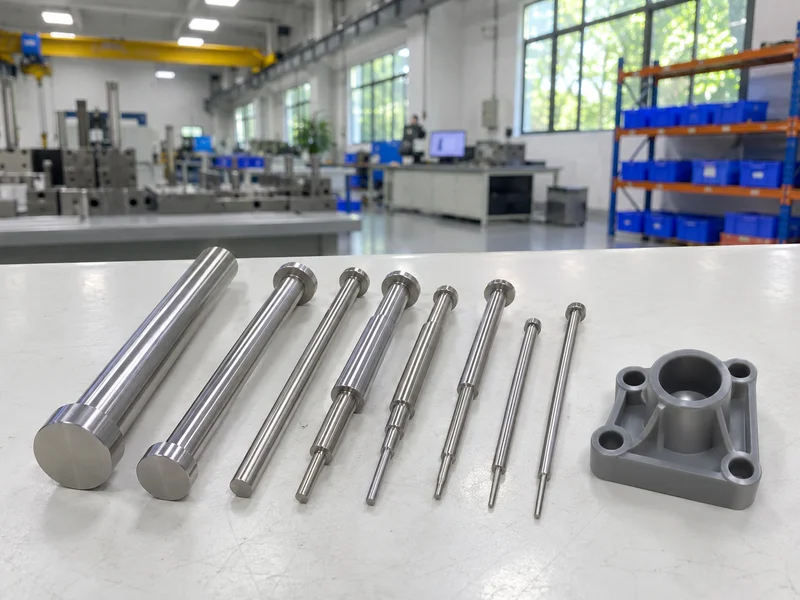
- Through holes for screws and pins
- Blind holes for bosses and inserts
- Recesses and small pockets
- Holes in side walls when mounted on slides
For example, a screw boss uses a core pin for its center hole and an ejector sleeve around the pin to push the boss off. Our guide to injection mold components shows where pins sit.
Key Takeaway: Above all, every hole in a molded part needs a core pin or a core feature.
What Types of Pin Are Used?
Several pin types are used depending on hole size and position.
| Type | Use |
|---|---|
| Straight core pin | Standard holes |
| Stepped core pin | Small working diameter with a stronger shank |
| Shoulder (headed) pin | Retained in a plate, easy to replace |
| Pin on a slide | Side holes |
| Cooled core pin | Larger pins with internal cooling |
For example, a 0.8 mm hole is made with a stepped pin whose shank is 3 mm. Standard pins are available from HASCO, Meusburger and DME catalogs and are ground to exact length; tool steel grades are specified by ASTM International.
Key Takeaway: In other words, choose a pin type that is strong where it is not forming the part.
Which Materials Are Used?
Pin materials are chosen for hardness, toughness and heat.
- 1.2344 / H13 nitrided: tough core, hard surface
- High-speed steel: stiffness for small diameters
- Through-hardened tool steel: about 58–60 HRC for wear
- Carbide: very small or very abrasive cases
- High-conductivity alloys: larger pins needing heat removal
For example, pins in a glass-filled PBT connector mold are often high-speed steel or carbide because the filler wears softer pins. Our guides to H13 tool steel and tool steel grades explain the steels.
Key Takeaway: For this reason, match pin material to resin abrasion and pin size.
What Are the Design Rules for a Core Pin?
The design rules for a core pin protect it from bending, sticking and wear.
- Unsupported length: keep to about 2–3 times the diameter for one-end support
- Support long pins in the opposite half for through holes
- Draft on the pin where function allows
- Radius at the pin root to reduce stress
- Balanced flow so melt does not push the pin sideways
- Replaceable mounting with a head or screw
For example, a long through hole can use two pins meeting in the middle, one from each side, with a small step where they meet. Our guide to injection molding wall thickness explains why gates and walls affect pin loading.
Key Takeaway: Overall, a well-supported pin keeps holes round and on position.
How Are the Pins Cooled and Vented?
Pins are cooled and vented to keep heat and trapped air under control.
- Venting at the pin tip through a small clearance or flat
- Bubblers or baffles inside larger pins
- High-conductivity inserts for small hot pins
- Cooling time set by the hottest pin, not the average
For example, a burn mark at the bottom of a blind hole usually means air is trapped at the pin tip. Our guides to injection mold venting and mold cooling channel design explain fixes.
Key Takeaway: Equally, hot pins lengthen cycles and distort holes, so plan their cooling.
How Do Core Pins Relate to the Mold Cavity?
Core pins and the mold cavity together form the full part geometry.
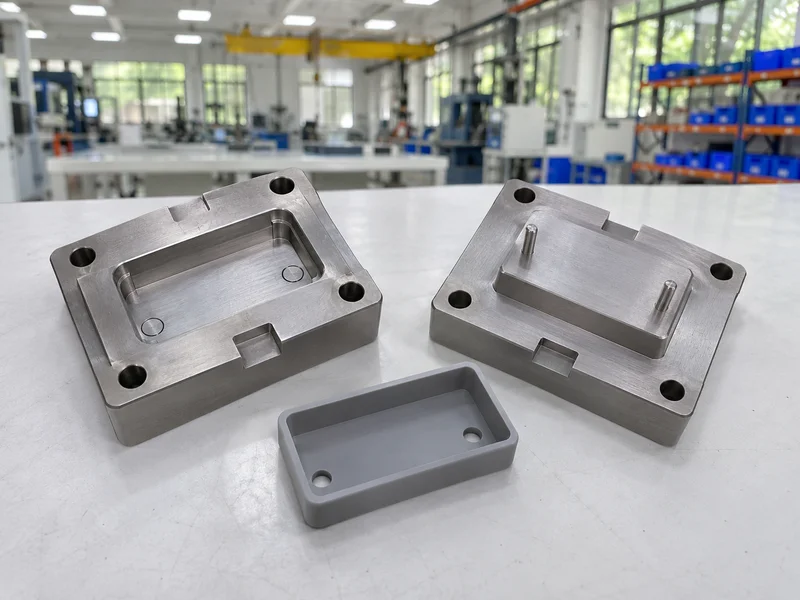
- Cavity: forms the outer surfaces, often the cosmetic side
- Core: forms the inner surfaces the part shrinks onto
- Core pins: form holes and recesses inside both
- Shutoffs: where pins touch the opposite side to form through holes
For example, a through hole in a cover is formed where a core pin from the core side shuts off against the mold cavity surface. Our guide to injection molding tool design explains the layout.
Key Takeaway: As a rule, design pin shutoffs with clearance and fit that prevent flash.
How Should Core Pins Be Specified and Maintained?
Core pins should be specified with size, material, treatment and spares, and checked during maintenance.
- Diameter, length and tolerance
- Material and hardness, such as nitrided 1.2344
- Draft and tip shape
- Spare pins for small and high-wear sizes
- Inspection for wear, bending and burrs
For example, a mold specification may state “core pins HSS, 60–62 HRC, 10 spares of each diameter under 2 mm”. Our precision mold making page explains how small inserts and pins are verified.
Key Takeaway: Finally, keep spare pins for every small size in the mold.
FAQ
- Q: What is a core pin?
- A pin in the mold that forms a hole or recess in the part.
- Q: Why do core pins bend?
- Long unsupported length, unbalanced flow or high injection pressure.
- Q: What material are core pins made of?
- Usually nitrided hot-work steel, high-speed steel or carbide for small pins.
- Q: What is the difference between a core and a core pin?
- The core forms the inner shape; core pins form holes within it.
- Q: How do you stop flash around a core pin?
- Keep the fit tight and the shutoff well fitted, and replace worn pins.
Conclusion
A core pin forms holes and recesses and is one of the most sensitive details in a mold. Keep pins short and supported, choose the right material, vent and cool them, and keep spares. To review a part with small holes or deep bosses, send your 3D model and 2D drawing to our engineers.
For production support, explore our injection mold manufacturing service. You can also share your drawing for an engineering review.