
Graphite Electrode for EDM: Grades vs Copper and Design
A graphite electrode is the shaped tool used in sinker EDM to burn its form into hardened steel, made from fine-grain synthetic graphite that machines quickly, handles high current and resists heat. Graphite and copper are the two main electrode materials, and the right choice decides EDM speed, electrode wear, surface finish and the accuracy of ribs, cavities and sharp corners in molds.
Most mold shops use both. For example, a deep rib in a housing core may be roughed with a graphite electrode for speed, then finished with a second fine-grain graphite or copper electrode to reach the required surface and corner sharpness. In this guide, we explain graphite electrodes: why graphite is used, grades, graphite vs copper, design and undersize, machining, wear and finish, and how to plan electrodes for a mold. For the EDM process itself, see our guide to sinker EDM.
A graphite electrode is machined to the reverse shape of the feature, made slightly undersize by the spark gap, and fed into the steel in a dielectric oil bath. Graphite machines several times faster than copper, is light, keeps its shape at high current and has low thermal expansion, making it ideal for large and roughing electrodes. Copper gives finer finishes and lower wear in some finishing work and does not shed dust. Graphite grades are chosen by particle size, typically 1–10 µm for mold work. Roughing undersize is often about 0.2–0.4 mm per side and finishing about 0.03–0.1 mm per side.
In short: graphite for speed and size, copper for some fine finishes, with undersize matched to each pass.
Key points:
- Graphite: fast machining, high current, light.
- Copper: fine finish, no dust.
- Undersize: set by spark gap and pass.
Why Is a Graphite Electrode Used in EDM?
A graphite electrode is used because it machines fast and performs well under high current.
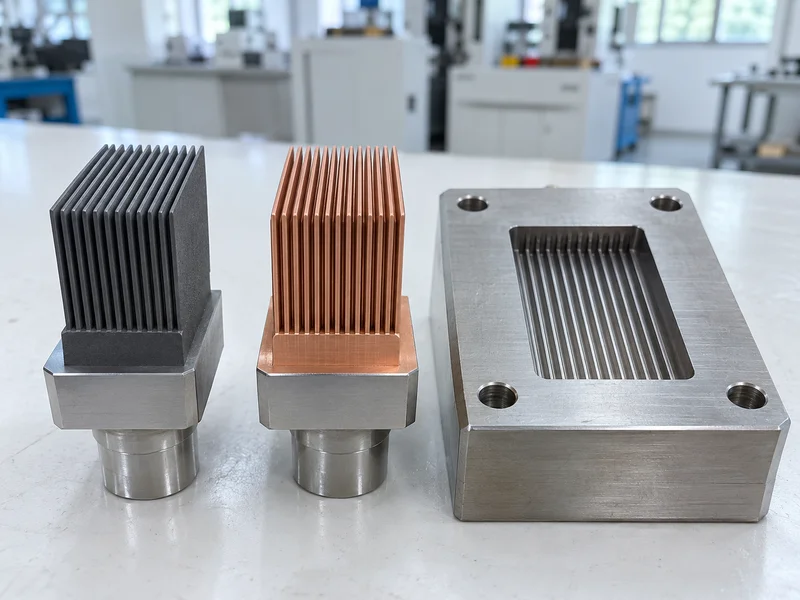
- Fast machining: often several times faster than copper
- Light weight: easy to handle on large electrodes
- Heat resistance: sublimates instead of melting
- Low thermal expansion: holds shape in long burns
- High current: fast roughing removal
For example, a large electrode for a TV-bezel-sized cavity is far lighter and cheaper in graphite than in copper. Our wire EDM services page describes our EDM and electrode work.
Key Takeaway: Above all, graphite makes large and roughing electrodes fast and affordable.
Which Graphite Grades Are Used?
Graphite grades are chosen mainly by particle size, density and strength.
| Grade (particle size) | Typical use |
|---|---|
| Coarse, about 10 µm and above | Roughing large cavities |
| Medium, about 5–10 µm | General mold work |
| Fine, about 2–5 µm | Detailed finishing |
| Ultra-fine, about 1–2 µm | Fine ribs, sharp detail, fine finish |
For example, thin 0.6 mm ribs need ultra-fine graphite so they do not chip during machining or EDM. Material properties are listed by graphite suppliers and standards bodies such as ASTM. Our guide to mold texture explains finish grades.
Key Takeaway: In other words, finer grades cost more but hold small details and fine finishes.
How Does Graphite Compare With Copper Electrodes?
Graphite compares with copper by speed, wear, finish and handling.
| Factor | Graphite | Copper |
|---|---|---|
| Machining speed | Fast | Slower, burrs |
| Weight | Light | Heavy |
| High-current roughing | Excellent | Good |
| Fine finish | Good with fine grades | Very good |
| Thin ribs | Good in fine grades | Can bend |
| Dust | Needs extraction | None |
| Cost | Lower for large shapes | Higher for large shapes |
For example, a polished mirror-finish area may be finished with copper, while the same mold’s deep ribs use graphite. Our guide to machinability of copper explains copper machining.
Key Takeaway: For this reason, many molds use graphite for roughing and fine graphite or copper for finishing.
How Is an EDM Electrode Designed?
An EDM electrode is designed from the part model with undersize and holding features.
- Shape: reverse of the feature to be burned
- Undersize: spark gap per pass, for example 0.3 mm roughing and 0.05 mm finishing per side
- Number of electrodes: roughing, semi-finishing and finishing
- Holder: standard reference system for repeatable setup
- Flushing: holes or paths for debris removal
- Reference faces: for measuring position
For example, a rib 1.0 mm wide may use a roughing electrode 0.4 mm wide and a finishing electrode 0.9 mm wide. Our guide to injection mold design software explains how electrodes are extracted in CAD.
Key Takeaway: Overall, plan electrode count and undersize together with the surface finish target.
How Are Graphite Electrodes Machined?
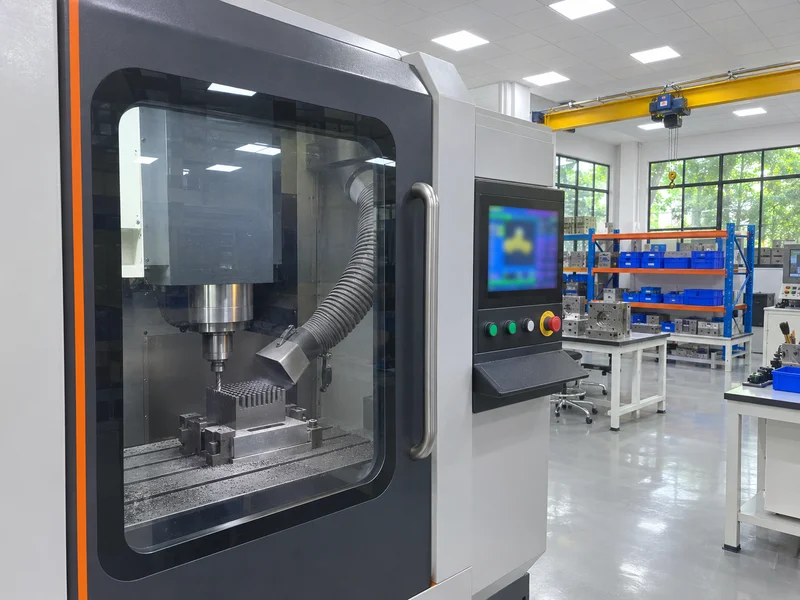
Graphite electrodes are machined on high-speed machining centers with dust control.
| Factor | Good practice |
|---|---|
| Machine | High spindle speed, sealed guides |
| Dust | Extraction or wet machining |
| Tools | Diamond-coated carbide |
| Thin ribs | Light passes, sharp tools |
| Inspection | Measure on CMM or optical system |
For example, graphite electrodes for our molds are cut on dedicated small-part machining centers, kept separate from steel machining. Our manufacturing capabilities page lists the equipment.
Key Takeaway: Equally, dust control matters as much as tool choice when cutting graphite.
How Do Electrode Wear and Finish Affect the Mold?
Electrode wear and finish settings decide final accuracy and surface.
- Corner wear: rounds sharp edges during roughing
- Finishing electrodes: restore corners and size
- Surface finish: set by spark energy and grade
- VDI texture: can be produced directly by EDM
- Orbiting: improves side finish and size control
For example, a VDI 27 texture on a cavity can be produced by finishing settings on the last electrode. Our guide to VDI 3400 explains texture grades.
Key Takeaway: As a rule, use a fresh finishing electrode for critical corners and textures.
How Should Electrodes Be Planned for a Mold?
Electrodes should be planned during mold design so EDM fits the schedule.
- Identify features that need EDM: ribs, corners, deep slots
- Choose material for each electrode
- Set undersize for roughing and finishing
- Count electrodes and holders
- Machine and inspect electrodes
- Record settings for future repairs
For example, keeping electrodes after mold approval makes later repairs of worn ribs faster. Our injection mold manufacturing page explains how EDM fits into mold building.
Key Takeaway: Finally, store key electrodes for future mold repairs and changes.
FAQ
- Q: What is a graphite electrode in EDM?
- A machined graphite tool that burns its shape into steel by sinker EDM.
- Q: Is graphite or copper better for EDM?
- Graphite for speed and size; copper for some fine finishes and no dust.
- Q: What is electrode undersize?
- The amount the electrode is smaller than the feature to allow for the spark gap.
- Q: Why does graphite need dust control?
- Machining creates fine conductive dust that harms machines and people.
- Q: How many electrodes does a feature need?
- Often one for roughing and one or two for finishing.
Conclusion
A graphite electrode makes sinker EDM fast and economical, with copper or fine-grain graphite for detailed finishing. Plan grades, undersize and electrode count during mold design. To review EDM for your mold or parts, send your 3D model and 2D drawing to our engineers.