
Plastic Handles and Knobs: Materials, Design, Mounting
Plastic handles are molded grips used on equipment, tools, appliances, furniture, cabinets and containers, ranging from simple pull handles to ergonomic soft-touch grips with metal inserts. Most are injection molded in PP, PA, ABS or glass-filled nylon, often with a TPE overmold, and custom plastic handles must carry the user’s pull or lift load without cracking, loosening or feeling uncomfortable.
Strength and comfort are designed together. For example, a solid 25 mm thick PP handle may sink and void inside, while a cored handle with ribs and a TPE overmold is lighter, stronger at the mounts and better to hold. In this guide, we explain plastic handles and plastic knobs: types, materials, design rules, mounting with inserts, molding options, testing and how to specify a custom part. For soft-touch grips, see our overmolding page.
Plastic handles and knobs are molded in PP, ABS, PA6 or PA66 (often with glass fiber), POM and phenolic or thermoset grades for heat. Thick grips are cored out or gas-assisted to avoid sink and voids. Mounting uses molded-in or heat-set brass inserts, through bolts or snap fits. Soft-touch grips use TPE overmolding or two-shot molding. Tests include pull strength, torque on mounts, drop and impact, heat for cookware and chemical exposure for cleaning agents.
In short: core out thick sections, reinforce the mounts and add soft-touch only where hands grip.
Key points:
- Materials: PP, ABS, PA GF, POM, TPE overmold.
- Mounting: brass inserts, bolts or snap fits.
- Key risk: sink and voids in thick grips.
What Types of Plastic Handles and Knobs Are Molded?
Many types of plastic handles and knobs are injection molded.
| Type | Typical use |
|---|---|
| Pull handles | Cabinets, machine doors, drawers |
| Bail and lifting handles | Buckets, cases, containers |
| Ergonomic grips | Power tools, garden tools, brushes |
| Cookware handles | Pots and pans, lids |
| Control knobs | Appliances, instruments, machines |
| Clamping knobs | Fixtures and jigs with threaded inserts |
For example, a machine guard door may use a glass-filled PA pull handle with two threaded inserts, while a cooker uses a heat-resistant knob. Our guide to appliance injection molding covers appliance knobs and handles.
Key Takeaway: Above all, the load, environment and user decide the handle type.
Which Materials Work Best for Grips?
Plastic handles use materials chosen for load, heat and feel.
- PP: low cost, chemical resistant, for household items
- ABS / PC-ABS: good finish for appliances and devices
- PA6 / PA66 GF: high strength for industrial and tool handles
- POM: stiff, low friction for knobs and moving parts
- Thermoset (phenolic, BMC): heat-resistant cookware handles
- TPE: soft-touch overmold for comfort and grip
For example, a pan handle near a flame often uses a thermoset, because most thermoplastics soften at those temperatures. Our guides to glass filled nylon and TPE injection molding explain two common choices.
Key Takeaway: In other words, a rigid core for strength and a soft skin for comfort is the most common combination.
How Should Plastic Handles Be Designed?
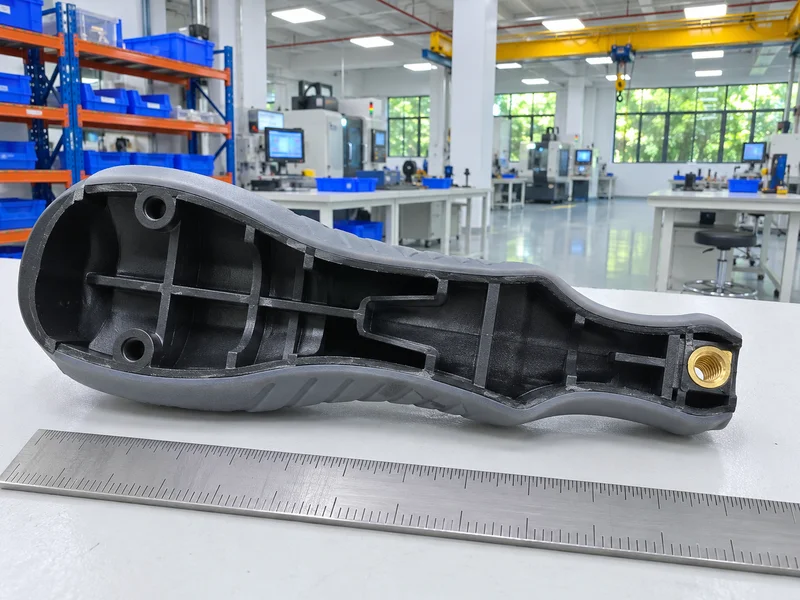
Plastic handles should be designed with cored sections and strong mounts.
| Design point | Guideline |
|---|---|
| Wall thickness | About 2.5–4 mm, cored or ribbed inside |
| Grip diameter | About 25–40 mm for a power grip |
| Mount areas | Thicker bosses with gussets and inserts |
| Radii | Generous radii to avoid stress and sharp edges |
| Draft | On all walls, more on textured grips |
| Thick sections | Gas-assist or coring to avoid sink |
For example, a hollow pull handle made in two shells and welded, or molded with gas assist, avoids the voids of a solid section. Our guides to gas assist injection molding and injection molding wall thickness explain the methods.
Key Takeaway: For this reason, never design a handle as a solid block of plastic.
How Are Handles and Knobs Mounted?
Handles and knobs are mounted with inserts, bolts or snap fits.
- Molded-in brass inserts: strongest threads, placed in the mold
- Heat-set or ultrasonic inserts: added after molding
- Through bolts with metal sleeves: for heavy loads
- Snap fits: for light handles and knobs
- Knob shafts: D-shaped or splined holes with set screws or inserts
For example, a clamping knob uses a molded-in threaded steel insert so it can be tightened by hand many times. Our guides to plastic threaded inserts and metal insert molding cover the options.
Key Takeaway: Overall, put metal where the load enters the plastic.
Which Molding Methods Suit Grips?
Several molding methods suit molded grips, depending on shape and feel.
| Method | Best for |
|---|---|
| Standard molding | Simple, thin handles and knobs |
| Gas-assist molding | Thick, hollow handles without sink |
| Two-shot molding | Rigid core and TPE grip in one cycle |
| Overmolding | TPE over a separate core or metal part |
| Insert molding | Handles and knobs with threaded inserts |
For example, a power tool grip is often two-shot molded with a PA GF core and a TPE skin. Our two-shot injection molding page and gas-assisted injection molds page explain these processes.
Key Takeaway: Equally, choose the method that removes thick sections and extra assembly.
How Is Grip Strength Tested?
Molded handles are tested for strength, durability and safety in use.
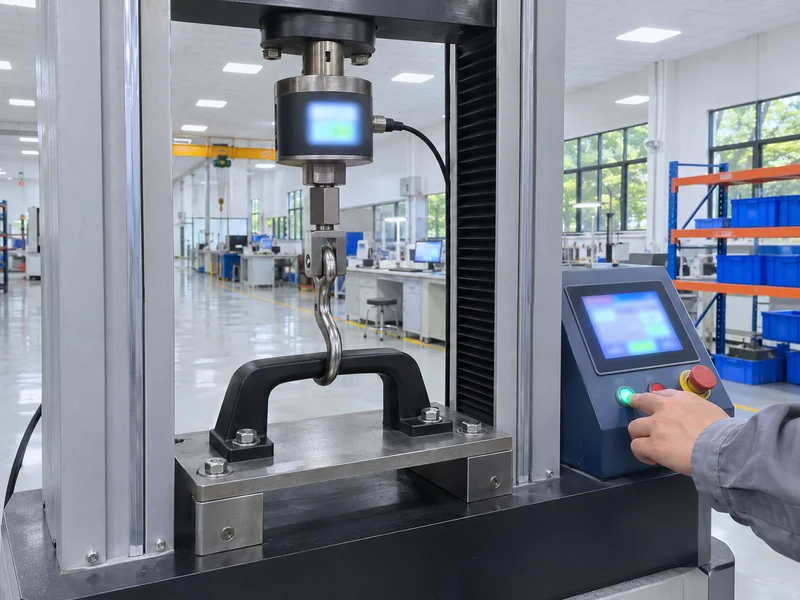
- Static pull test: load the handle at a defined force
- Torque test: on screw or insert mounts
- Fatigue test: repeated loading for lifting handles
- Drop and impact: at room and low temperature
- Heat test: for cookware and appliance handles
- Chemical test: cleaning agents and oils
- Overmold peel test: for TPE grips
For example, a bucket handle may be cycled thousands of times with a filled load to check fatigue at the pivot. Test methods are published by ISO and ASTM. Our guide to creep deformation explains long-term load effects.
Key Takeaway: As a rule, test handles with the real mounting hardware and load.
How Should Custom Plastic Handles and Knobs Be Specified?
Custom plastic handles and knobs should be specified with geometry, load and finish.
- 3D model and 2D drawing with mount points and CTQs
- Material and color, including TPE hardness if overmolded
- Load and test requirements
- Inserts and fasteners
- Temperature and chemical exposure
- Surface finish and texture
- Annual volume
For example, “PA66 GF30 core, TPE 60 Shore A grip, two M6 brass inserts, 500 N pull test” is a clear basis for a tool handle. Our plastic injection molding page explains how custom parts move from T1 to production.
Key Takeaway: Finally, write the load case and test on the drawing so every supplier quotes the same part.
FAQ
- Q: What plastic is best for handles?
- PP for household items, PA GF for strong handles, thermosets for high heat.
- Q: How are soft-touch handles made?
- By two-shot molding or overmolding TPE onto a rigid core.
- Q: How do you avoid sink marks in thick handles?
- Core out the section, add ribs or use gas-assist molding.
- Q: How are plastic knobs attached?
- With molded-in inserts, D-shaped holes and set screws or snap fits.
- Q: Can custom plastic handles be made in small volumes?
- Yes, with simpler single-cavity molds, though cost per part is higher.
Conclusion
Plastic handles and knobs work best with cored sections, metal at the mounts and soft-touch only where needed. Define loads and tests before tooling. To quote custom handles or knobs, send your 3D model and 2D drawing to our engineers.