
Passivation: Nitric vs Citric, Process and Standards
Passivation is a chemical treatment that removes free iron and other contaminants from the surface of stainless steel and helps it form a stronger, uniform chromium oxide layer, improving corrosion resistance without changing dimensions or appearance. It is usually done in nitric or citric acid after machining, welding or handling, and is specified to standards such as ASTM A967 and AMS 2700.
Passivation fixes contamination, not poor material choice. For example, a 304 part with embedded iron from a carbon-steel tool can rust within days of salt spray, but the same part passivated after machining often passes, while a 304 part used in seawater will still pit because the grade itself is not suited. In this guide, we explain passivation of stainless steel: how it works, nitric vs citric methods, the process steps, standards and tests, which grades can be passivated, limits and how to specify it. For surface options, see our guide to electropolishing.
Passivation of stainless steel removes free iron and surface contamination with an acid bath (nitric acid or citric acid), allowing the chromium-rich oxide film to reform evenly. Typical steps are cleaning and degreasing, rinsing, acid immersion for about 20–30 minutes at controlled temperature, rinsing in clean water and drying, then testing by water immersion, high humidity, salt spray or copper sulfate per ASTM A967. It does not remove scale, heat tint or deep rust, and it does not change dimensions or appearance.
In short: the treatment cleans the stainless surface so its natural protection works as intended.
Key points:
- Purpose: remove free iron, restore the oxide film.
- Methods: nitric or citric acid.
- Standards: ASTM A967, AMS 2700.
What Is Passivation?
Passivation is a surface treatment that improves the natural corrosion resistance of stainless steel.
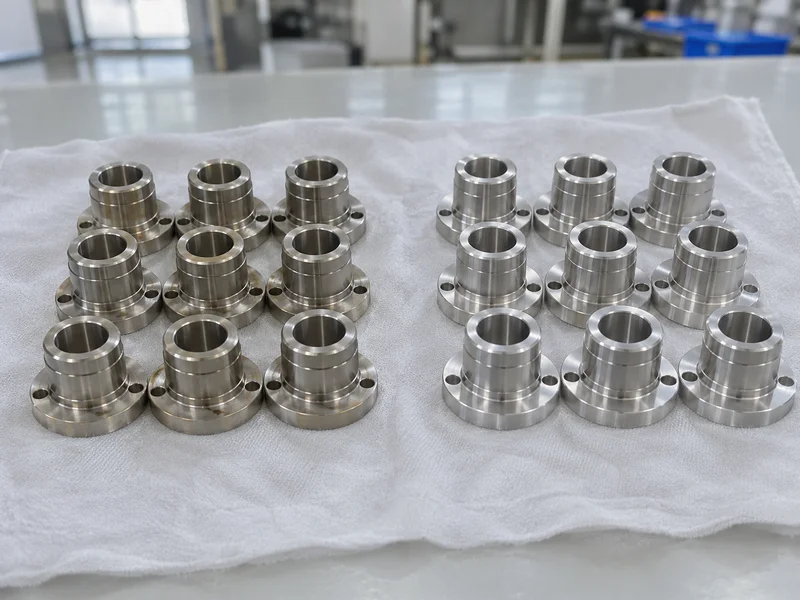
- Removes: free iron, embedded steel particles, light contamination
- Promotes: a uniform chromium oxide passive layer
- Does not: add a coating, change color or remove material measurably
- Applies to: machined, welded, ground or handled stainless parts
For example, chips from a carbon-steel part machined on the same machine can embed in a stainless part and start rust spots. General guidance on corrosion testing is available from ASTM. Our guide to 304 stainless steel explains the base material.
Key Takeaway: Above all, passivation removes contamination; it does not coat the part.
How Do Nitric and Citric Passivation Compare?
Nitric and citric methods compare by chemistry, safety and grade suitability.
| Factor | Nitric acid | Citric acid |
|---|---|---|
| Standards | ASTM A967 Nitric 1–5, AMS 2700 Method 1 | ASTM A967 Citric 1–5, AMS 2700 Method 2 |
| Typical bath | 20–50% nitric, sometimes with dichromate | 4–10% citric |
| Safety | Corrosive fumes, stricter handling | Safer, food-grade chemistry |
| Free-machining grades | Needs care to avoid etching | Often gentler on 303 and 416 |
| Environment | Nitrate waste | Easier waste treatment |
For example, many shops now use citric baths for 303 and 304 machined parts because it is safer and avoids nitric fumes. Our guide to 303 vs 304 stainless explains why free-machining grades need care.
Key Takeaway: In other words, both methods work when the bath matches the grade and standard.
What Are the Steps in the Passivation Process?
The process follows cleaning, acid treatment, rinsing and testing steps.
- Degrease to remove oils and coolant
- Rinse in clean water
- Acid bath for a set time and temperature
- Rinse in deionized water
- Dry without recontaminating
- Test a sample per the agreed method
For example, a part still carrying cutting oil will not passivate evenly, because the acid cannot reach the oily areas. Our guide to deburring covers preparation before surface treatment.
Key Takeaway: For this reason, cleaning before the acid bath matters as much as the bath itself.
Which Standards and Tests Apply?
Standards and tests for the treatment define the method and how to check results.
| Test (ASTM A967) | What it checks |
|---|---|
| Water immersion | Rust spots after soaking |
| High humidity | Rust after humidity exposure |
| Salt spray | Corrosion after salt fog exposure |
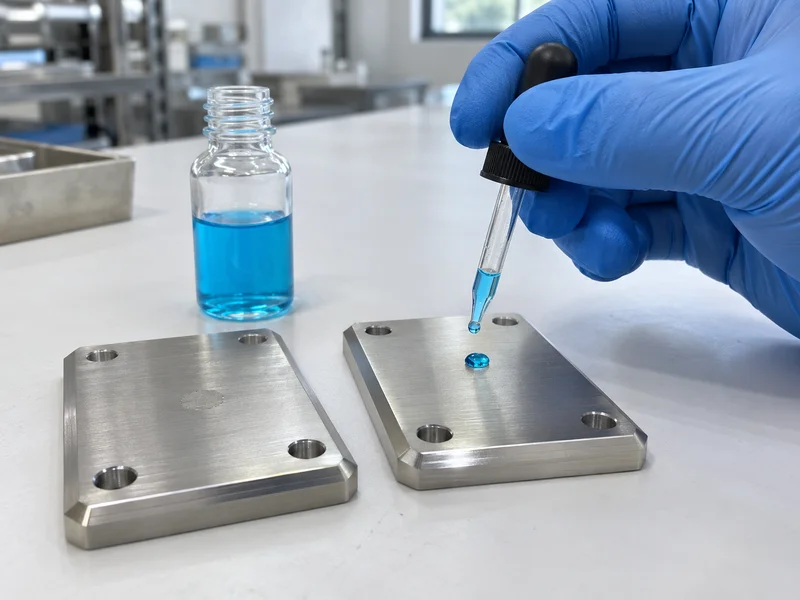
| Copper sulfate | Free iron (copper deposits) on austenitic grades |
| Potassium ferricyanide-nitric acid | Very sensitive free-iron check |
For example, a copper sulfate drop that leaves a pink copper spot shows free iron on the surface. Common specifications are ASTM A967, ASTM A380 and AMS 2700. Our guide to plating thickness covers testing for other finishes.
Key Takeaway: Overall, name both the method and the test on the drawing.
Which Stainless Grades Can Be Passivated?
Most stainless grades can be passivated, with different baths for different families.
- Austenitic (304, 316, 303): common, good results
- Martensitic (410, 420, 440C): need milder baths, risk of etching
- Precipitation hardening (17-4 PH): passivated after heat treatment
- Free-machining (303, 416): sulfur inclusions need gentle chemistry
- Ferritic (430): possible with suitable baths
For example, a hardened 420 part passivated in a strong nitric bath may show light etching, so a milder bath is chosen. Our guides to 17-4 PH stainless steel and 420 stainless steel cover these grades.
Key Takeaway: Equally, tell the finisher the exact grade and heat-treat condition.
What Are the Limits of the Treatment?
The treatment has limits because it only cleans and does not repair the surface.
| Limit | Better option |
|---|---|
| Heat tint and weld scale | Pickling, then passivation |
| Rough or embedded surfaces | Electropolishing |
| Wrong grade for environment | Change to 316 or duplex |
| Deep rust | Mechanical cleaning and pickling |
| Need for color or wear | Coatings or other finishes |
For example, a welded 316 frame with blue heat tint needs pickling first, because the treatment alone will not remove the oxide. Our guide to electropolishing compares a stronger surface treatment.
Key Takeaway: As a rule, use passivation to clean good material, not to rescue the wrong material.
How Should the Treatment Be Specified?
The treatment should be specified with standard, method, test and records.
- Standard: ASTM A967 or AMS 2700
- Method: nitric or citric, or “supplier choice within standard”
- Test: water immersion, humidity, salt spray or copper sulfate
- Sampling: per lot or per batch
- Certificate: certificate of conformance with lot number
- Packaging: clean, dry, no contact with carbon steel
For example, “Passivate per ASTM A967 Citric 2, verify by humidity test, C of C per lot” is clear. Our CNC machining services page explains how the treatment is arranged with machined stainless parts.
Key Takeaway: Finally, ask for a certificate tied to the lot so the treatment is traceable.
FAQ
- Q: What is passivation?
- An acid treatment that removes free iron and helps stainless steel form its protective oxide layer.
- Q: Does passivation change dimensions?
- No, it does not measurably change dimensions or appearance.
- Q: Nitric or citric passivation, which is better?
- Both work; citric is safer and often gentler on free-machining grades.
- Q: Which standard covers passivation?
- ASTM A967, ASTM A380 and AMS 2700.
- Q: Does passivation remove weld discoloration?
- No, heat tint needs pickling or electropolishing first.
Conclusion
Passivation restores the natural corrosion resistance of clean stainless steel when the method, test and grade are matched. Use pickling or electropolishing where more is needed. To quote passivated stainless parts, send your 3D model and 2D drawing to our engineers.