
420 Stainless Steel for Molds: Properties and Polishing
420 stainless steel is a martensitic stainless steel with about 12–14% chromium and enough carbon to be hardened by heat treatment. It combines moderate corrosion resistance with high hardness, which makes it a common choice for injection mold cavities that need a mirror finish, and for machined parts such as shafts, valve components, surgical-style tools and cutting blades. Mold steels such as S136, 1.2083 and 4Cr13 belong to the same family.
It is not the right steel for every job. For example, a cavity for a clear PC lens can be polished to a mirror finish in 420 mold steel and will resist rust from humid cooling water, while a part that sits in salt spray may need 316 instead, because hardened 420 is less corrosion resistant than austenitic grades. In this guide, we explain 420 stainless steel: composition, properties, heat treatment, mold grades, machining and polishing, applications, limits and how to specify it. For general mold steel choices, see our guide on how to choose mold steel.
420 stainless steel (UNS S42000, EN 1.4021 / 1.4028; mold grades 1.2083, S136, 4Cr13) is a martensitic stainless steel with about 0.15–0.40% carbon and 12–14% chromium. It can be hardened to roughly 48–52 HRC, takes a mirror polish and resists water, humidity and mild chemicals better than carbon mold steels, though less than 304 or 316. It is used for mold cavities for clear, medical-style and PVC parts, and for hardened machined parts. It machines well in the annealed or pre-hardened state and is finished by grinding, EDM and polishing after hardening.
In short: 420 gives hardness, polish and rust resistance in one steel; it is not a substitute for 316 in corrosive service.
Key points:
- Type: martensitic, hardenable stainless steel.
- Strengths: hardness, mirror polish, rust resistance.
- Limits: lower corrosion resistance than 304/316, lower toughness when very hard.
What Is 420 Stainless Steel?
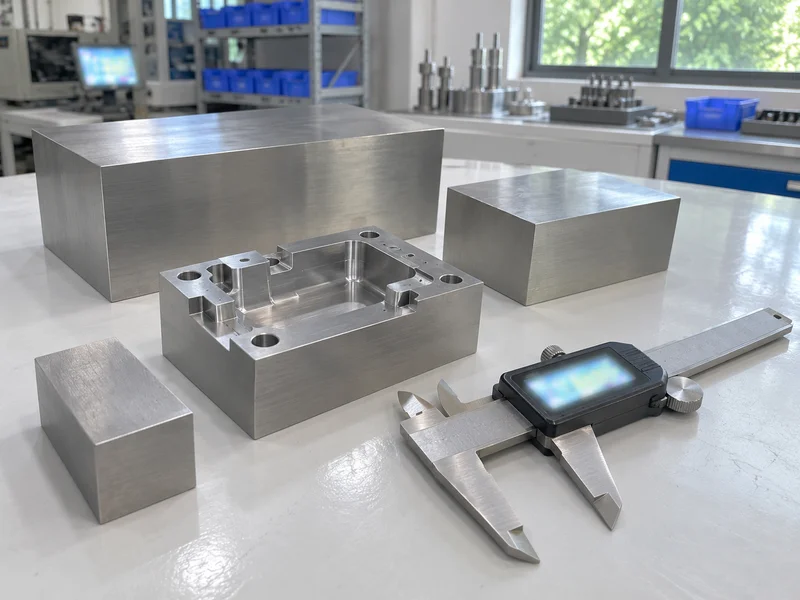
420 stainless steel is a hardenable stainless steel in the martensitic family.
| Element (typical) | 420 |
|---|---|
| Carbon | 0.15–0.40% |
| Chromium | 12–14% |
| Manganese | ≤1.0% |
| Silicon | ≤1.0% |
| Nickel | Usually not specified |
Common equivalents:
- UNS S42000, AISI 420
- EN 1.4021 / 1.4028 / 1.4034 (carbon level varies)
- Mold grades: 1.2083, S136 type, 4Cr13
For example, a bar ordered as “420” may have low carbon for general parts, while a mold block ordered as 1.2083 ESR has a controlled carbon and cleaner structure for polishing. Bar specifications are published by ASTM International, such as ASTM A276. Our guide to is stainless steel a ferrous material explains stainless families.
Key Takeaway: Above all, specify the exact grade, not just “420”, because carbon level changes hardness.
What Are the Properties of 420 Stainless Steel?
The properties of 420 stainless steel depend strongly on heat treatment.
| Property (typical) | Annealed | Hardened and tempered |
|---|---|---|
| Hardness | about 200 HB or less | about 48–52 HRC |
| Corrosion resistance | Fair | Best when hardened and polished |
| Polishability | Good | Excellent (ESR grades) |
| Magnetic | Yes | Yes |
| Thermal conductivity | about 20–25 W/m·K | about 20–25 W/m·K |
Points to note:
- Hardened 420 resists rust better than annealed 420
- Thermal conductivity is lower than P20, so cooling design matters
- Toughness drops at the highest hardness levels
For example, a 420 core with the same cooling as a P20 core may run hotter and lengthen the cycle. Our guide to mold cooling channel design explains how to compensate.
Key Takeaway: In other words, plan hardness and cooling together when you choose 420 for a mold.
How Is 420 Stainless Steel Heat Treated?
This stainless grade is heat treated by hardening and tempering to reach the required hardness.
Typical steps:
- Stress relieve after rough machining
- Harden from about 1,000–1,050 °C, usually in vacuum
- Quench in gas or oil
- Temper twice to reach the target hardness
- Avoid tempering ranges that reduce corrosion resistance
Pre-hardened mold blocks of about 30–36 HRC are also available, so cavities can be machined without a hardening step. For example, a medium-volume clear cover mold may use pre-hardened 420 to save time, while a high-volume mold uses fully hardened inserts. Our guide to heat treatment of steel explains the basics.
Key Takeaway: For this reason, choose pre-hardened or fully hardened 420 based on volume and polish.
Why Is 420 Stainless Steel Used for Molds?
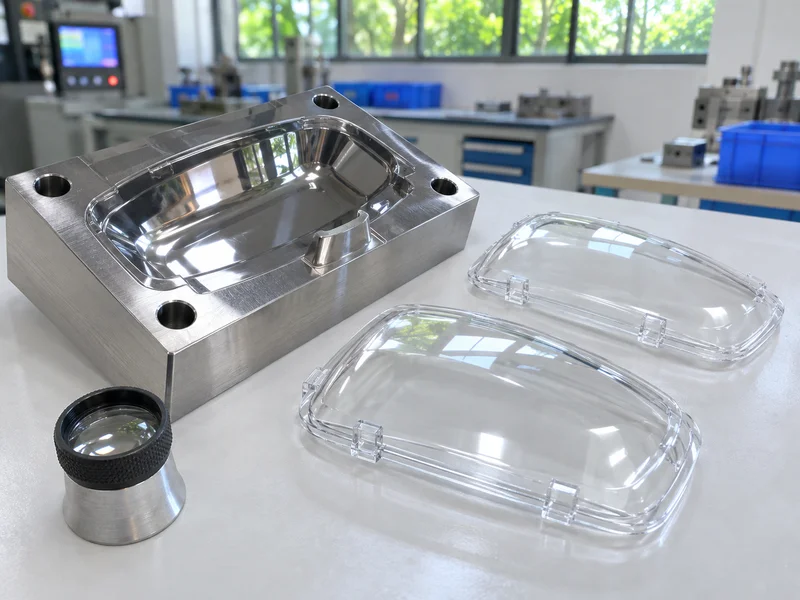
420 is used as a mold steel because it polishes well, resists rust and holds hardness.
Typical mold uses:
- Clear parts: lenses, light guides, transparent covers
- Medical-style and food-contact parts that need clean, rust-free cavities
- PVC and other resins that release corrosive gases
- Humid plants where carbon steels rust in storage
- Mirror finish requirements such as SPI A-1 or A-2
For example, a cavity for a PMMA light guide is often made in ESR 420 steel and polished to a mirror finish. Our guides to mold polishing and injection mold steel material compare it with other steels.
| Mold steel | Polish | Corrosion resistance | Typical hardness |
|---|---|---|---|
| P20 / 718H | Good | Low | about 30–36 HRC |
| H13 / 1.2344 | Good | Low | about 48–52 HRC |
| 420 / S136 / 1.2083 | Excellent | Good | about 48–52 HRC |
Key Takeaway: Overall, choose 420 when polish and rust resistance matter more than conductivity.
How Is 420 Steel Machined and Polished?
420 steel is machined in the annealed or pre-hardened state and finished after hardening.
Process notes:
- Rough machining annealed, with stock for heat treatment
- Finish machining pre-hardened, or hard milling after hardening
- Wire and sinker EDM for fine features in hardened inserts
- Grinding for flat and cylindrical fits
- Polishing in stages from stone to diamond paste
For example, a hardened 420 cavity insert may be wire-cut, sinker-EDM’d for ribs and then polished to remove the EDM layer. Our guides to wire EDM and sinker EDM explain these steps.
Key Takeaway: Equally, remove the EDM recast layer fully before mirror polishing.
Where Else Is 420 Stainless Used?
Beyond molds, 420 stainless is used for hard, wear-resistant machined parts.
- Shafts and pins that need hardness and rust resistance
- Valve and pump components
- Surgical-style and dental-style instruments (build-to-print)
- Cutting blades and knives
- Measuring tools and gauges
For example, a hardened 420 pump shaft resists wear and light corrosion in water. Our CNC machining services machine stainless steels including 420 to customer drawings.
Key Takeaway: As a rule, use 420 where hardness matters and the environment is only mildly corrosive.
What Are the Limits of 420 Stainless?
420 stainless steel has limits in corrosion resistance, toughness and weldability.
- Lower corrosion resistance than 304 and 316, especially in chlorides
- Brittle at high hardness under impact
- Poor weldability; welds need preheat and post-heat
- Lower thermal conductivity than carbon mold steels
For example, a part exposed to seawater should use 316 or a duplex grade. Our guide to 304 vs 316 stainless steel compares austenitic grades.
Key Takeaway: Furthermore, do not expect 420 to match austenitic grades in corrosive service.
How Should 420 Stainless Be Specified?
420 stainless should be specified with grade, condition, hardness and finish.
Specification items:
- Grade, such as “1.2083 ESR” or “AISI 420”
- Condition: annealed, pre-hardened or hardened
- Hardness range, such as 48–52 HRC
- Surface finish, such as SPI A-2 or Ra value
- Material certificate as required
For example, “Cavity insert 1.2083 ESR, harden and temper to 48–52 HRC, polish SPI A-2, material certificate” is complete. Our injection mold manufacturing team selects 420 mold steels for polished and corrosion-sensitive molds.
Key Takeaway: Finally, always state hardness and polish grade together with the steel grade.
FAQ
- Q: Is 420 stainless steel magnetic?
- Yes, it is martensitic and magnetic.
- Q: How hard can 420 stainless get?
- About 48–52 HRC for mold grades after hardening and tempering.
- Q: Is S136 the same as 420?
- S136 is a premium 420-type mold steel with controlled composition and cleanliness.
- Q: Does 420 stainless rust?
- It resists water and humidity well when hardened and polished, but can rust in chlorides.
- Q: Is 420 better than 304?
- 420 is harder; 304 is more corrosion resistant.
Conclusion
420 stainless steel offers hardness, mirror polish and rust resistance, making it a strong choice for clear-part and corrosion-sensitive molds and for hard machined parts. Specify the exact grade, hardness and finish, and plan cooling for its lower conductivity. To review a mold or part in 420, send your 3D model and 2D drawing to our engineers.