
1045 Steel: Properties, Heat Treatment and Uses
1045 steel is a medium-carbon steel with about 0.45% carbon that offers a good balance of strength, toughness, wear resistance and machinability at low cost. Known as AISI/SAE 1045, EN C45 or 1.0503, it is widely used for shafts, pins, axles, gears, bolts and machine parts, and can be flame or induction hardened on the surface for extra wear resistance.
1045 is strong enough for many shafts but not for every load. For example, a 1045 pump shaft in normalized condition may be fine, while a heavily loaded gearbox shaft may need 4140 or surface hardening of the 1045 at the bearing seats. In this guide, we explain 1045 steel: composition, properties, heat treatment and hardening, machining, typical uses, comparisons with other steels and how to specify it. For steel basics, see our guide to the difference between carbon steel and alloy steel.
1045 steel contains about 0.43–0.50% carbon and 0.60–0.90% manganese. Hot-rolled 1045 has a typical tensile strength of about 565 MPa, rising to about 625 MPa when cold drawn, with hardness around 163–180 HB. It can be through-hardened only in small sections but is often induction or flame hardened to about 50–58 HRC on the surface while keeping a tough core. It machines reasonably well (about 55–60% of free-machining steel), welds with preheat, and needs plating or oil to resist rust.
In short: 1045 is a low-cost, strong carbon steel that can be surface hardened where it wears.
Key points:
- Carbon: about 0.45%.
- Strength: about 565–625 MPa tensile.
- Hardening: induction or flame hardened surfaces.
What Is 1045 Steel?
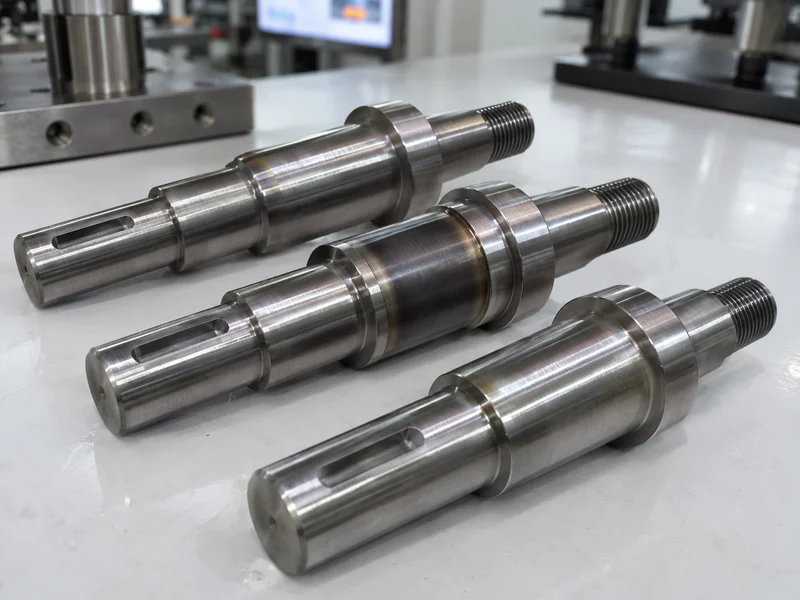
1045 steel is a plain medium-carbon steel in the AISI/SAE 10xx series.
| Designation | Equivalent |
|---|---|
| AISI / SAE | 1045 |
| UNS | G10450 |
| EN / W.Nr. | C45 / 1.0503 |
| JIS | S45C |
| GB (China) | 45# steel |
For example, a drawing calling for “S45C” from a Japanese customer and “45# steel” in a Chinese mill certificate refer to the same type of steel. Steel standards are published by ASTM and SAE. Our guide to steel alloy composition explains the numbering.
Key Takeaway: Above all, 1045, C45, S45C and 45# are close equivalents across standards.
What Are the Properties of 1045 Steel?
The properties of this steel depend on whether it is hot rolled, cold drawn or heat treated.
| Property | Hot rolled | Cold drawn |
|---|---|---|
| Tensile strength | about 565 MPa | about 625 MPa |
| Yield strength | about 310 MPa | about 530 MPa |
| Elongation | about 16% | about 12% |
| Hardness | about 163 HB | about 179 HB |
| Density | about 7.85 g/cm³ | about 7.85 g/cm³ |
For example, cold-drawn 1045 bar has higher yield strength and better size accuracy, which helps when shafts are turned with little stock removal. Our guide to heat treatment of steel explains how processing changes these values.
Key Takeaway: In other words, specify the condition, because it changes strength a lot.
How Is 1045 Steel Heat Treated and Hardened?
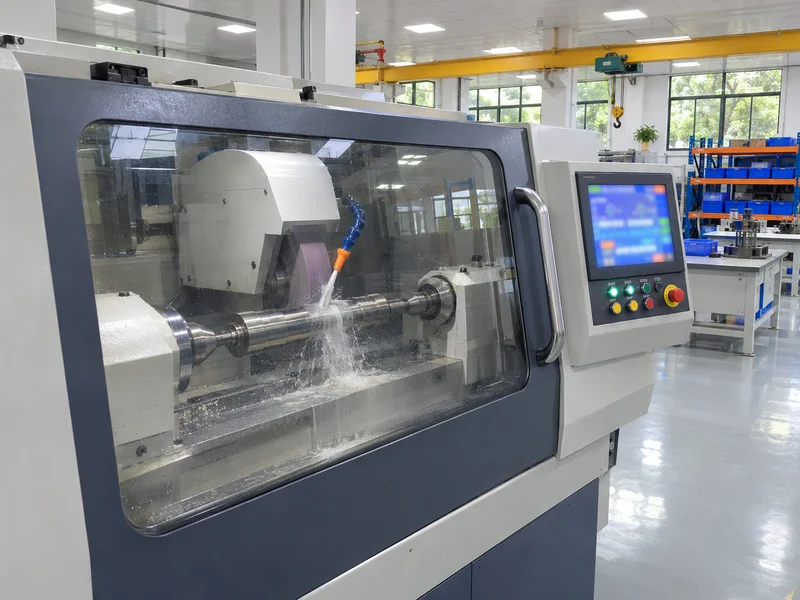
This steel is heat treated by normalizing, quench and tempering, or surface hardening.
- Normalizing: refines grain and evens properties
- Quench and temper: higher strength in small sections
- Induction hardening: hard surface (about 50–58 HRC) on journals and gears
- Flame hardening: similar result on larger parts
- Limited hardenability: large sections do not harden through
For example, a 1045 shaft is often turned, induction hardened at the bearing journals and then ground to final size. Our guide to cylindrical grinding explains finishing after hardening.
Key Takeaway: For this reason, use surface hardening when only some areas of a 1045 part see wear.
How Is This Steel Machined?
This steel machines reasonably well in normalized or cold-drawn condition.
| Factor | Good practice |
|---|---|
| Machinability | About 55–60% of free-machining steel |
| Tools | Coated carbide for production |
| Chips | Chip breakers for continuous chips |
| Coolant | Flood coolant for heat and finish |
| Hardened areas | Grind instead of cutting |
| Rust | Oil or protect parts right after machining |
For example, 1045 shafts turned on a CNC lathe often get a rust-preventive oil before packing, because bare carbon steel rusts quickly in humid shipping. Our guides to CNC turning and high precision CNC turning cover shaft machining.
Key Takeaway: Overall, plan machining before hardening, and grinding after it.
What Is This Steel Used For?
This steel is used for parts that need strength and wear resistance at low cost.
- Shafts and axles
- Pins and bolts
- Gears and sprockets
- Couplings and hubs
- Machine and fixture parts
- Hydraulic rods (often chrome plated)
For example, a hydraulic piston rod may be 1045, induction hardened and hard chrome plated for wear and corrosion. Our guide to keyway design covers a common shaft feature.
Key Takeaway: Equally, 1045 suits many machine parts that do not need alloy-steel strength.
How Does 1045 Compare With Other Steels?
1045 compares with other steels by strength, hardenability and cost.
| Steel | Compared with 1045 |
|---|---|
| 1018 | Lower carbon, weaker, easier to weld |
| 1045 | Medium carbon, balanced, low cost |
| 4140 | Alloy steel, higher hardenability and strength |
| 12L14 | Free machining, lower strength |
| 304 stainless | Corrosion resistant, softer, higher cost |
For example, a lightly loaded spacer can be 1018, a shaft 1045, and a highly loaded drive shaft 4140 steel. Our guides to 304 stainless steel and carbon steel vs alloy steel compare options.
Key Takeaway: As a rule, step up to alloy steel only when 1045 cannot meet the load or section size.
How Should This Steel Be Specified?
This steel should be specified with grade, condition, hardness and protection.
- Grade and standard: AISI 1045 or EN C45
- Condition: hot rolled, cold drawn or normalized
- Hardness: core and, if required, surface hardness and case depth
- Hardened zones marked on the drawing
- Finish: black oxide, zinc plating, chrome plating or oil
- Certificates: mill certificate and hardness report
For example, “1045 cold drawn, journals induction hardened 52–56 HRC, case 1.5–2.5 mm, ground, black oxide” is a complete basis. Our guide to black oxide coating and our CNC machining services page explain finishing and machining.
Key Takeaway: Finally, mark hardened zones and case depth so every supplier quotes the same part.
FAQ
- Q: What is 1045 steel?
- A medium-carbon steel with about 0.45% carbon.
- Q: Is 1045 steel strong?
- Yes, about 565–625 MPa tensile, depending on condition.
- Q: Can 1045 steel be hardened?
- Yes, mainly by induction or flame hardening on the surface.
- Q: What is 1045 steel used for?
- Shafts, axles, pins, gears, bolts and machine parts.
- Q: Does 1045 steel rust?
- Yes, it needs oil, plating or another coating for protection.
Conclusion
1045 steel is a strong, low-cost carbon steel for shafts and machine parts, especially when surface hardening is added where parts wear. Specify condition, hardness and finish clearly. To quote 1045 steel parts, send your 3D model and 2D drawing to our engineers.