
4140 Steel: Properties, Heat Treatment and Machining
4140 steel is a low-alloy chromium-molybdenum steel with about 0.40% carbon that combines high strength, toughness, fatigue resistance and good hardenability. Known as AISI/SAE 4140, EN 42CrMo4 or 1.7225, it is used for shafts, gears, axles, spindles, bolts, tool holders and fixture parts that carry heavy or repeated loads, and it is often supplied pre-hardened so parts can be machined without later heat treatment.
4140 is a step up from plain carbon steel, but it is not always needed. For example, a lightly loaded spacer can stay in 1045, while a drive shaft with a large diameter and shock loads benefits from the deeper hardening that chromium and molybdenum give. In this guide, we explain the composition, properties, heat treatment, machining, typical uses, comparisons with other steels and how to specify 4140 steel. For background, see our guide to the difference between carbon steel and alloy steel.
4140 steel contains about 0.38–0.43% carbon, 0.80–1.10% chromium and 0.15–0.25% molybdenum. Annealed 4140 has a typical tensile strength of about 655 MPa and hardness around 197 HB. Quenched and tempered, it commonly reaches about 850–1,100 MPa, and pre-hardened bar is usually sold at about 28–32 HRC. It can be nitrided for a hard, wear-resistant surface, machines well in annealed or pre-hardened condition, and needs preheat for welding. Like other alloy steels, it rusts and needs a coating or oil.
In short: 4140 is a tough, hardenable alloy steel for heavily loaded machine parts.
Key points:
- Alloying: chromium and molybdenum.
- Pre-hardened: about 28–32 HRC.
- Equivalents: 42CrMo4, SCM440, 42CrMo.
What Is 4140 Steel?
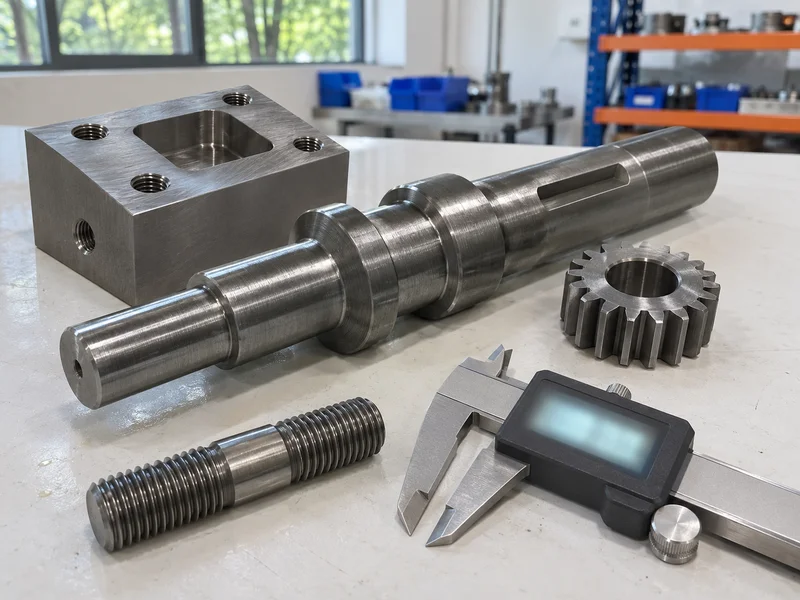
4140 steel is a chromium-molybdenum alloy steel in the AISI/SAE 41xx series.
| Designation | Equivalent |
|---|---|
| AISI / SAE | 4140 |
| UNS | G41400 |
| EN / W.Nr. | 42CrMo4 / 1.7225 |
| JIS | SCM440 |
| GB (China) | 42CrMo |
For example, a European drawing calling for 42CrMo4 and a Chinese mill certificate for 42CrMo describe very similar steel, though limits differ slightly. Steel grades are defined by ASTM and SAE standards. Our guide to steel alloy composition explains the numbering.
Key Takeaway: Above all, check the standard behind each equivalent, because small chemistry limits differ.
What Are the Properties of 4140 Steel?
The properties of 4140 steel depend strongly on its heat-treated condition.
| Property | Annealed | Pre-hardened (Q&T) |
|---|---|---|
| Tensile strength | about 655 MPa | about 950–1,100 MPa |
| Yield strength | about 415 MPa | about 800–950 MPa |
| Elongation | about 25% | about 12–16% |
| Hardness | about 197 HB | about 28–32 HRC |
| Density | about 7.85 g/cm³ | about 7.85 g/cm³ |
Values are typical; check the mill certificate for your bar. For example, pre-hardened bar is roughly 1.5 times as strong as annealed bar, which is why it is popular for fixtures and shafts that are machined and used without further heat treatment. Our guide to heat treatment of steel explains the processes.
Key Takeaway: In other words, the condition matters as much as the grade.
How Is This Alloy Steel Heat Treated?
This alloy steel is heat treated by quench and tempering, normalizing, annealing or nitriding.
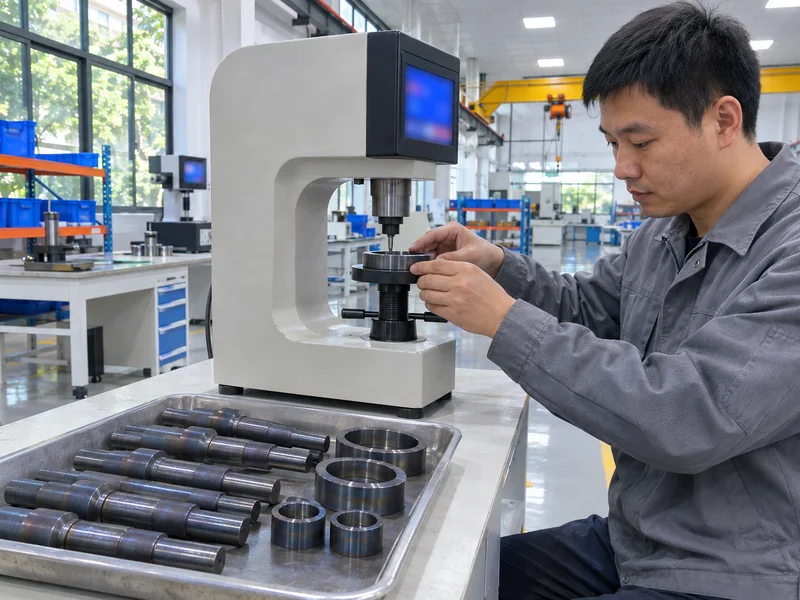
- Annealing: softens for heavy machining
- Quench and temper: oil quench from about 845 °C, then temper for the needed hardness
- Pre-hardened bar: already quenched and tempered to about 28–32 HRC
- Nitriding: hard surface layer with little distortion
- Induction hardening: hard journals or gear teeth on a tough core
For example, a spindle may be rough machined in annealed bar, quenched and tempered, finish turned, nitrided and then ground at the bearing seats. Meanwhile, a fixture plate is often machined straight from pre-hardened bar. Our guide to cylindrical grinding covers finishing after hardening.
Key Takeaway: For this reason, choose pre-hardened bar when distortion after heat treatment would be a problem.
How Is 4140 Steel Machined?
4140 steel is machined well in annealed or pre-hardened condition with rigid setups and carbide tools.
| Factor | Good practice |
|---|---|
| Machinability | About 65% of free-machining steel when annealed |
| Pre-hardened bar | Carbide tools, lower speeds than annealed |
| Fully hardened areas | Grind or hard turn instead of milling |
| Chips | Chip breakers and good evacuation |
| Distortion | Rough, stress relieve, then finish for long parts |
| Rust | Oil or coat parts right after machining |
For example, a long shaft may be rough turned, stress relieved and then finish turned so it stays straight. Our pages on CNC turning and CNC milling show how steel parts are machined, and the alloy steel grade is confirmed with each quotation.
Key Takeaway: Overall, plan the sequence of machining and heat treatment before cutting starts.
What Is 4140 Steel Used For?
4140 steel is used for parts that need strength, toughness and fatigue resistance.
- Shafts, axles and spindles
- Gears and sprockets
- Bolts, studs and high-strength fasteners
- Tool holders and machine parts
- Fixtures and jigs (often pre-hardened)
- Hydraulic and oil-tool parts
For example, a fixture base machined from pre-hardened bar resists dents and wear better than mild steel without needing heat treatment. Our guides to CNC machining fixtures and keyway design cover two common uses.
Key Takeaway: Equally, use the alloy where loads, shocks or section size exceed what carbon steel can handle.
How Does 4140 Compare With Other Steels?
4140 compares with other steels by strength, hardenability, cost and corrosion resistance.
| Steel | Compared with 4140 |
|---|---|
| 1045 | Carbon steel, lower hardenability, lower cost |
| 4140 | Cr-Mo alloy, tough, deep hardening |
| 4340 | Nickel added, tougher in large sections, higher cost |
| P20 | Similar base, made for molds |
| 17-4 PH | Stainless, corrosion resistant, higher cost |
For example, a shaft of 30 mm may work in 1045, while a 100 mm shaft under shock load hardens more evenly in 4140. Our guides to 1045 steel and P20 steel compare two close options.
Key Takeaway: As a rule, choose the lowest-cost steel that meets load, section size and environment.
How Should This Steel Be Specified?
This steel should be specified with grade, condition, hardness, surface treatment and documents.
- Grade and standard: AISI 4140 or EN 42CrMo4
- Condition: annealed, normalized or quenched and tempered
- Hardness: for example 28–32 HRC, with test location
- Surface hardening: nitriding or induction, with case depth
- Finish: black oxide, zinc plating, chrome plating or oil
- Documents: mill certificate and hardness report if required
For example, “AISI 4140 Q&T 28–32 HRC, nitrided 0.3 mm min, black oxide” is a clear basis for quoting. Our guides to black oxide coating and zinc plating explain finishing options.
Key Takeaway: Finally, state the hardness and its test location, not just the grade.
FAQ
- Q: What is 4140 steel?
- A low-alloy chromium-molybdenum steel with about 0.40% carbon.
- Q: Is 4140 steel stainless?
- No. It rusts and needs oil, plating or another coating.
- Q: What hardness is pre-hardened 4140?
- Usually about 28–32 HRC.
- Q: What is the European equivalent of 4140?
- 42CrMo4 (1.7225).
- Q: Is 4140 better than 1045?
- It is stronger and hardens deeper, but costs more.
Conclusion
4140 steel is a tough, hardenable alloy for shafts, gears and fixtures, and its condition and hardness matter as much as the grade. Specify them clearly with any surface treatment. To review alloy steel parts, send your 3D model and 2D drawing to our engineers.