
Zinc Plating: Colors, Thickness and Corrosion Protection
Zinc plating is an electroplating process that deposits a thin layer of zinc, usually 5–25 µm, onto steel parts so the zinc corrodes first and protects the steel underneath. Followed by a chromate or trivalent passivate in clear, blue, yellow or black, it is one of the cheapest and most common finishes for screws, brackets, shafts, housings and machined carbon steel parts.
The passivate and thickness decide how long it lasts. For example, a bracket with 5 µm of zinc and a thin clear passivate may show white rust after a short salt spray test, while 12 µm with a thick-film trivalent passivate and sealer lasts many times longer. In this guide, we explain zinc plating: how it works, passivate colors, thickness classes, corrosion performance, hydrogen embrittlement, comparisons with other finishes and how to specify it. For other steel finishes, see our guide to black oxide coating.
Zinc plating (electrogalvanizing) applies zinc to steel in an acid or alkaline bath, typically 5, 8, 12 or 25 µm thick per ASTM B633 service conditions. A conversion passivate is then applied: trivalent clear/blue, trivalent yellow or black, or older hexavalent chromates that RoHS restricts. Zinc protects steel sacrificially, so small scratches stay protected. High-strength steels above about 31–39 HRC need a baking treatment after plating to avoid hydrogen embrittlement. Zinc-nickel plating offers much higher corrosion resistance where needed.
In short: choose zinc thickness and passivate for the environment, and bake high-strength parts.
Key points:
- Thickness: about 5–25 µm.
- Passivates: clear, blue, yellow, black (trivalent for RoHS).
- Risk: hydrogen embrittlement on hardened steel.
How Does Zinc Plating Work?
Zinc plating works by depositing zinc that corrodes in place of the steel.
- Cleaning: degreasing and pickling to bare steel
- Plating: zinc deposited by electric current in a bath
- Rinsing: to remove bath chemicals
- Passivating: chromate or trivalent conversion layer
- Sealing (optional): topcoat for extra protection
- Baking (if needed): to remove hydrogen
For example, a scratch through zinc plating on a steel bracket still stays rust-free for a while because the surrounding zinc protects the bare steel. Electroplating standards are published by ASTM. Our guide to metal surface finishing techniques compares other processes.
Key Takeaway: Above all, zinc protects steel sacrificially, which is why scratches do not rust immediately.
Which Zinc Plating Passivate Colors Are Used?
Passivate colors are used for appearance and different corrosion levels.
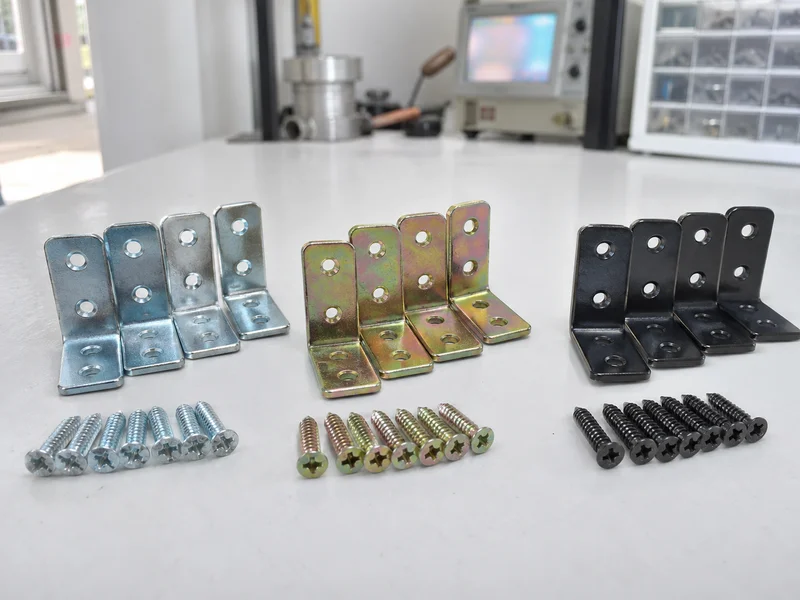
| Passivate | Look | Corrosion protection | Note |
|---|---|---|---|
| Clear / blue trivalent | Silver-blue | Basic | RoHS compliant |
| Thick-film trivalent | Silver, slightly iridescent | Better | RoHS compliant |
| Yellow (hexavalent) | Gold-yellow | Good | Restricted by RoHS |
| Yellow trivalent | Iridescent yellow | Good | RoHS compliant |
| Black trivalent | Black | Good with sealer | RoHS compliant |
For example, a European buyer usually asks for “trivalent clear” or “trivalent black” to stay RoHS compliant. RoHS rules are published on EUR-Lex. Our guide to plating thickness explains how layers are measured.
Key Takeaway: In other words, specify trivalent passivates for parts sold into the EU.
How Thick Should Zinc Plating Be?
The coating should be thick enough for the service environment, usually 5–25 µm.
| ASTM B633 condition | Zinc thickness | Typical environment |
|---|---|---|
| SC1 (Fe/Zn 5) | 5 µm | Indoor, dry |
| SC2 (Fe/Zn 8) | 8 µm | Indoor with condensation |
| SC3 (Fe/Zn 12) | 12 µm | Outdoor, mild |
| SC4 (Fe/Zn 25) | 25 µm | Outdoor, severe |
For example, an outdoor electrical bracket is often specified at Fe/Zn 12 with a sealed trivalent passivate. Threads need allowance, because 12 µm on each flank changes a thread fit. Our guide to threaded holes covers thread allowances.
Key Takeaway: For this reason, choose thickness from the environment and allow for it on threads and fits.
How Long Does the Coating Protect Steel?
The coating protects steel for a time that depends on thickness, passivate and sealer.
- Thin clear passivate: shortest salt spray life
- Thick-film or sealed passivate: much longer to white rust
- Thicker zinc: longer to red rust (base metal rust)
- Zinc-nickel: far higher salt spray resistance
- Real life: depends on humidity, salt and abrasion
For example, two parts with the same 8 µm zinc can show very different salt spray results if one has a sealer. Salt spray testing is described in ASTM B117. Our guide to black oxide coating compares a lighter-protection finish.
Key Takeaway: Overall, agree salt spray hours to white rust and red rust if corrosion life matters.
What Causes Hydrogen Embrittlement After Plating?
Hydrogen embrittlement is cracking of steel caused by hydrogen absorbed during cleaning and plating.
- At risk: steels above about 31–39 HRC, springs, high-strength fasteners
- Cause: hydrogen from acid pickling and plating
- Prevention: baking at about 190–220 °C within a few hours of plating
- Alternatives: mechanical zinc or zinc flake coatings
- Standard: ASTM B850 covers baking
For example, a hardened 10.9 grade bolt plated without baking can snap under load days later. Our guide to heat treatment of steel explains hardness levels.
Key Takeaway: Equally, always state hardness so the plater knows whether baking is required.
How Does Zinc Compare With Other Finishes?
The coating compares with other finishes by cost, thickness and corrosion life.
| Finish | Thickness | Corrosion | Note |
|---|---|---|---|
| Zinc plating | 5–25 µm | Good | Low cost |
| Zinc-nickel | 8–15 µm | Very good | Automotive use |
| Hot-dip galvanizing | 45–85 µm+ | Excellent outdoors | Too thick for precision parts |
| Black oxide + oil | <1 µm | Low | Keeps dimensions |
| Electroless nickel | 5–50 µm | Good, wear resistant | Uniform on complex shapes |
For example, a precision shaft may use black oxide to keep its fit, while a frame bracket uses zinc plating. Our guides to copper and nickel plating and 1045 steel cover related choices.
Key Takeaway: As a rule, use zinc plating for low-cost protection where a thin layer is acceptable.
How Should the Coating Be Specified?
The coating should be specified with standard, thickness, passivate and post-treatment.
- Standard: ASTM B633 or ISO 2081
- Thickness: for example, Fe/Zn 8 or Fe/Zn 12
- Passivate: trivalent clear, yellow or black
- Sealer if longer corrosion life is needed
- Baking for parts above the hardness limit
- Masking on threads, bores or contact areas
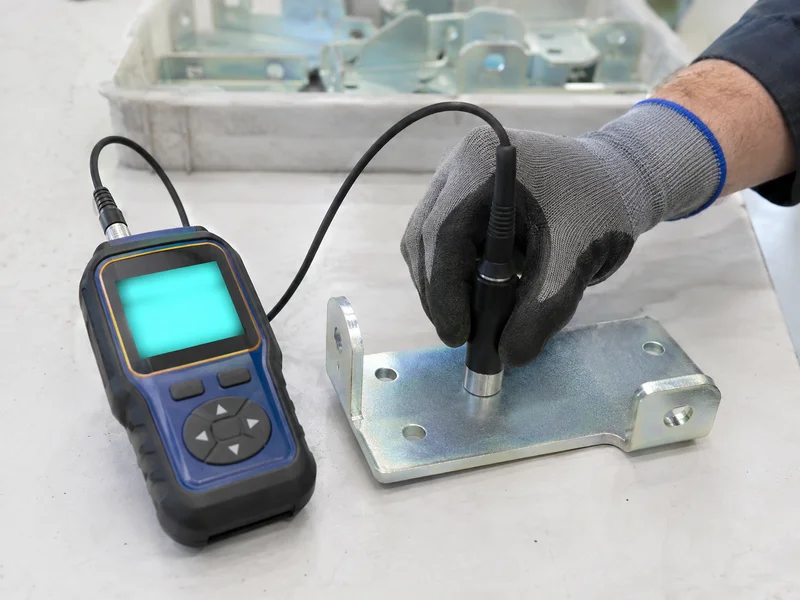
- Test: thickness measurement and salt spray hours
For example, “Zinc plate per ASTM B633 SC2, trivalent black passivate with sealer, 96 h to white rust” is clear. Our CNC machining services page explains how plating is arranged with machined parts.
Key Takeaway: Finally, write thickness, passivate and test hours on the drawing so finishes are comparable.
FAQ
- Q: What is zinc plating?
- An electroplated zinc layer that protects steel from rust.
- Q: How thick is zinc plating?
- Usually 5–25 µm, depending on service condition.
- Q: Is zinc plating RoHS compliant?
- Yes, when trivalent passivates are used.
- Q: What is the difference between zinc plating and galvanizing?
- Galvanizing is much thicker and made by dipping in molten zinc.
- Q: Can hardened steel be zinc plated?
- Yes, but it must be baked after plating to avoid hydrogen embrittlement.
Conclusion
Zinc plating gives low-cost, sacrificial protection for steel parts when thickness, passivate and baking are matched to the part. Specify the standard and test clearly. To quote plated machined parts, send your 3D model and 2D drawing to our engineers.