
Electroless Nickel Plating: Phosphorus Types and Hardness
Electroless nickel plating is an autocatalytic chemical process that deposits a uniform nickel-phosphorus alloy layer on metal parts without electric current, giving even thickness on edges, bores and recesses plus good wear and corrosion resistance. It is widely used on aluminum and steel machined parts, mold components, valves, shafts and electronic housings that need a hard, consistent coating.
Uniform thickness is the main reason to choose it. For example, a 25 µm electrolytic nickel layer on a part with a deep bore may be thick on the outer edges and thin inside, while the same nominal electroless layer stays almost even everywhere, so threads and bores can be sized for it. In this guide, we explain how electroless nickel plating works, phosphorus types, thickness, hardness and heat treatment, corrosion performance, comparisons with other finishes and how to specify it. For thickness basics, see our guide to plating thickness.
Electroless nickel (EN) plating reduces nickel onto the part surface by a chemical reaction, usually with hypophosphite, producing a nickel-phosphorus alloy. Low-phosphorus (about 1–5% P) deposits are hardest, mid-phosphorus (about 6–9% P) is the general-purpose choice, and high-phosphorus (about 10–13% P) gives the best corrosion resistance and is non-magnetic. Typical thickness is about 5–50 µm with near-uniform coverage. As-plated hardness is roughly 500–700 HV and can rise to about 900–1,000 HV after heat treatment. Common specifications include ASTM B733 and AMS 2404.
In short: choose electroless nickel plating when even thickness, hardness and corrosion protection all matter.
Key points:
- Coverage: uniform on edges, bores and recesses.
- Types: low, mid and high phosphorus.
- Thickness: about 5–50 µm typical.
How Does Electroless Nickel Plating Work?
Electroless nickel plating deposits nickel by a controlled chemical reaction on the part surface.
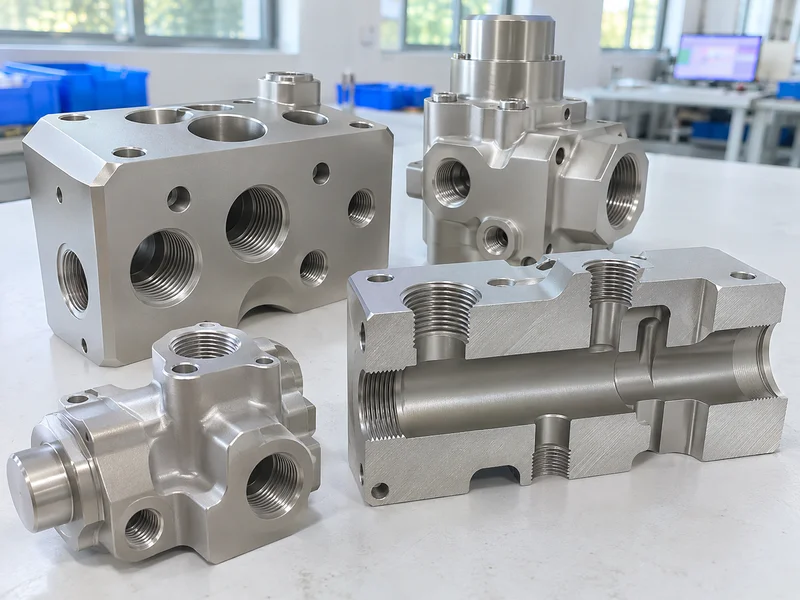
- Cleaning: degreasing and activation for the base metal
- Zincate or strike: for aluminum and some alloys
- Plating bath: nickel salt plus a reducing agent, about 85–95 °C
- Deposition: layer grows at a steady rate on all wetted surfaces
- Post-treatment: rinsing, drying, optional baking or heat treatment
For example, an aluminum valve body needs a zincate step before plating so the nickel bonds firmly. Specifications are published by ASTM, and our guide to copper and nickel plating compares related layers.
Key Takeaway: Above all, good adhesion depends on cleaning and activation before the bath.
What Are the Phosphorus Types of Electroless Nickel?
The phosphorus content changes hardness, corrosion resistance and magnetism.
| Type | Phosphorus | Main strength | Typical use |
|---|---|---|---|
| Low phosphorus | about 1–5% | Highest as-plated hardness, wear | Tooling, wear parts |
| Mid phosphorus | about 6–9% | Balanced, bright | General engineering parts |
| High phosphorus | about 10–13% | Best corrosion resistance, non-magnetic | Chemical, marine, electronics |
For example, a part near a magnetic sensor often uses high-phosphorus coating because it is non-magnetic as plated. Our guide to 304 stainless steel compares a bare corrosion-resistant option.
Key Takeaway: In other words, pick the phosphorus level for the main need: wear, balance or corrosion.
How Thick Should Electroless Nickel Plating Be?
Electroless nickel plating thickness depends on the service environment and wear.
| ASTM B733 service condition | Minimum thickness |
|---|---|
| SC1 (light) | 5 µm |
| SC2 (moderate) | 13 µm |
| SC3 (severe) | 25 µm |
| SC4 (very severe) | 75 µm |
For example, an indoor aluminum housing may need 5–13 µm, while a valve part in a corrosive fluid may need 25 µm or more. Because the layer is uniform, bores and threads can be machined undersize by about twice the thickness on diameter. Our guide to threaded holes covers thread allowances.
Key Takeaway: For this reason, size fits and threads for the coating before machining.
How Hard Is the Coating After Heat Treatment?
The coating gets much harder after heat treatment, at some cost to corrosion resistance.
- As plated: about 500–700 HV depending on phosphorus
- After heat treatment: about 900–1,000 HV, near hard chrome
- Typical cycle: around 400 °C for about 1 hour
- Trade-off: heat treatment can reduce corrosion resistance
- Adhesion bake: lower temperature bake to improve bonding
For example, a mold slide wear plate may be heat treated after plating to resist sliding wear. Our guides to chrome plating and heat treatment of steel explain related hardening.
Key Takeaway: Overall, heat treat for wear, and leave as plated for best corrosion resistance.
How Does It Compare With Other Finishes?
Electroless nickel plating compares with other finishes by uniformity, hardness and cost.
| Finish | Uniformity | Hardness | Note |
|---|---|---|---|
| Electroless nickel | Excellent | 500–1,000 HV | Higher cost |
| Electrolytic nickel | Thicker on edges | about 150–400 HV | Decorative or underlayer |
| Hard chrome | Thicker on edges | about 850–1,000 HV | Very wear resistant |
| Zinc plating | Fair | Soft | Low-cost steel protection |
| Hard anodizing | Good | High, aluminum only | Grows into the base metal |
For example, an aluminum part that must keep its dimensions in a long bore may use the electroless coating instead of hard anodizing. Our guides to zinc plating and hard anodizing cover the alternatives.
Key Takeaway: Equally, choose this coating when uniform thickness matters more than the lowest price.
Which Parts Use Electroless Nickel Plating?
Many machined parts use electroless nickel plating for wear, corrosion and solderability.
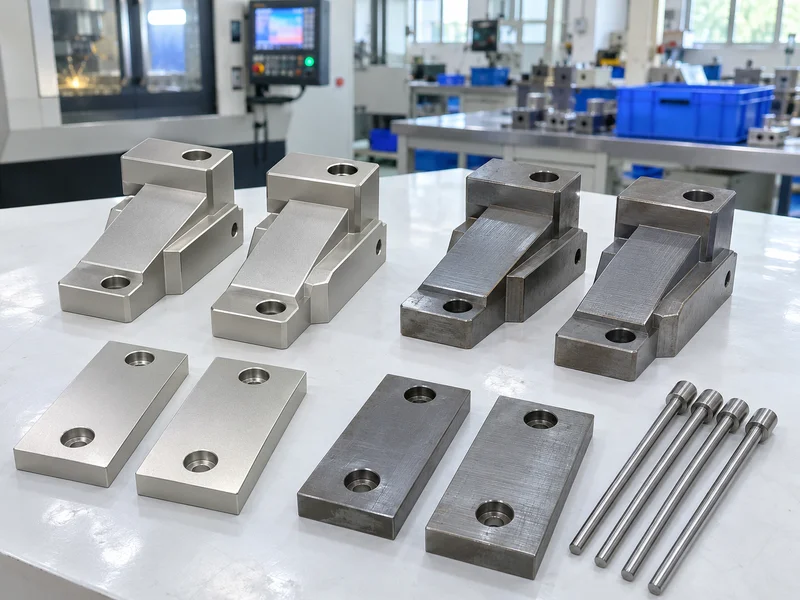
- Mold components: slides, wear plates, cores for corrosive resins
- Valves and pump parts: bores and seats
- Shafts and pins: wear surfaces
- Electronics housings: solderable, conductive surfaces
- Aluminum parts: hard, corrosion-resistant layer
For example, a mold insert for PVC can be electroless nickel plated to resist corrosive gases. Our guides to PVC injection molding and mold inserts explain why.
Key Takeaway: As a rule, use it on complex parts where every surface needs the same protection.
How Should the Coating Be Specified?
The coating should be specified with standard, phosphorus type, thickness and post-treatment.
- Standard: ASTM B733 or AMS 2404
- Type: low, mid or high phosphorus
- Thickness: for example, 13–18 µm
- Heat treatment: none, adhesion bake or hardening
- Masking: threads, bores or contact areas
- Tests: thickness, adhesion and salt spray if needed
For example, “Electroless nickel per ASTM B733, Type V high phosphorus, 15–20 µm, no heat treatment” is a clear callout. Our CNC machining services page explains how plating is arranged with machined parts.
Key Takeaway: Finally, state phosphorus type and thickness, because they change performance.
FAQ
- Q: What is electroless nickel plating?
- A chemical nickel-phosphorus coating deposited without electric current.
- Q: Why is electroless nickel plating uniform?
- The reaction occurs evenly on every wetted surface, not along current lines.
- Q: How hard is electroless nickel plating?
- About 500–700 HV as plated and up to about 1,000 HV after heat treatment.
- Q: Is electroless nickel magnetic?
- High-phosphorus deposits are non-magnetic as plated; low phosphorus is magnetic.
- Q: Can aluminum be electroless nickel plated?
- Yes, after a zincate pretreatment.
Conclusion
Electroless nickel plating gives uniform, hard and corrosion-resistant coverage on complex parts when phosphorus type, thickness and heat treatment are chosen for the job. Size fits for the coating before machining. To quote plated machined parts, send your 3D model and 2D drawing to our engineers.