
Chrome Plating: Hard Chrome Thickness, Hardness, Limits
Chrome plating is an electroplating process that deposits chromium on metal parts, either as a thin decorative layer over nickel or as thick hard chrome for wear and corrosion resistance on functional parts. Hard chrome plating, usually about 20–250 µm thick and 850–1,000 HV hard, is used on hydraulic rods, shafts, rolls, mold surfaces and tooling where low friction and wear resistance matter.
Hard chrome is a functional finish, not just a shiny one. For example, a hydraulic piston rod is ground, hard chrome plated and ground again to size, so the hard, smooth surface seals against the gland and resists scoring for years. In this guide, we explain the types of chromium plating, the hard chrome process, thickness and hardness, grinding after plating, corrosion and limits, alternatives and how to specify it. For other coatings, see our guide to metal surface finishing techniques.
Chrome plating comes in two main forms. Decorative chrome is about 0.25–1 µm of chromium over nickel for a bright appearance. Hard (engineering) chrome is applied directly to steel at about 2.5–500 µm, usually 20–250 µm, giving about 850–1,000 HV hardness, low friction and good wear resistance. Hard chrome is plated from hexavalent chromium baths, which are tightly regulated, and high-strength steels need baking to prevent hydrogen embrittlement. Thick deposits are ground to final size. Specifications include AMS 2460 and ASTM B177.
In short: hard chrome gives a very hard, slick surface on steel parts, finished by grinding.
Key points:
- Types: decorative and hard chrome.
- Hard chrome: about 20–250 µm, 850–1,000 HV.
- Finish: ground to size after plating.
What Types of Chrome Plating Are Used?
Chrome plating is used in decorative and functional forms.
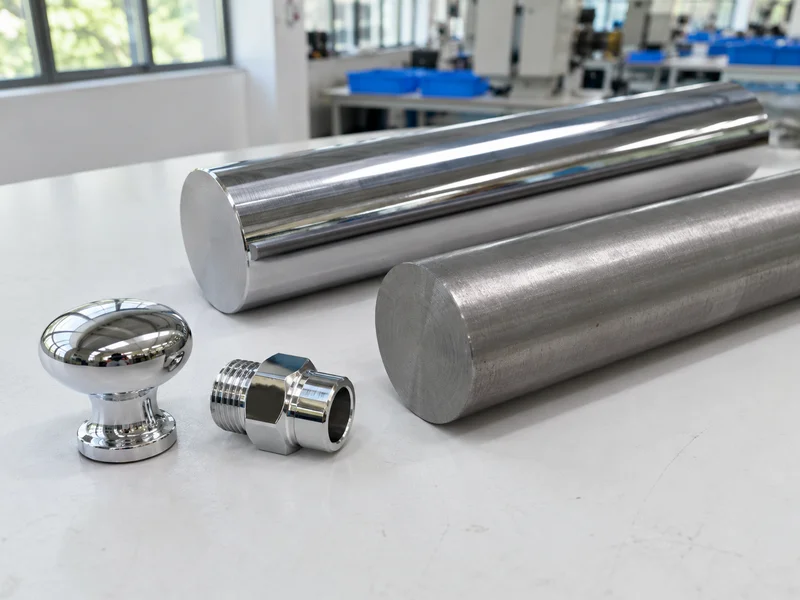
| Type | Thickness | Purpose |
|---|---|---|
| Decorative chrome | about 0.25–1 µm over nickel | Bright appearance |
| Hard chrome | about 2.5–500 µm | Wear, friction, corrosion |
| Thin dense chrome | a few µm | Wear on precision parts |
| Trivalent decorative chrome | thin | Lower environmental impact |
For example, a bathroom tap uses decorative chrome, while a press ram uses hard chrome. Restrictions on hexavalent chromium are published by the European Chemicals Agency. Our guide to plating thickness explains measurement.
Key Takeaway: Above all, specify “hard chrome” when the part needs wear resistance.
How Is Hard Chrome Plating Done?
Hard chrome plating is done in steps that prepare, plate and finish the surface.
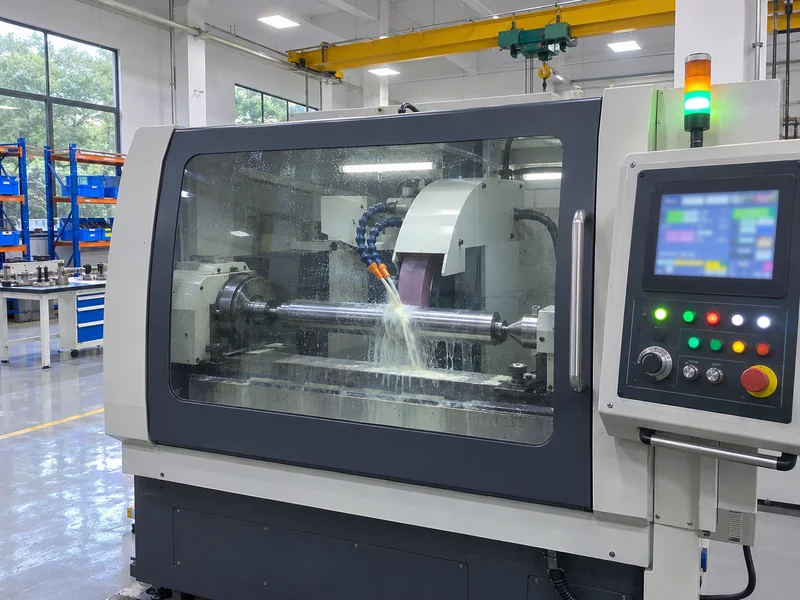
- Grind or polish the base metal to the pre-plate size
- Clean and etch to activate the steel
- Plate in a chromic acid bath at controlled current and temperature
- Bake high-strength steel to remove hydrogen
- Grind or hone to final size and finish
- Inspect thickness, hardness and surface
For example, a shaft for a 50 mm seal is ground about 0.1–0.2 mm under size, plated oversize and ground back to its final tolerance. Our guide to cylindrical grinding explains the finishing step.
Key Takeaway: In other words, plan both the pre-plate size and the final ground size on the drawing.
How Thick and Hard Is Hard Chrome?
Hard chrome is thick enough to grind and among the hardest common electroplates.
- Typical thickness: about 20–250 µm on wear parts
- Thin coatings: a few µm for light wear, no grinding
- Hardness: about 850–1,000 HV
- Friction: low coefficient of friction against steel and seals
- Surface: micro-cracked structure that holds oil
For example, a 25 µm layer on a guide pin can be used as plated, while a 150 µm layer on a roll is ground. Our guide to electroless nickel plating compares a uniform alternative.
Key Takeaway: For this reason, choose thickness from wear life and whether grinding is needed.
Does a Chrome Layer Protect Against Corrosion?
The coating gives some corrosion protection but is not a sealed barrier.
| Factor | Effect |
|---|---|
| Micro-cracks | Can let moisture reach the steel |
| Thicker deposit | Better protection |
| Nickel underlayer | Improves corrosion resistance |
| Crack-free or dense chrome | Better barrier |
| Environment | Salt and chlorides reduce life |
For example, a hydraulic rod used on outdoor equipment may get a nickel underlayer plus hard chrome for better corrosion resistance. Our guide to zinc plating explains sacrificial protection.
Key Takeaway: Overall, add an underlayer or more thickness when parts work outdoors.
What Are the Limits of the Coating?
The coating has limits in uniformity, embrittlement and regulation.
- Uneven thickness: thicker on edges, thin in bores
- Hydrogen embrittlement: high-strength steels need baking
- Regulation: hexavalent chromium is tightly controlled
- Fatigue: can reduce fatigue strength unless shot peened first
- Cost: grinding and masking add cost
For example, a deep bore may need conforming anodes or a different coating to reach the bottom evenly. Our guides to heat treatment of steel and 1045 steel cover common base materials.
Key Takeaway: Equally, design bores and edges with plating limits in mind.
What Are Alternatives to the Coating?
Several finishes can replace hard chrome depending on the job.
| Alternative | When to use |
|---|---|
| Electroless nickel | Uniform coating on complex shapes |
| Nitriding | Surface hardening without coating thickness |
| PVD / DLC | Thin, very hard coatings on tools and molds |
| Thermal spray (HVOF) | Thick wear coatings on large parts |
| Hard anodizing | Aluminum parts |
For example, a mold core may be nitrided or PVD coated instead of chromed to avoid any change in size. Our guides to mold polishing and hard anodizing explain other surface options.
Key Takeaway: As a rule, compare alternatives when regulation, uniformity or size change is a concern.
How Should Chrome Plating Be Specified?
Chrome plating should be specified with type, thickness, hardness and finishing.
- Type: hard (engineering) chrome or decorative
- Standard: AMS 2460 or ASTM B177 guidance
- Thickness: before and after grinding
- Hardness: for example, 850 HV minimum
- Final size and roughness after grinding
- Baking for steels above the hardness limit
- Masking of non-plated areas
For example, “Hard chrome per AMS 2460, 50 µm after grind, Ra 0.2 µm, bake per ASTM B850” is a complete callout. Our CNC turning page explains how shafts are machined and finished.
Key Takeaway: Finally, put both pre-plate and finished dimensions on the drawing.
FAQ
- Q: What is chrome plating?
- An electroplated chromium layer for appearance or wear resistance.
- Q: How thick is hard chrome plating?
- Usually about 20–250 µm on functional parts.
- Q: How hard is hard chrome?
- About 850–1,000 HV.
- Q: Is chrome plating rust proof?
- Not completely; micro-cracks can let moisture reach the steel.
- Q: Why is hard chrome ground after plating?
- To reach the final size and surface finish.
Conclusion
Chrome plating, especially hard chrome, gives a very hard, low-friction surface on steel parts when thickness, baking and grinding are planned. Compare alternatives when uniformity or regulation matters. To quote chrome plated machined parts, send your 3D model and 2D drawing to our engineers.