
Reaming vs Drilling and Boring: Stock and Speeds
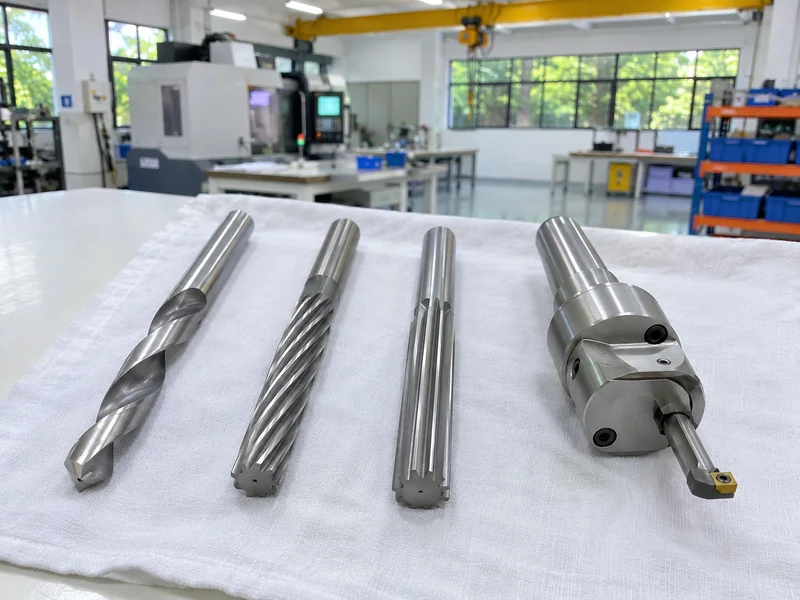
Reaming is a finishing operation that enlarges a drilled hole by a small amount with a multi-flute cutting tool to give an accurate diameter and a smooth surface, typically to an H7 tolerance. It is one of three main hole-making steps on CNC machines, together with drilling, which creates the hole quickly, and boring, which corrects position and straightness and produces larger or custom sizes.
Each step fixes a different problem. For example, a dowel hole that must fit a pin to H7 is drilled undersize and reamed to size, while a bearing bore that must also be in an exact position relative to other features is bored first, because a reamer follows the existing hole and cannot correct its position. In this guide, we explain reaming, drilling and boring: how each works, the accuracy they reach, stock allowances, speeds and feeds, common problems and how to choose the right sequence. For hole tolerances, see our ISO 2768 and ISO 286 tolerance calculator.
Drilling makes holes fast with about IT11–IT13 accuracy. Reaming removes a small stock, often about 0.1–0.3 mm on diameter depending on size, to reach about IT7–IT8 (for example, H7) and a surface of about Ra 0.4–1.6 µm, but it follows the existing hole axis. Boring with a single-point tool reaches about IT6–IT8, corrects position and straightness and makes non-standard or large diameters. Reamers run at lower speeds and higher feeds than drills, with good coolant and chip evacuation.
In short: drill to make the hole, ream for size and finish, bore for position and custom sizes.
Key points:
- Drilling: fast, about IT11–IT13.
- Reaming: size and finish, about IT7–IT8.
- Boring: position, straightness, custom sizes.
What Is Reaming?
A reamer makes a light finishing cut that brings a hole to an accurate size and finish.
- Tool: multi-flute reamer, straight or spiral
- Stock: small allowance left after drilling
- Result: accurate diameter, round hole, smooth surface
- Limit: follows the drilled hole’s axis
- Typical use: dowel holes, pin holes, bushing bores
For example, a 10 mm H7 dowel hole is often drilled at about 9.8 mm and reamed to 10.000–10.015 mm. Hole tolerances follow ISO 286. Our guide to tolerance for slip fit explains common hole and pin fits.
Key Takeaway: Above all, use a reamer for size and finish, not to fix position.
How Do Drilling, Reaming and Boring Compare?
Drilling, reaming and boring compare by accuracy, finish and what they can correct.
| Process | Typical accuracy | Surface (Ra) | Corrects position | Typical use |
|---|---|---|---|---|
| Drilling | IT11–IT13 | 3.2–6.3 µm | No | Clearance and tap holes |
| Reaming | IT7–IT8 | 0.4–1.6 µm | No | Dowel and pin holes |
| Boring | IT6–IT8 | 0.8–3.2 µm | Yes | Bearing bores, large holes |
| Grinding / honing | IT5–IT6 | 0.1–0.4 µm | Limited | Hardened precision bores |
For example, a gearbox housing may use drilling for bolt holes, reaming for dowels and boring for bearing seats. Our guide to bearing press fit tolerance chart explains bearing bore fits.
Key Takeaway: In other words, choose the process by the tolerance and whether position must be corrected.
How Much Stock Should Be Left?
The stock left for the reamer depends on diameter and material.
| Hole diameter | Typical stock on diameter |
|---|---|
| Up to about 5 mm | about 0.1–0.2 mm |
| About 5–20 mm | about 0.2–0.3 mm |
| About 20–50 mm | about 0.3–0.5 mm |
Too little stock makes the reamer rub and glaze the hole; too much overloads the flutes and gives a poor finish. For example, a 12 mm reamed hole in steel is usually drilled at about 11.7–11.8 mm. Our guide to machining tolerance chart explains tolerance grades.
Key Takeaway: For this reason, follow the reamer maker’s stock recommendation for the material.
What Speeds and Feeds Suit a Reamer?
A reamer suits lower speeds and higher feeds than drilling.
- Speed: often about half to two-thirds of drilling speed
- Feed: often 2–3 times the drilling feed per revolution
- Coolant: steady flood or through-tool coolant
- Chip evacuation: spiral flutes for blind holes
- Retract: feed out without stopping inside the hole
For example, a reamer run too fast in stainless can work-harden the hole and lose size. Our guide to 304 stainless steel explains work hardening.
Key Takeaway: Overall, slow speed and firm feed give the best reamed finish.
When Is Boring the Better Choice?
Boring is better when position, straightness or size flexibility matters.
- Position correction: a boring bar cuts its own axis
- Large diameters: above standard reamer sizes
- Non-standard sizes: any diameter with one tool
- Tight bearing fits: fine adjustment in microns
- Interrupted holes: cross-holes and slots
For example, a bearing bore that must be within 0.01 mm of another bore is bored, because a reamer would follow any drill wander. Our guides to GD&T position tolerance and CNC milling explain position control.
Key Takeaway: Equally, bore when the hole must be in the right place, not just the right size.
What Problems Occur With Reamed Holes?
Common problems with reamed holes come from stock, alignment and chips.
| Problem | Likely cause | Fix |
|---|---|---|
| Oversize hole | Runout, worn reamer | Check holder, replace tool |
| Undersize hole | Worn reamer, material spring-back | New reamer, adjust size |
| Poor finish | Too little stock, rubbing | More stock, correct feed |
| Chatter marks | Too fast, loose setup | Lower speed, rigid holding |
| Bell-mouth entry | Misalignment | Floating holder, check alignment |
For example, a reamer in a holder with 0.02 mm runout can cut a hole 0.02 mm oversize. Our guide to CMM measurement explains how holes are checked.
Key Takeaway: As a rule, control runout and stock first when reamed holes go wrong.
How Should Hole-Making Be Planned on a Drawing?
Hole-making should be planned from the tolerance, position and function on the drawing.
- Tolerance: H7 suggests reaming or boring
- Position tolerance: tight positions suggest boring
- Diameter: standard sizes suit reamers
- Depth and blind holes: need chip evacuation
- Material and hardness: hardened parts may need grinding
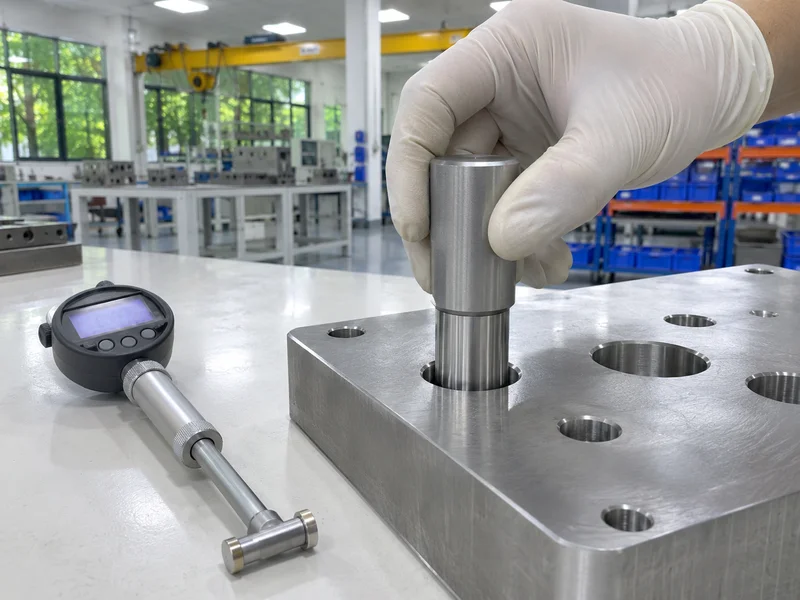
- Inspection: plug gauges or CMM
For example, “Ø10 H7, position Ø0.02 to A|B” will usually be drilled, bored or reamed in the same setup as the datums. Our precision CNC machining services page explains how we plan holes to drawing.
Key Takeaway: Finally, put both size tolerance and position tolerance on critical holes.
FAQ
- Q: What is reaming?
- A finishing cut that brings a drilled hole to accurate size and finish.
- Q: What tolerance can reaming hold?
- Typically about IT7–IT8, such as H7.
- Q: Can a reamer correct hole position?
- No, it follows the existing hole; boring corrects position.
- Q: How much stock should be left for reaming?
- Usually about 0.1–0.5 mm on diameter, depending on size.
- Q: Is boring more accurate than reaming?
- Boring can reach similar or tighter size and also corrects position.
Conclusion
Reaming gives accurate size and finish, drilling makes holes fast and boring fixes position and custom sizes. Choose the sequence from the drawing’s tolerances. To review hole-making on your parts, send your 3D model and 2D drawing to our engineers.