
Anodizing Colors: Options, Matching and Fading
Anodizing colors are produced by dyeing the porous oxide layer that anodizing grows on aluminum, then sealing the pores so the color is locked in. Clear, black, blue, red, gold, green and grey are common, and Type II (sulfuric acid) anodizing gives the widest range of bright, even colors, while hard Type III anodizing is limited mostly to darker shades.
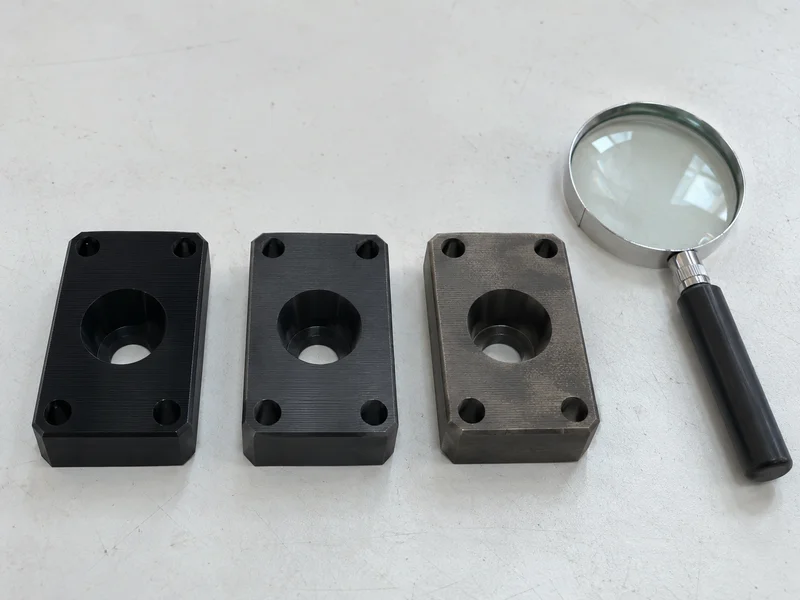
Color depends on the alloy as much as on the dye. For example, the same black dye can look deep black on 6061 but slightly brown or uneven on a cast alloy or a high-copper 2024 part, which is why color is approved on samples made from the production alloy. In this guide, we explain how anodizing colors are made, the common color options, how alloy and anodize type change the result, color matching and consistency, fading and durability, and how to specify colors on a drawing. For the hard version of the process, see our guide to hard anodizing.
Anodizing colors come from organic or inorganic dyes absorbed into the open pores of the anodic oxide, or from electrolytic coloring with metal salts for bronze and black shades. Type II anodizing, typically about 5–25 µm thick, accepts dyes well and gives the most uniform colors on 6061 and 6063. Type III hard anodizing is thicker and naturally grey to dark, so it suits black and dark colors. Results vary with alloy, surface finish, coating thickness, dye batch and sealing. Organic dyes can fade in sunlight; electrolytic and some inorganic colors are more lightfast. Colors are approved on samples and limit samples, not on color numbers alone.
In short: choose the alloy, anodize type and approval sample together to get the color you expect.
Key points:
- Common colors: clear, black, blue, red, gold, grey.
- Best base: Type II on 6061 or 6063.
- Approval: physical samples, not just a color code.
How Are Anodizing Colors Made?
Anodizing colors are made by filling the pores of the oxide layer with dye before sealing.
- Pretreat: clean, etch or bright dip
- Anodize: grow the porous oxide layer
- Dye: immerse in organic or inorganic dye, or color electrolytically
- Seal: close the pores with hot water, nickel acetate or mid-temperature seals
- Inspect: color, thickness and seal quality
For example, a red part is dyed for a few minutes after anodizing; a longer dye time gives a deeper red. Anodizing practices are described by the Aluminum Association. Our guide to anodized vs non anodized aluminum explains the base process.
Key Takeaway: Above all, the dye sits inside the oxide, so it does not chip like paint.
Which Anodizing Colors Are Available?
Many anodizing colors are available, each with its own consistency and durability.
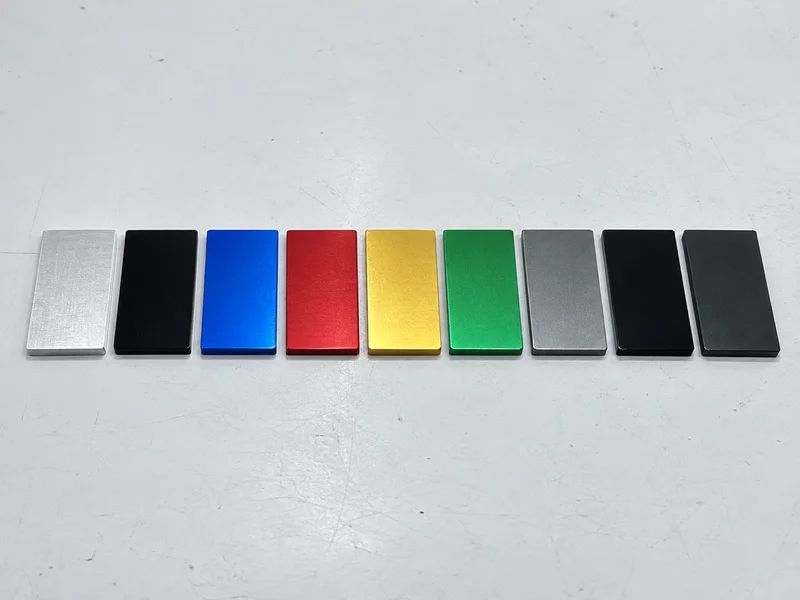
| Color | Notes |
|---|---|
| Clear (natural) | Most common, keeps metallic look |
| Black | Very popular; organic or electrolytic black |
| Blue | Bright on 6061/6063, can fade outdoors |
| Red | Bright, more fade-sensitive |
| Gold / champagne | Decorative, electrolytic options exist |
| Grey / titanium grey | Technical look, hides fingerprints |
| Green, purple, orange | Possible, harder to keep consistent |
| Bronze | Usually electrolytic, very lightfast |
For example, black and clear are the safest choices for production parts because they are easiest to repeat lot after lot. Our guide to 7075 aluminum covers a common anodized alloy.
Key Takeaway: In other words, black and clear repeat best; bright colors need tighter control.
How Do Alloy and Anodize Type Change the Color?
Alloy and anodize type change the color because they change the oxide layer itself.
| Factor | Effect on color |
|---|---|
| 6061, 6063 | Even, bright colors |
| 7075 | Good, slightly darker tone |
| 2024 (high copper) | Duller, less even color |
| Cast alloys (high silicon) | Grey, blotchy |
| Type II (5–25 µm) | Widest color range |
| Type III hard (25–75 µm) | Grey base, dark colors only |
For example, a blue Type II part on 6061 looks bright, while the same blue on a Type III hard coat looks dark navy. Our guides to aluminium alloy 6061 properties and 2024 aluminum explain the alloys.
Key Takeaway: For this reason, choose the alloy with color in mind when appearance matters.
How Is Color Matched and Kept Consistent?
Color is matched and kept consistent with samples, controlled processes and batch rules.
- Reference sample: physical part or plaque, not only a Pantone number
- Same alloy and finish: bead blast or machining marks change the look
- Limit samples: lightest and darkest acceptable
- Same batch: parts that sit together in a product are anodized together
- Measurement: colorimeter with a ΔE limit for critical parts
For example, two batches of black housings anodized weeks apart may differ slightly, so mating parts are often processed in the same rack. Our guides to bead blast texture and CNC machining surface finish explain how surface prep affects appearance.
Key Takeaway: Overall, approve color on parts made with the production alloy and surface finish.
Do Anodized Colors Fade?
Some anodized colors fade, depending on dye type, sealing and sunlight.
- Organic dyes: bright but can fade under UV, especially reds and blues
- Electrolytic colors: bronze and black, very lightfast
- Good sealing: improves fade and corrosion resistance
- Thicker coatings: hold more dye and last longer outdoors
- Indoor parts: rarely fade noticeably
For example, a red anodized part on outdoor equipment can turn pinkish after long sun exposure, while an electrolytic bronze part keeps its tone. Lightfastness testing follows methods from ISO. Our guide to metal surface finishing techniques compares outdoor finishes.
Key Takeaway: Equally, choose lightfast colors and good sealing for outdoor parts.
What Limits Apply to Anodizing Colors?
Anodizing colors have limits that designers should plan for.
| Limit | Effect |
|---|---|
| No white | True white is not practical by dyeing |
| Pastel shades | Hard to repeat |
| Rack marks | Small uncoated points where parts are held |
| Edges and corners | Can look slightly lighter |
| Welds and mixed alloys | Color differences across the part |
| Dimensions | Coating adds thickness to fits and threads |
For example, a thread or bore that must keep its size can be masked or sized for coating growth. Our guide to threaded holes explains thread allowances.
Key Takeaway: As a rule, mark rack contact points and masked areas on the drawing.
How Should Anodizing Colors Be Specified?
Anodizing colors should be specified with type, color, thickness, sealing and approval method.
- Standard and type: for example, MIL-A-8625 Type II, Class 2 (dyed)
- Color: name plus reference sample
- Thickness: for example, 10–15 µm
- Surface before anodizing: machined, bead blasted or brushed
- Masking and rack points
- Approval: golden sample and limit samples
For example, “Anodize per MIL-A-8625 Type II Class 2, black, 10–15 µm, bead blast before anodize, match approved sample” is a clear callout. Our CNC milling page explains how anodized aluminum parts are machined and finished.
Key Takeaway: Finally, always approve color on a physical sample before production.
FAQ
- Q: What colors can aluminum be anodized?
- Clear, black, blue, red, gold, grey, green, bronze and more.
- Q: Which anodizing color is most consistent?
- Clear and black.
- Q: Can hard anodizing be colored?
- Mostly dark colors such as black, because the coating is naturally grey.
- Q: Do anodized colors fade?
- Some organic dyes fade in sunlight; electrolytic colors are more lightfast.
- Q: Can aluminum be anodized white?
- Not practically by dyeing; painting or powder coating is used instead.
Conclusion
Anodizing colors give durable, integral color on aluminum when alloy, anodize type, sealing and samples are planned together. Black and clear repeat best. To quote anodized aluminum parts, send your 3D model and 2D drawing to our engineers.