
Shot Count and Mold Life: Tracking and Extending It
Shot count is the number of times an injection mold has opened and closed to make parts, and it is the main measure of a mold’s age, maintenance needs and remaining life. One shot is one cycle, whatever the number of cavities, so a 4-cavity mold at 250,000 shots has made about one million parts. Tracking it accurately turns maintenance from guesswork into a schedule.
Shot count also settles disputes. For example, when a buyer and a molder disagree whether a mold has reached its agreed life, a sealed mold counter gives a figure both sides accept, while machine logs may be reset or split across several presses. In this guide, we explain shot count: what it means, how it is tracked, typical mold life, what shortens it, how to extend it, maintenance by shot interval and how to agree mold life when ordering. For mold life classes, see our guide to SPI mold classification.
Shot count is the cumulative number of injection cycles a mold has run. It is tracked by a mechanical or electronic counter fixed to the mold, by press cycle logs and by production records. Mold life depends on steel, hardness, resin, part design, process and maintenance; typical guide values run from under 500 shots for prototype tools to a million or more for hardened production molds. Life is extended by correct steel, venting, cooling, process control, cleaning, lubrication and replacing wear parts on a shot-based schedule.
In short: count every shot on the mold itself, and plan maintenance and replacement by that number.
Key points:
- Definition: one shot = one mold cycle.
- Tracking: mold-mounted counter plus press logs.
- Use: maintenance intervals and mold life agreements.
What Is Shot Count in Injection Molding?
Shot count in injection molding is the total number of cycles a mold has completed.
- One shot: inject, cool, open, eject, close
- Parts made: shots × cavities, minus rejects
- Trial shots: usually counted too
- Life reference: compared with the agreed mold life
For example, a 2-cavity mold at 300,000 shots has made about 600,000 parts, including setup scrap. Our guide to estimating molding cycle time explains how shots relate to output per hour.
Key Takeaway: Above all, count shots, not parts, when judging mold wear.
How Is Shot Count Tracked?
Shot count is tracked on the mold and on the press.
| Method | How it works | Strength | Limit |
|---|---|---|---|
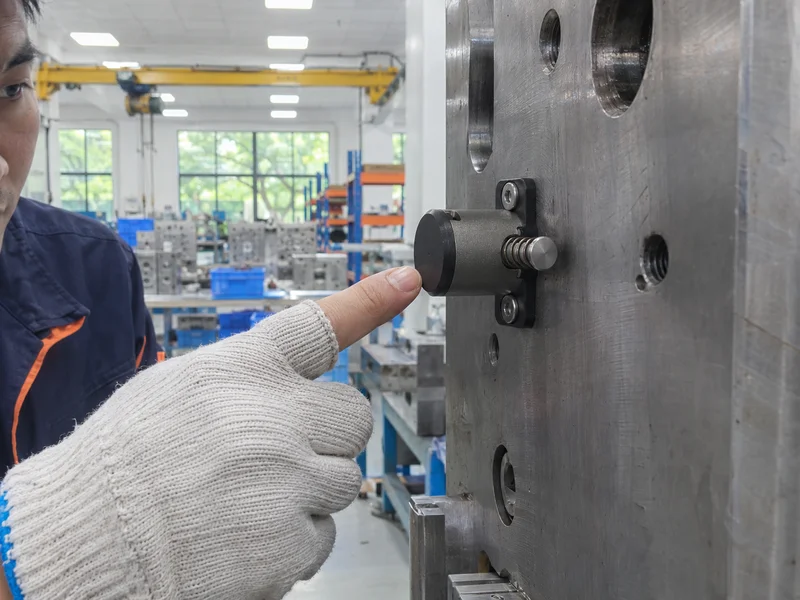
| Mechanical mold counter | Plunger triggered at each close | Stays with the mold, cannot reset easily | Count only |
| Electronic mold monitor | Sensor and memory on the mold | Cycle time and activity data | Battery, cost |
| Press cycle counter | Machine control | Easy, no extra part | Lost when mold moves |
| Production records | Shift reports, MES | Links to output and scrap | Manual errors |
For example, a mechanical counter on the mold plate keeps the true total when a mold moves between presses or plants. Our guide to injection mold components shows where such parts are mounted.
Key Takeaway: In other words, the mold should carry its own record of shots.
How Many Shots Can a Mold Make?
A mold can make from a few hundred to over a million shots, depending on how it is built and used.
| Mold type | Typical guide life |
|---|---|
| Prototype tools (SPI Class 105) | up to about 500 shots |
| Low-volume molds (Class 104) | up to about 100,000 shots |
| Pre-hardened steel molds (Class 103) | up to about 500,000 shots |
| Hardened production molds (Class 102) | up to about 1,000,000 shots |
| High-volume hardened molds (Class 101) | 1,000,000 shots or more |
These figures are guide values, not guarantees. For example, a P20 mold running unfilled PP may pass its guide life, while the same steel running glass-filled nylon may need gate inserts much earlier. Our guide to soft tooling vs hard tooling compares steels.
Key Takeaway: For this reason, treat mold life as a design target that depends on resin and care.
What Reduces Mold Life?
Several factors reduce mold life faster than the planned shot count.
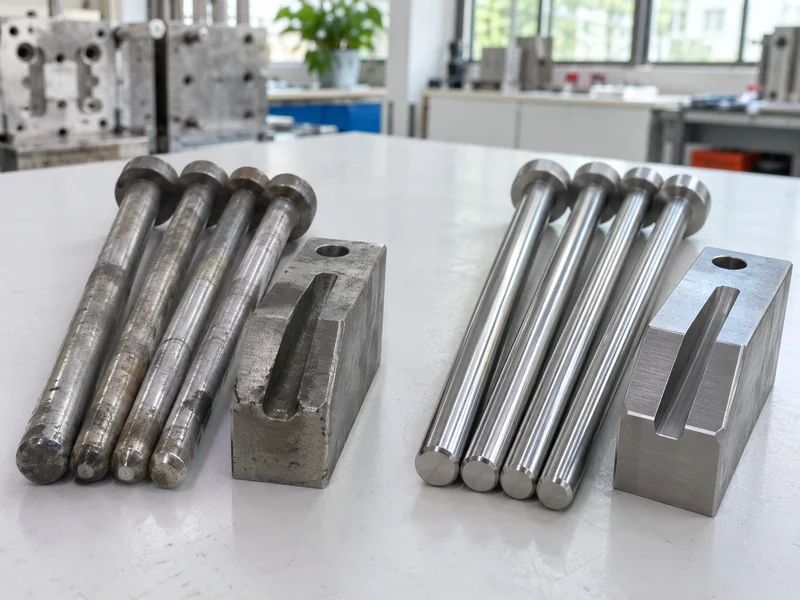
- Abrasive resins with glass, mineral or flame-retardant fillers
- Corrosive gases from PVC, POM or flame retardants
- High injection pressure and over-packing
- Blocked vents causing burning and erosion
- Poor cooling and thermal cycling
- Missed lubrication of slides, lifters and guides
- Closing on parts or debris
For example, blocked vents on a PBT GF30 mold can burn and erode the parting line within a few thousand shots. Our guides to injection mold venting and burn marks explain the cause.
Key Takeaway: Overall, most early wear comes from resin, venting and missed maintenance.
How Can Mold Life Be Extended?
Mold life can be extended through design, steel and process choices.
- Hardened inserts at gates and shutoffs
- Surface treatments such as nitriding, PVD or DLC
- Replaceable wear parts for pins, gates and slides
- Balanced cooling to limit thermal stress
- Stable process with no over-packing
- Mold protection settings on the press
For example, a replaceable H13 gate insert lets a mold keep running after gate wear, without welding the main cavity. Our guides to mold inserts and H13 tool steel explain these options.
Key Takeaway: Equally, design wear areas to be replaced, not repaired.
How Should Maintenance Follow Shot Count?
Maintenance should follow shot count so each task happens before wear causes defects.
| Interval (example) | Task |
|---|---|
| Every shift | Clean parting line, check vents and water flow |
| Every 20,000–50,000 shots | Clean vents, lubricate slides, lifters and guides |
| Every 100,000–250,000 shots | Partial teardown, check pins, sleeves and wear plates |
| End of run | Clean, rust-protect, record shots and issues |
| Major interval | Full teardown, replace wear parts, measure critical features |
Intervals vary by resin and mold; filled resins need shorter ones. A record of shot count against each repair shows where design changes are needed. Our guides to maintenance of molds and injection mold repair give more detail. Inspection methods follow general principles from ISO.
Key Takeaway: As a rule, tie every maintenance task to a shot count, not to the calendar.
How Should Mold Life Be Agreed When Ordering?
Mold life should be agreed as target cycles with the conditions that support it.
- Target shots, such as 500,000 cycles
- Resin grade, including fillers
- Steel and hardness for cavities, cores and inserts
- Counter type fitted to the mold
- Maintenance plan and spare parts list
For example, “Target 800,000 shots in PA66 GF30, hardened inserts 48–52 HRC, mechanical counter, spare gate inserts” is a clear basis. Our injection mold manufacturing team matches steel and structure to the required mold life instead of quoting a fixed warranty period.
Key Takeaway: Finally, agree target shots, resin and maintenance together, because life depends on all three.
FAQ
- Q: What is shot count?
- The total number of cycles a mold has run.
- Q: Is shot count the same as part count?
- No, part count is shots multiplied by the number of cavities.
- Q: How is shot count measured?
- With a counter on the mold, press logs and production records.
- Q: How many shots does a P20 mold last?
- Often up to about 500,000 with unfilled resins, depending on design and care.
- Q: When should a mold be serviced?
- At set shot intervals, plus a cleaning every shift.
Conclusion
Shot count is the clearest measure of mold use. Track it on the mold, set maintenance by shot intervals and agree target life with resin and steel when you order. To plan a mold for your production volume, send your 3D model and 2D drawing to our engineers.