
Types of Injection Molds: How to Pick the Best One
The main types of injection molds are grouped by plate structure, runner system, cavity layout, the way they release undercuts and the way they combine materials or inserts. Common examples are two-plate and three-plate molds, cold runner and hot runner molds, single-cavity, multi-cavity and family molds, side-action and unscrewing molds, and two-shot, overmolding and insert molds.
Most real molds combine several of these types. For example, a cap mold may be a two-plate, 8-cavity, hot runner, unscrewing mold, while a small connector housing may be a three-plate, 4-cavity cold runner mold with side actions. In this guide, we explain how mold types are grouped, plate structures, runner systems, cavity layouts, molds for undercuts and threads, molds that combine materials or inserts, and how to choose. For mold structure basics, see our guide to injection molding tool design.
Injection molds are classified in five ways. Plate structure gives two-plate, three-plate and stack molds. The runner system gives cold runner, hot runner and valve gate molds. Cavity layout gives single-cavity, multi-cavity and family molds. Undercut release gives straight-pull, side-action (slides and lifters) and unscrewing molds. Special processes give two-shot, overmolding, insert, gas-assist and micro molds. The right combination depends on part geometry, volume, resin, cosmetic needs and budget, and is decided at DFM.
In short: describe a mold by all five groups, not by one label.
Key points:
- Structure: two-plate, three-plate, stack.
- Runner: cold, hot, valve gate.
- Special: side action, unscrewing, 2K, insert, micro.
How Are Types of Injection Molds Grouped?
Types of injection molds are grouped by how they are built and what they do.
| Group | Options |
|---|---|
| Plate structure | Two-plate, three-plate, stack |
| Runner system | Cold runner, hot runner, valve gate |
| Cavity layout | Single-cavity, multi-cavity, family |
| Undercut release | Straight pull, slides, lifters, unscrewing |
| Process | Two-shot, overmolding, insert, gas-assist, micro |
Mold components and terms are described in ISO 12165 from ISO. Our guide to injection mold components shows the parts.
Key Takeaway: Above all, use one option from each group to describe a mold fully.
What Are Two-Plate and Three-Plate Molds?
Two-plate and three-plate molds differ in how many parting planes they open.
- Two-plate mold: one parting line; runner and parts eject together; simplest and most common
- Three-plate mold: a second parting plane separates the runner; allows pin-point gates anywhere on the part
- Stack mold: two or more parting faces back to back to double output on one press
For example, a round cover gated in the center from a cold runner usually needs a three-plate mold, while a hot runner lets the same part run in a two-plate mold. Our guides to mold base and stack mold explain these structures.
Key Takeaway: In other words, the gate position often decides between two and three plates.
What Runner Systems Define Mold Types?
Runner systems define mold types by how melt reaches the cavities.
| Runner | How it works | Best for |
|---|---|---|
| Cold runner | Runner solidifies and ejects with parts | Low to medium volume, frequent color change |
| Hot runner | Heated manifold keeps melt molten | High volume, less waste, faster cycles |
| Valve gate | Hot runner with pins that open and close gates | Cosmetic gates, sequential filling |
For example, an 8-cavity closure for a high-volume consumer product often uses a hot runner to remove runner scrap. Our guides to cold runner, hot runner system and valve gate injection molding explain each.
Key Takeaway: For this reason, choose the runner from volume, resin cost and gate appearance.
How Do Cavity Layouts Change the Mold?
Cavity layouts change mold size, cost and output.
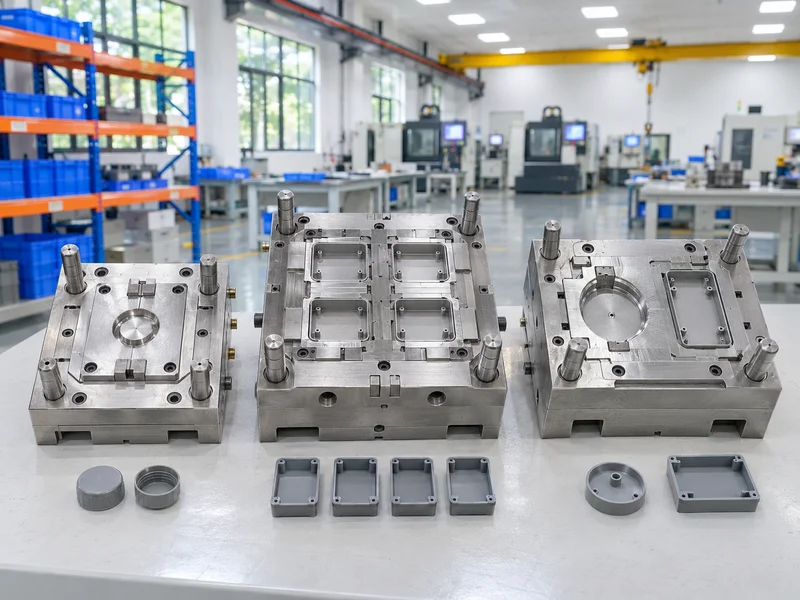
- Single-cavity: lowest mold cost, easiest to tune, lowest output
- Multi-cavity: several identical parts per shot, needs balance
- Family mold: different parts in one mold, best for matched sets
For example, a 4-cavity mold of a clip can cost less per part than a single-cavity mold once volume passes a few hundred thousand pieces. Our multi-cavity injection molds page and our guide to multi-cavity vs family molds compare the options.
Key Takeaway: Overall, set cavity count from volume and tolerance, not from press size alone.
Which Types of Injection Molds Handle Undercuts and Threads?
Several types of injection molds handle undercuts and threads with moving mold parts.
| Feature | Mold solution |
|---|---|
| External side holes and snaps | Slides (side actions) |
| Internal undercuts | Lifters |
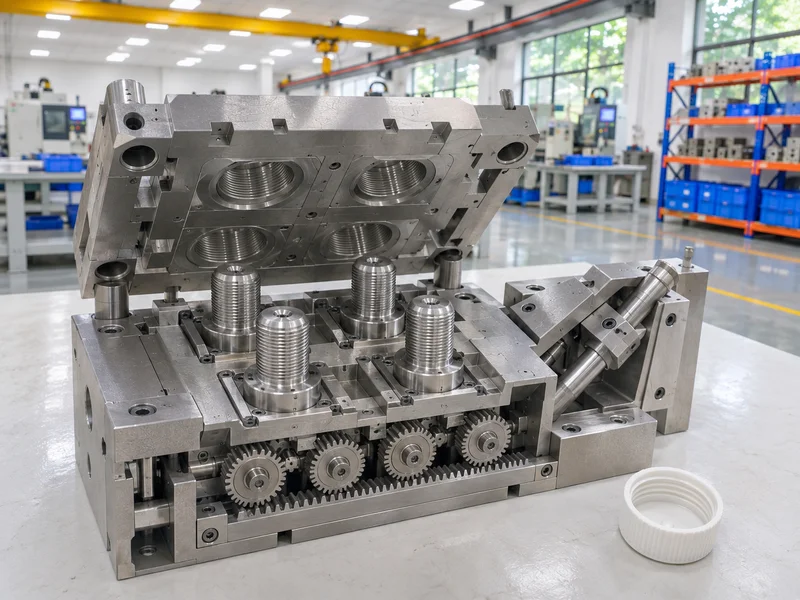
| Internal threads | Unscrewing cores or collapsible cores |
| External threads | Slides on the thread split line or unscrewing |
For example, a bottle cap with an internal thread uses a gear-driven unscrewing core, while a housing with a side clip uses a slide. Our guides to side action injection molding, injection molding lifter and our unscrewing injection molds page explain each.
Key Takeaway: Equally, every undercut adds a moving part, so remove undercuts at DFM where possible.
Which Molds Combine Materials or Inserts?
Some molds combine two materials, metal inserts or gas in one part.
- Two-shot (2K) molds: two resins molded in one cycle on a 2K press
- Overmolding molds: a second material molded over a first part
- Insert molds: metal inserts placed and molded in
- Gas-assist molds: gas hollows thick sections
- Micro molds: very small, precise parts
For example, a power tool grip with a soft TPE layer is often made in a two-shot mold. Our pages on two-shot injection molds, overmolding molds, insert injection molds and micro injection molds explain these molds.
Key Takeaway: As a rule, process molds need the press and automation planned together with the mold.
How Do You Choose Between Types of Injection Molds?
You choose between types of injection molds from part geometry, volume, resin and appearance.
| Need | Likely mold type |
|---|---|
| Low volume, simple part | Two-plate, single-cavity, cold runner |
| High volume, small part | Multi-cavity, hot runner |
| Central gate on a cover | Three-plate or hot runner |
| Side holes or snaps | Slides or lifters |
| Threads | Unscrewing mold |
| Soft-touch grip | Two-shot or overmolding mold |
| Metal terminals | Insert mold |
For example, a 50,000-piece housing with two side snaps might be a two-plate, 2-cavity cold runner mold with two slides. Our precision mold making and injection mold manufacturing pages explain the small and medium precision molds we build.
Key Takeaway: Finally, let DFM decide the mold type before quotes are compared.
FAQ
- Q: What are the main types of injection molds?
- Two-plate, three-plate, hot runner, cold runner, multi-cavity, family, side-action, unscrewing, two-shot and insert molds.
- Q: What is the difference between a two-plate and three-plate mold?
- A three-plate mold has an extra parting plane that separates the runner from the parts.
- Q: When is a hot runner mold worth it?
- At high volume or with expensive resin, where runner waste and cycle time matter.
- Q: What is a family mold?
- A mold that produces different parts in one shot.
- Q: Which mold type is used for threaded parts?
- An unscrewing mold, or slides for external threads.
Conclusion
Types of injection molds are best understood by structure, runner, cavities, undercut release and process. Combine these choices at DFM to fit your part, volume and budget. To find the right mold type for your part, send your 3D model and 2D drawing to our engineers.